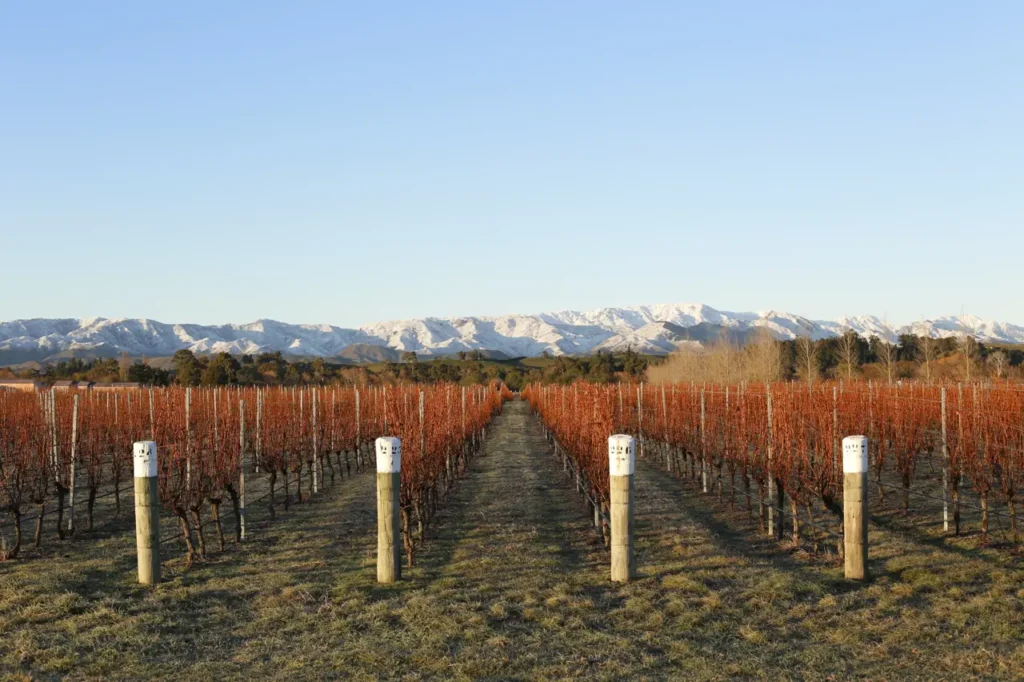
New Zealand Weather in August: What It’s Really Like, Region by Region
Last updated November 2026. Climate averages are 1991–2020 normals from Earth Sciences New Zealand (formerly NIWA). Last August’s figures come from its official monthly summary.
New Zealand weather in August is deep winter with the first hints of spring. Days are short but they stretch fast, the ski fields hold their deepest snow, and most of the country is quiet. Still, “winter” doesn’t mean one climate here. On the same August day you can walk a Northland beach at 16°C (61°F), scrape frost off a windscreen at −1°C (30°F) beside Lake Tekapo, and watch rain pour down Milford Sound, which collects about 457 mm (18 inches) in an average August.
Most weather guides give you a few averages and stop. We’ll give you the averages too, for 19 places. But we’ll also show what August has actually done in recent years, including August 2026, so you can plan a trip that survives a bad forecast.
Quick answer: Most of New Zealand sits between 11°C and 16°C (52–61°F) by day in August, with nights from about −1°C (mountains) to 8°C (Auckland). The north is mildest. The south is cold and frosty, but often sunny and dry. Fiordland and the West Coast are by far the wettest. Snow is deepest on the ski fields, and it occasionally reaches sea level.
August Weather in New Zealand by Place: The Numbers
Here are the long-term August averages for the places most visitors actually go. Rain days are days with at least 1 mm of rain. For scale, 25 mm is about an inch.
Place
Avg high / low
Rain
Rain days
Sunshine (hours)
Bay of Islands (Kerikeri)
16°C / 7°C (60°F / 45°F)
186 mm
16
–
Auckland
15°C / 8°C (59°F / 47°F)
117 mm
15
152
Tauranga
15°C / 7°C (59°F / 44°F)
112 mm
12
176
Rotorua
13°C / 4°C (55°F / 39°F)
125 mm
12
–
Taupō
12°C / 3°C (54°F / 37°F)
89 mm
12
–
Whakapapa Village (Mt Ruapehu)
7°C / 0°C (45°F / 31°F)
259 mm
18
–
Napier
15°C / 5°C (58°F / 41°F)
57 mm
8
173
Wellington
12°C / 7°C (54°F / 45°F)
139 mm
12
148
Nelson
14°C / 4°C (56°F / 39°F)
84 mm
9
184
Christchurch
13°C / 3°C (56°F / 37°F)
58 mm
8
157
Lake Tekapo
9°C / −1°C (48°F / 30°F)
38 mm
7
184
Aoraki / Mount Cook
9°C / −1°C (48°F / 31°F)
284 mm
14
113
Queenstown
11°C / 2°C (52°F / 35°F)
82 mm
8
120
Dunedin
11°C / 4°C (53°F / 40°F)
55 mm
9
122
Invercargill
11°C / 2°C (52°F / 35°F)
63 mm
11
142
Stewart Island (Oban)
11°C / 4°C (51°F / 39°F)
116 mm
18
–
Milford Sound
11°C / 3°C (52°F / 37°F)
457 mm
16
–
Franz Josef
13°C / 4°C (55°F / 39°F)
427 mm
15
104
Greymouth
13°C / 5°C (55°F / 42°F)
204 mm
16
137
Source: Current Results (https://www.currentresults.com/Weather/New-Zealand/temperature-august.php), using Earth Sciences New Zealand national climate database data for 1991–2020.
Two patterns jump out. First, the Southern Alps still split the country. Lake Tekapo gets 38 mm in an average August. Aoraki / Mount Cook, about an hour’s drive away, gets 284 mm. Second, the real cold comes at night. Highs sit between 9°C and 16°C in almost every town on the list. But overnight lows fall to −1°C at Lake Tekapo and Aoraki / Mount Cook, and to 0°C at Whakapapa.
Where Is the Weather Best in August?
If sunshine is your priority, the long-term numbers point to a few clear winners:
Sunniest: Blenheim (189 hours), then Nelson and Lake Tekapo (184 hours each). That is why the top of the South Island keeps winning “sunniest region” lists. Tauranga (176 hours) and Napier (173 hours) lead the North Island.
Driest: Lake Tekapo (38 mm), Dunedin (55 mm), Napier (57 mm) and Christchurch (58 mm).
Mildest nights: Auckland and Northland, at about 7–9°C.
Gloomiest: Franz Josef (104 hours), Aoraki / Mount Cook (113 hours), Queenstown (120 hours) and Dunedin (122 hours).
Gloomy doesn’t make a place a bad August destination. It just means you shouldn’t build a whole day around blue skies there. Queenstown logs only 120 hours of sun because high mountains block the low winter sun. It is better for snow than for sunbathing.
Averages Lie: What New Zealand Weather in August Actually Looks Like
An average is a polite way of hiding the extremes. Look at three recent Augusts and you get a more honest picture.
August 2024: Mild. The national average temperature was 9.8°C, which was 0.8°C above normal and the ninth-warmest August on record. On 29 August, Hastings reached 24.9°C (77°F), equal to New Zealand’s fourth-highest August temperature ever.
August 2025: The opposite. It was New Zealand’s coolest month of winter 2025, and rain was below normal across much of the country. Clear skies brought record sunshine to ten places, including Tūrangi (197 hours) and Taumarunui (196 hours).
August 2026: Earth Sciences New Zealand called it “warm and wet for the South Island”. The national average temperature was 9.7°C, which was 0.7°C above normal. But that number hides a wild ride:
The month opened with some of the coldest air of the winter. On 4 August, a southerly outbreak brought snow to sea level around Christchurch and Dunedin. Cass, in inland Canterbury, fell to −10.7°C on 6 August.
Then it turned warm. Tauranga reached 21.4°C (71°F) on 15 August. Timaru hit 23.5°C (74°F) on 25 August, the country’s highest reading of the month.
On 27 August, heavy rain and slips hit Otago and the West Coast. Queenstown flooded, and 45 people left their homes.
Meanwhile, the North Island was dry. Tūrangi had its driest August on record (48 mm, or 31% of normal), and Levin had its second-driest (23 mm).
Fog also grounded flights. On 27 August, 42 flights in and out of Auckland were cancelled or delayed.
Here is how the six main centres fared that month:
City
Mean temp
vs normal
Rainfall
% of normal
Sunshine (hours)
Auckland
11.9°C
+0.2°C
91 mm
77%
195
Tauranga
11.6°C
+0.6°C
151 mm
135%
209
Hamilton
9.8°C
+0.1°C
83 mm
70%
175
Wellington
10.1°C
+0.4°C
104 mm
75%
144
Christchurch
8.4°C
+1.1°C
50 mm
86%
175
Dunedin
8.8°C
+1.0°C
65 mm
119%
147
Source: Earth Sciences New Zealand, Climate Summary for August 2026.
Notice the pattern. The south ran warmer than normal, yet the month began with snow at sea level and ended with floods in Queenstown. El Niño was strengthening through August, and strong westerly winds drove the heavy rain into the west and south. That is the real August risk in New Zealand: not just cold, but fast swings. One month isn’t a forecast, but it is a good reminder to build slack into your plan.
New Zealand Weather in August: North Island, Region by Region
Northland and the Bay of Islands
Expect highs of 15–16°C (59–61°F) and nights around 7–9°C. Kerikeri averages 186 mm over 16 rainy days, so Northland is one of the wetter corners of the North Island. Showers are normal and usually brief. But big rain events still happen. In August 2026, flooding hit Paihia on 29 August, and police asked people to avoid unnecessary travel around Kaeo and Kawakawa. So don’t squeeze Cape Reinga and a Hole in the Rock cruise into your only two days. See Northland & Bay of Islands activities.
Auckland and Waiheke
Auckland is mild, grey and damp. Highs reach 15°C (59°F), nights fall to 8°C (47°F), and about 117 mm of rain falls over 15 days. Sunshine averages 152 hours, or about five a day. August 2026 was drier (91 mm) and sunnier (195 hours) than normal. But fog was the problem. On 10 August, eight flights were cancelled at Auckland Airport, and 42 more were cancelled or delayed on 27 August. So leave slack around tight connections. Rainy-day options are in Auckland activities, and our 5-day escape to Waiheke and Aotea suits a quiet winter break.
Coromandel and Bay of Plenty
Tauranga is the warm, sunny pick. It reaches 15°C by day, drops to 7°C at night, and gets 176 hours of sun. The Coromandel is wetter, and Whitianga averages 186 mm over 16 rain days. In August 2026, flooding closed part of State Highway 25 near Whitianga on 13 August. Tauranga also bucked the national trend, with 151 mm of rain (135% of normal). Keep a hot pool or a Middle-earth tour as your fallback. See Coromandel activities and Bay of Plenty activities.
Rotorua, Taupō and the Central Plateau
Inland is cooler. Rotorua reaches 13°C (55°F) by day and falls to 4°C (39°F) at night, and Taupō is a degree cooler again. Rotorua’s geothermal parks, Māori cultural evenings and hot pools don’t care about the weather. That makes it one of the best bad-weather bases in the country. Up at Whakapapa Village on Mount Ruapehu, the average August high is just 7°C (45°F), with 0°C lows and about 259 mm of rain. That is ski weather. On 19 August 2026, snow closed the Desert Road between Waiouru and Rangipo, and Rotorua logged a record August low of −5.6°C on 7 August. Browse Rotorua, Taupō and Ruapehu, or try the Rotorua Geothermal Park Experience.
Gisborne and Hawke’s Bay
This is the drier, sunnier side of the North Island. Napier averages 57 mm over 8 rain days and 173 hours of sun, with highs of 15°C. Gisborne gets 87 mm and the same sunshine. But nights can bite. Napier fell to −3.5°C on 7 August 2026. Snow also settled on Te Mata Peak on 5 August, and the Napier–Taihape road closed. Later, ice shut State Highway 2 between Ōpōtiki and Gisborne on 19 August. See Hawke’s Bay and Gisborne & Eastland.
Wellington and the Wairarapa
Wellington is cool and breezy: 12°C (54°F) by day, 7°C (45°F) at night, 139 mm of rain over 12 days, and 148 hours of sun. The Wairarapa is milder by day (Masterton reaches 14°C) but frostier at night (4°C). August 2026 even brought snow flurries to about 100 m above sea level around Wellington on 4 August. The Remutaka Hill Road closed for snow on 4 and 5 August, and fog disrupted flights on 14 August. The Cook Strait can also get rough, so book ferries with some flexibility. Wet days suit the city’s museums, cafés and craft beer scene. See Wellington & Wairarapa.
New Zealand Weather in August: South Island, Region by Region
Nelson, Abel Tasman and Marlborough
The top of the South Island is the sunniest corner in winter. Blenheim gets 189 hours of sun and just 58 mm of rain. Nelson gets 184 hours and 84 mm. Highs reach 14°C (about 57°F), though nights drop to 4°C (39°F). August 2026 was dry here too, and Tākaka had its warmest August daytime average on record (16.1°C). Higher up at Lake Rotoiti in the Nelson Lakes, highs are only 10°C, nights are 0°C, and rain is closer to 139 mm. So don’t assume the whole region is dry. Cellar doors stay open and the Sounds are quiet. See Nelson Tasman, Marlborough and our guide to the best things to do in the Marlborough Sounds.
Kaikōura, Christchurch and Canterbury
Christchurch is cold but dry: 13°C (56°F) by day, 3°C (37°F) at night, 58 mm of rain and 157 hours of sun. Frost is common. Kaikōura looks similar on paper, with 59 mm of rain and 12°C highs. It is still a top winter stop, because sperm whales live there year-round. Arthur’s Pass, by contrast, averages 353 mm and highs of just 8°C. On 4 August 2026, snow fell to sea level around Christchurch, and Dyers Pass and part of State Highway 75 on Banks Peninsula closed. Christchurch ended the month as the coldest and driest of the six main centres. See Christchurch & Canterbury and Kaikōura & Hanmer Springs.
Lake Tekapo and Aoraki / Mount Cook
Lake Tekapo is sunny, dry and very cold at night: 9°C (48°F) by day, −1°C (30°F) after dark, 38 mm of rain and 184 hours of sun. That is why it is a stargazing hub inside the Aoraki Mackenzie International Dark Sky Reserve. Aoraki / Mount Cook, an hour or so up the road, is a different world, with 284 mm of rain and 113 hours of sun. In August 2026, Mount Cook Airport fell to −10.1°C on 6 August, and Mt Cook Village recorded a 140 km/h gust on 23 August. So book flights and boat trips for your first day and keep a spare. See Mt Cook & Mackenzie, our Lake Tekapo guide and the Mt Cook Day Tour.
Queenstown, Wānaka and Central Otago
Queenstown averages 11°C (52°F) by day and 2°C (35°F) at night, with 82 mm of rain over 8 days and 120 hours of sun. Cold, clear days are the norm, and snow is deepest on the ski fields. But August 2026 shows how fast that can change. Heavy rain on 27 August lifted Queenstown’s monthly total to 158 mm (235% of normal), flooded the Wakatipu Basin and forced 45 people from their homes. The Crown Range road closed for rockfall, and so did the Glenorchy road. The same storm gave The Remarkables 52 cm of fresh snow. Central Otago went the other way, with Clyde falling to −10.0°C on 6 August. See Queenstown, Wānaka and our guide to the best ski resorts.
Dunedin, Southland and Stewart Island
The deep south is cold, grey and changeable. Dunedin averages 11°C (53°F) by day, with 55 mm of rain and only 122 hours of sun. Invercargill is 11°C by day and 2°C at night, with rain on about 11 days. Oban, on Stewart Island, gets 116 mm over about 18 days. August 2026 was wetter than normal in Otago and Southland, and Gore had its second-wettest August on record (133 mm). Snow also reached near sea level on 31 August and closed State Highway 1 between Dunedin and Waitati. Bring a windproof layer. Wildlife days still work, because yellow-eyed penguins return to Otago Peninsula beaches at dusk. See Dunedin & Otago, Southland, Stewart Island and our wildlife guide by region.
Fiordland: Milford Sound and Te Anau
Milford Sound averages 457 mm in August over 16 rain days. Honestly, that isn’t a disaster. Rain turns the cliffs into hundreds of temporary waterfalls, which many people rate as the best way to see the fiord. Interestingly, Manapouri, near Te Anau, averages only 82 mm over 11 days, so the drier side of the range is close. Cold snaps can bite hard. On 5 August 2026, Manapouri’s West Arm Jetty reached a high of just 0.8°C. Cruises can be cancelled and the Milford Road can close for snow, so carry chains. See Fiordland, our Doubtful Sound guide and the Milford Sound Coach and Cruise from Queenstown.
West Coast and the Glaciers
Franz Josef averages 427 mm in August over 15 rain days, with just 104 hours of sun. Greymouth gets 204 mm. The honest advice is to give yourself two nights, not one, so a rained-off helicopter flight can move to the next morning. Rain is a lottery here, though, and August 2026 delivered a lot. Ōkārito had 511 mm (206% of normal), Lake Moeraki had 542 mm, and Franz Josef recorded 194 mm in a single day on 26 August. Low cloud grounds flights, but a clear morning after a front is spectacular. See West Coast and the Franz Josef Glacier Heli-Hike.
The Sun: August UV in New Zealand
Here the news is better than in summer. Earth Sciences New Zealand says the UV index peaks at only 1 or 2 in winter. But there are catches. SunSmart notes that the index can reach 3 or higher on mountains and snow at altitude, and in the upper North Island, even in winter. Snow also reflects UV, so ski days can burn skin and eyes. And fair skin can burn on long days outdoors even when the index is under 3.
Use SPF 30+ on exposed skin on the ski fields, and reapply every two hours.
Wear goggles or sunglasses, and a lip balm with sun protection.
Check the UV forecast for ski fields, because the daily Sun Protection Alert doesn’t start until September.
Days are still short, but they grow fast. In Auckland, daylight runs from about 10 hours 15 minutes on 1 August to 11 hours 15 minutes on 31 August. In Queenstown, it grows from 9 hours 37 minutes to 10 hours 58 minutes, a gain of more than 80 minutes. On 15 August, the sun rises at about 7:05am and sets at 5:46pm in Auckland. In Queenstown, it rises at about 7:43am and sets at 5:56pm. So plan long drives to finish before 5:30pm.
The sea is at its coldest. Typical August temperatures are around 16°C in the Bay of Islands, 12°C near Wellington and 10°C off Christchurch. That is wetsuit territory. Rivers and alpine lakes are colder still, so soak in a hot pool instead. The Lake Rotoiti Thermal Hot Pools Experience is a good option.
What to Pack for New Zealand Weather in August
Forget “winter clothes”. Pack for three layers.
Base layer: thermal or merino tops and leggings. They keep you warm and dry on cold mornings.
Warm layer: a fleece or light down jacket. Evenings in Tekapo, Queenstown and Mount Cook fall to −1°C to 2°C.
Rain layer: a waterproof jacket with a hood. If you’re heading to Milford Sound, the West Coast or Stewart Island, make it a sturdy one.
Add a warm hat, gloves, sunglasses, sunscreen and waterproof boots with good grip. Pack swimwear for hot pools. Many holiday parks and older rooms are poorly insulated, so ask about heating when you book. For a longer checklist, see our must-have list before your New Zealand vacation.
How to Plan Your Trip Around New Zealand Weather in August
Put weather-dependent activities first. Scenic flights, glacier helicopters, Milford Sound cruises and ski days are the ones that get cancelled. Schedule them early in each region, with a spare day behind. Browse scenic flights and skiing and snowboarding.
Pair every outdoor plan with a backup. In Rotorua it’s a geothermal park. In Wellington it’s a museum. In Central Otago it’s a cellar door, and our wine tours cover several regions.
Use winter’s best features. Whales live off Kaikōura all year. Waitomo’s glowworm caves are warm and dry in any weather. And long clear nights suit stargazing around Tekapo. Browse wildlife activities for more.
Check forecasts and roads daily. MetService covers forecasts and warnings, and NZTA’s Journeys site shows closures. See our driving in New Zealand guide before you set off.
Don’t over-pack the itinerary. Our South Island and North Island itineraries are built with slack for this reason.
Severe New Zealand Weather in August: Take the Warnings Seriously
Most August days are fine. But winter weather can be disruptive, and August 2026 showed how. Here is what to prepare for:
Snow and ice. Roads that closed in August 2026 included the Desert Road, the Remutaka Hill Road, Dyers Pass, the Crown Range road and Lewis Pass. Carry chains, learn to fit them, and check road status before you leave.
Floods and slips. About 30 slips closed State Highway 6 between Makarora and Lake Hāwea on 27 August. Never drive through floodwater.
Wind. A gust of 207 km/h hit Cape Turnagain on 23 August. Strong wind can cancel flights and ferries.
Fog. It grounded flights at Auckland and Wellington. Leave a buffer day before any international departure.
Avalanches. Don’t ski out of bounds without training, gear and a current avalanche forecast.
Subscribe to MetService warnings and follow local Civil Defence updates. If you’re told to evacuate, go straight away. Make sure your travel insurance covers weather disruption. See our travel insurance guide and health and safety page.
Crowds, Prices and Booking in August
August is shoulder season everywhere except the ski hubs. New Zealand’s winter school holidays fall in July, so August is calmer on the roads, and flights and accommodation are cheaper outside the mountain towns. But Queenstown and Wānaka fill up fast. Book accommodation, ski passes and rental cars well ahead, and see how to book a tour for guidance. Our guides to visiting New Zealand in August, July and September will help you compare. Our best time to visit page covers the whole year, and our weather and climate overview gives general background. For fares, see our cheapest time to fly guide.
Frequently Asked Questions About New Zealand Weather in August
What is the weather like in New Zealand in August?
Cold and changeable, with the north mildest. Most places reach 11–16°C (52–61°F) by day (Auckland 15°C, Christchurch 13°C, Wellington 12°C, Queenstown 11°C). Nights range from about 8°C in Auckland to −1°C in the mountains. The east is drier and sunnier, while Fiordland and the West Coast are very wet. Milford Sound averages about 457 mm.
What should I wear in New Zealand in August?
Wear layers. Start with a thermal or merino base, add a fleece or light down jacket, and finish with a waterproof shell. Pack a warm hat, gloves, sunglasses and sturdy waterproof boots. In Northland and Auckland a lighter jacket is often enough. In Queenstown, Tekapo and Mount Cook you’ll want everything. See our packing checklist.
Does it snow in New Zealand in August?
Yes, but mostly in the mountains. Snow is deepest on the ski fields in August. At low levels it is rare but possible. In August 2026, snow reached sea level around Christchurch and Dunedin on 4 August, and again near the coast of Southland and Otago on 31 August. Check road conditions before any mountain drive.
Is August the coldest month in New Zealand?
Usually not. July is typically the coldest month, and August is a touch milder with more daylight each week. August 2026 was above average nationally (9.7°C, or 0.7°C above normal). But cold snaps still happen, as the first week of August 2026 showed.
Can you ski in New Zealand in August?
Yes. August is peak ski season, with reliable snow at the Queenstown, Wānaka, Canterbury and Ruapehu fields. Fresh storms can add 50 cm or more in a day. Compare the fields in our best ski resorts guide, and browse skiing and snowboarding activities.
Does it rain a lot in New Zealand in August?
It depends where you are. Christchurch gets about 58 mm and Lake Tekapo about 38 mm. Milford Sound averages about 457 mm and Franz Josef about 427 mm. The east and north-east are generally drier, and the south-west and West Coast much wetter.
Which part of New Zealand has the best weather in August?
The top of the South Island. Blenheim (189 hours) and Nelson (184 hours) are the sunniest, and Tekapo is just as bright but far colder at night. Tauranga and Napier lead the North Island for sunshine. If you want mild rather than sunny, choose Auckland or Northland.
Is August a good time to visit New Zealand?
Yes, if you want snow, hot pools, quiet roads and lower prices. The trade-offs are short days, cold nights and some closures. Build flexibility into your plan. Our August travel guide covers festivals, tours and things to do.
What sun protection do I need in New Zealand in August?
Less than in summer, but not none. Use SPF 30+ on exposed skin on the ski fields, where snow reflects UV, and wear goggles or sunglasses. At low levels the winter UV index is low. The Sun Protection Alert starts again in September.
Are roads, cruises and attractions open in New Zealand in August?
Mostly yes. Geothermal parks, Māori cultural experiences, boat cruises, glaciers and glowworm caves run year-round. But weather can close mountain roads and cancel flights and cruises at short notice. Some high alpine tracks are closed. See boat cruises and water activities for winter options.
Is it worth visiting Milford Sound in August?
Yes. Rain and melting snow create dozens of temporary waterfalls, and the crowds are thin. Bring a proper rain jacket and warm layers, and check road and cruise conditions before you go. For a longer trip, browse our New Zealand cruises.
Can I walk the Tongariro Alpine Crossing or the Great Walks in August?
Not easily. In winter the Tongariro Alpine Crossing is a serious alpine route that usually needs crampons, an ice axe and experience, so a guide is the safer choice. Most Great Walks are in their off-season, with ice and avalanche risk. The Milford Track’s main season only starts in late October. See our guide to the Great Walks for planning, and try lower walking and hiking options instead.
Can I see the Southern Lights in New Zealand in August?
Possibly. The Aurora Australis can show on clear, dark nights, especially in the far south. But it depends on solar activity, so no one can promise it. Long winter nights and dark skies around Lake Tekapo, Stewart Island and the Catlins give you the best chance.
What is the best waterproof jacket for a New Zealand winter trip?
Choose a waterproof-breathable shell with taped seams, an adjustable hood and room for layers underneath. A light shell is plenty for Auckland or Christchurch. For Milford Sound, the West Coast, Stewart Island or any alpine walk, choose a sturdier hooded jacket. Outdoor shops in every major city stock a wide range.
Do I need snow chains in New Zealand in August?
If you’ll cross a mountain pass in the South Island, yes. Chains are required on some alpine roads when it snows, and passes like the Crown Range and Arthur’s Pass can close. Learn to fit them before you need them, and check your rental agreement. Read our driving in New Zealand guide.
Does New Zealand have daylight saving in August?
No. Daylight saving starts at 2am on the last Sunday in September. Until then, sunset comes at about 5:40pm to 6pm in mid to late August.
Which tour style works best in New Zealand in August?
All of them work, but flexibility matters in winter. Self-drive tours let you chase clear days, while small group tours and guided tours hand the road conditions to a professional. No one can guarantee weather, so ask what happens if a flight or cruise is cancelled. Read our booking terms before you pay, and compare styles in our tour category guide.