

New Zealand Weather in June: What It’s Really Like, Region by Region
New Zealand weather in June is the first month of winter. The days are short and cool, with highs of about 7–16°C (45–61°F), and the nights are cold enough for hard frost across the South Island high country, where the average low at Lake Tekapo is −2°C (29°F). Snow settles on the mountains, the ski season is about to start, and Matariki, the Māori New Year, brings a long weekend. It’s also a month that can surprise you: June 2026 was the warmest June on record, with Christchurch reaching 26.0°C on the 20th, yet it ended with snow closing roads in Otago and Canterbury. In June 2025, Mount Cook Airport fell to −12.9°C.
The quick answer: Most places sit between 9°C and 16°C (48–61°F) by day in June, dropping to 7–8°C in the Mackenzie Basin and at Aoraki / Mount Cook, with nights from about −2°C (Lake Tekapo) to 9°C (Auckland). The north and west are wet, the east is drier, and frost is normal inland in the South Island. Sunrise is around 7:30–8:15am and sunset around 4:45–5pm, so you get about nine hours of daylight. It’s a good month for hot pools, wine, wildlife, Matariki events and the start of skiing, but not for beaches or high-country hiking. In 2027, King’s Birthday is Monday 7 June, Matariki is Friday 25 June, and the school holidays start on Saturday 3 July.
In this guide
- June Weather in New Zealand by Place: The Numbers
- Averages Lie: What June Actually Looks Like
- North Island Weather in June, Region by Region
- South Island Weather in June, Region by Region
- Skiing and Snow in June
- Matariki: The Māori New Year
- The Sun: June UV in New Zealand
- Daylight in June
- What to Pack for New Zealand in June
- How to Plan Your Trip Around June Weather
- Winter Driving in June
- Severe Weather: Take the Warnings Seriously
- Crowds, Prices and Booking in June
- Frequently Asked Questions About New Zealand Weather in June
- Plan Your June Trip With Us
June Weather in New Zealand by Place: The Numbers
Here are the long-term June averages for the places most visitors go. Rain days are days with at least 1 mm of rain. For scale, 25 mm is about an inch.
| Place | Avg high / low | Rain | Rain days | Sunshine (hours) |
|---|---|---|---|---|
| Bay of Islands (Kerikeri) | 16°C / 8°C (61°F / 47°F) | 198 mm | 14 | – |
| Auckland | 16°C / 9°C (60°F / 48°F) | 119 mm | 14 | 128 |
| Tauranga | 15°C / 7°C (60°F / 45°F) | 121 mm | 11 | 134 |
| Rotorua | 13°C / 4°C (55°F / 40°F) | 132 mm | 11 | – |
| Taupō | 12°C / 3°C (53°F / 38°F) | 93 mm | 11 | – |
| Napier | 15°C / 5°C (58°F / 41°F) | 79 mm | 8 | 138 |
| Wellington | 12°C / 7°C (54°F / 45°F) | 124 mm | 13 | 101 |
| Nelson | 13°C / 4°C (56°F / 38°F) | 100 mm | 9 | 145 |
| Christchurch | 12°C / 2°C (54°F / 36°F) | 71 mm | 9 | 115 |
| Lake Tekapo | 7°C / −2°C (45°F / 29°F) | 52 mm | 8 | 144 |
| Aoraki / Mount Cook | 8°C / −1°C (46°F / 29°F) | 291 mm | 14 | 73 |
| Queenstown | 9°C / 1°C (49°F / 34°F) | 75 mm | 9 | 69 |
| Dunedin | 11°C / 4°C (51°F / 39°F) | 59 mm | 9 | 96 |
| Invercargill | 10°C / 1°C (51°F / 35°F) | 85 mm | 14 | 99 |
| Stewart Island (Oban) | 10°C / 4°C (51°F / 38°F) | 140 mm | 18 | – |
| Milford Sound | 9°C / 2°C (49°F / 36°F) | 440 mm | 15 | – |
| Franz Josef | 12°C / 4°C (54°F / 39°F) | 456 mm | 14 | 76 |
| Greymouth | 12°C / 6°C (54°F / 42°F) | 233 mm | 15 | 93 |
Sources: Current Results (https://www.currentresults.com/Weather/New-Zealand/temperature-june.php), using Earth Sciences New Zealand data for 1991–2020, plus its June rainfall and June sunshine tables.
The Southern Alps still divide the country. Napier, Nelson, Christchurch and Lake Tekapo are relatively dry, while Milford Sound averages 440 mm of rain in June, more than six times Christchurch’s total (71 mm). The average night in Auckland (9°C) is 11 degrees warmer than one at Lake Tekapo (−2°C).
How June Compares With May
If you’ve read our May guide, here’s what changes:
- Days are 2–5°C cooler. Auckland’s high falls from 18°C to 16°C, Wellington’s from 15°C to 12°C, Christchurch’s from 15°C to 12°C, Queenstown’s from 13°C to 9°C and Lake Tekapo’s from 12°C to 7°C.
- Nights drop below freezing in the high country. The average low at Lake Tekapo falls from 1°C to −2°C and at Aoraki / Mount Cook from 1°C to −1°C. Queenstown and Invercargill drop from 4°C to 1°C, and Christchurch from 5°C to 2°C.
- Rain shifts around. Kerikeri goes from 174 mm to 198 mm and Christchurch from 60 mm to 71 mm, while Milford Sound eases from 645 mm to 440 mm and Lake Tekapo from 72 mm to 52 mm.
- Sunshine falls again. Auckland drops from 157 to 128 hours, Wellington from 133 to 101, Nelson from 176 to 145 and Queenstown from 84 to 69.
Where Is the Weather Best in June?
If sunshine is your priority, the long-term numbers favour the top of the South Island and the east coast of the North Island:
- Blenheim and Nelson: 152 and 145 hours, with 69–100 mm of rain.
- Lake Tekapo: 144 hours and just 52 mm, but with highs of 7°C and nights down to −2°C.
- Napier: 138 hours and 79 mm, the driest of the main North Island places.
- Tauranga: 134 hours, though it’s wetter (121 mm).
The gloomiest places are Queenstown (69 hours), Aoraki / Mount Cook (73), Franz Josef (76), Greymouth (93), Dunedin (96), Invercargill (99) and Wellington (101). That’s barely two hours of sun a day in Queenstown.
Averages Lie: What June Actually Looks Like
An average is a polite way of hiding the extremes. Look at five recent Junes and you get a more honest picture.
June 2022: A warm month, with a national average of 9.9°C (1.3°C above the 1981–2010 average), the 8th-warmest June at the time. It was wet in the west and dry in the east, and Tauranga and inland Otago and Canterbury had about double their usual rain. Arthur’s Pass received 131 mm on 1 June, and Middlemarch fell to −11.2°C on the 23rd.
June 2023: Warm and dry for many places, but wet in the east and north of the North Island. Whakatū in Hawke’s Bay reached 24.0°C on 2 June, while Tara Hills in Otago fell to −10.6°C on the 10th.
June 2024: A warm start to winter, at 9.9°C nationally (1.1°C above average, the 12th-warmest June). Warm north-easterlies helped Hastings hit 25.7°C on 10 June, which was then New Zealand’s highest June temperature, and Whenuapai in Auckland had its warmest June on record. Gisborne received 219% of its normal rain.
June 2025: Mild and soggy, at 9.4°C nationally (0.7°C above average, the 16th-warmest June). Blenheim had 342% of its normal rain, but Mount Cook Airport still dropped to −12.9°C on 8 June.
June 2026: The warmest June on record. The national average of 10.6°C was 1.9°C above normal, with 30 locations recording their warmest June ever and 53 more near-record. But it was a month of sharp contrasts:
- A record-warm start. On 1–2 June a subtropical northerly brought record overnight temperatures, with Kerikeri’s low only falling to 17.7°C.
- A national record. On 20 June a very warm north-westerly pushed Bromley (Christchurch) to 26.0°C, New Zealand’s highest June temperature on record. Queenstown reached 19.4°C just after midnight.
- Then a cold snap. On 25–26 June, snow fell to low levels in Southland, Otago and Canterbury, closing the Crown Range Road, the Lindis Pass and SH8 between Lake Tekapo and Twizel. Ranfurly fell to −7.7°C on the 27th.
- Storms. On 9 June, strong southerlies led to evacuations on Wellington’s south coast and cancelled ferries, and on 26 June over 100 flights were cancelled at Wellington Airport. Arthur’s Pass received 168 mm on the 20th.
- A snow shortage. Mueller Hut in Canterbury, which normally has about 45 cm of snowpack by the end of June, had none, and ski fields delayed their openings.
Here’s how the six main centres fared that month:
| City | Mean temp | vs normal | Rainfall | % of normal | Sunshine (hours) |
|---|---|---|---|---|---|
| Auckland | 13.1°C | +1.1°C | 93 mm | 73% | 153 |
| Tauranga | 13.1°C | +1.9°C | 147 mm | 122% | 155 |
| Hamilton | 10.9°C | +1.3°C | 151 mm | 116% | 139 |
| Wellington | 11.5°C | +1.6°C | 206 mm | 167% | 86 |
| Christchurch | 8.7°C | +2.3°C | 51 mm | 74% | 132 |
| Dunedin | 9.6°C | +2.2°C | 36 mm | 62% | 112 |
The national average only ranged from 9.4°C to 10.6°C over those five years, but the weather inside those numbers went from 26°C to −12.9°C. Sources: Earth Sciences New Zealand’s June 2026, June 2025, June 2024 and June 2022 summaries, and 1News on June 2023.
North Island Weather in June, Region by Region
Northland and the Bay of Islands
Mild but wet: highs around 16°C and nights of 8–9°C, with Kerikeri averaging about 198 mm over 14 rain days. It’s green and quiet, but not a beach month.
Auckland and Waiheke
Cloudy and damp: 16°C by day, 9°C at night, about 119 mm of rain over 14 days and 128 hours of sun. Fog can disrupt flights: nearly 50 domestic flights were cancelled or delayed on 13 June 2026. Museums, Waiheke wineries and food-led days work whatever the weather.
Coromandel and Bay of Plenty
Tauranga is one of the sunnier North Island spots, with 134 hours of sun and highs of 15°C. Whitianga is wetter (185 mm). A good month for hot pools and coastal walks, not for swimming.
Rotorua, Taupō and the Central Plateau
Rotorua averages 13°C by day and 4°C at night, Taupō 12°C and 3°C. Geothermal parks and hot pools are at their best in the cold. Whakapapa Village averages just 8°C by day and 0°C at night, with 272 mm of rain over 17 days, and the Tongariro Alpine Crossing is a winter route needing ice axe, crampons and the skills to use them, or a guide.
Gisborne and Hawke’s Bay
The driest and sunniest part of the North Island: Napier averages 15°C by day, 5°C at night, about 79 mm of rain and 138 hours of sun. Pleasant for wineries and cafés, with cold nights and inland frosts.
Wellington and the Wairarapa
Cool, wet and windy: 12°C by day, 7°C at night, about 124 mm of rain over 13 days and only 101 hours of sun. A proper windproof layer is essential. Allow slack around the Cook Strait ferry and flights: in June 2026, strong southerlies cancelled ferries on 9 June and 25–27 June.
South Island Weather in June, Region by Region
Nelson, Abel Tasman and Marlborough
The sunniest corner of New Zealand: Blenheim averages 152 hours of sun and Nelson 145, with highs of 13–14°C and low rainfall (Blenheim 69 mm). Nights are cold at 4°C. It isn’t immune to storms: on 1–2 June 2026 flooding closed SH6 and SH60.
Kaikōura, Christchurch and Canterbury
Christchurch is cold and fairly dry: 12°C by day, 2°C at night, about 71 mm of rain over 9 days and 115 hours of sun. Frosts are routine. Arthur’s Pass is far colder and wetter, averaging 7°C by day, −1°C at night and 378 mm of rain over 15 days.
Lake Tekapo and Aoraki / Mount Cook
Tekapo is cold, dry and clear: 7°C by day, −2°C at night, with 144 hours of sun and about 52 mm of rain. Hard frosts are normal, and the long nights are ideal for stargazing. Mount Cook Village, an hour up the road, gets about 291 mm of rain over 14 days.
Queenstown, Wānaka and Central Otago
Queenstown averages 9°C by day and 1°C at night, with about 75 mm of rain and just 69 hours of sun. It’s the gateway to Coronet Peak, The Remarkables and Cardrona, and the Crown Range Road can need chains.
Dunedin, Southland and Stewart Island
Cool and cloudy. Dunedin averages 11°C by day, 4°C at night and 96 hours of sun. Invercargill is 10°C by day and 1°C at night, with rain on about 14 days, and Oban on Stewart Island is 10°C with rain on about 18 days. Bring a windproof layer and warm hat.
Fiordland: Milford Sound and Te Anau
Milford Sound averages about 440 mm over 15 rain days, with highs of just 9°C. Rain turns the cliffs into hundreds of waterfalls, but the Milford Road can close for snow or avalanche risk. Manapouri, near Te Anau, is far drier (91 mm).
West Coast and the Glaciers
Franz Josef averages about 456 mm of rain with just 76 hours of sun, and Greymouth gets 233 mm. Highs are 12°C. Give yourself two nights at the glaciers so a rained-off helicopter flight can move to the next morning.
Skiing and Snow in June
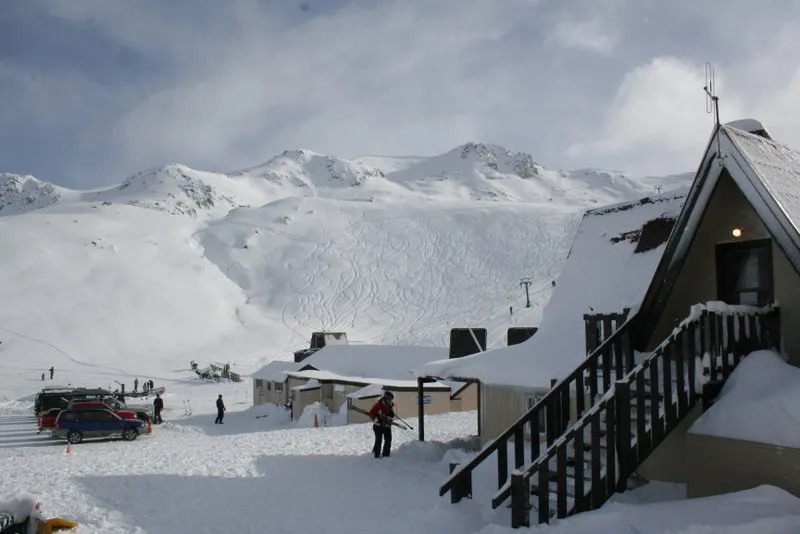
The main commercial ski areas typically target opening from around mid-June, snow permitting, and run into early October. Snowmaking now lets some open early: in 2026, Coronet Peak’s new snow factory opened limited beginner terrain on 29 May, with its full season targeted from 12 June. But natural snow is never guaranteed. In June 2026, mild weather delayed Mt Hutt, The Remarkables and Cardrona, which were due to open on 27 June after fresh snow. Check each ski area’s website before you book lift passes.
Matariki: The Māori New Year
Matariki is marked by the rising of the Matariki star cluster (the Pleiades) in the pre-dawn sky in mid-winter. It has been a public holiday since 2022 and always falls on a Friday. In 2027, it’s Friday 25 June, giving a long weekend from 25 to 27 June. Events run around the country, and the clear, dark winter skies at places like Lake Tekapo are ideal for stargazing. The date moves each year (10 July in 2026, 14 July in 2028), so don’t assume it falls in June.
The Sun: June UV in New Zealand
UV levels are at their lowest of the year in June, and across much of the country the UV Index often stays below 3, so sun protection isn’t always needed. But snow reflects UV and altitude intensifies it, so ski days still call for sunscreen and sunglasses or goggles. SunSmart recommends sun protection whenever the UV Index reaches 3 or above. Check the daily Sun Protection Alert on MetService, or the free UVNZ app.
Daylight in June
June has the shortest days of the year, around the winter solstice on 21–22 June. Sunrise is between about 7:30am and 8:15am, and sunset between about 4:45pm and 5pm, so you get roughly nine hours of daylight, a little less in the deep south. Plan your driving so that you arrive before dark, especially on mountain roads where frost and ice form early. The upside is the sky: long, dark, often clear nights make June a great month for stargazing.
What to Pack for New Zealand in June
June means proper winter gear, especially for the South Island and ski days. Pack for three layers, and make each one a good one.
- Base layer: thermal or merino tops and leggings.
- Warm layer: a fleece or down jacket, plus a beanie, gloves and warm socks. Nights in Tekapo, Mount Cook, Queenstown and Invercargill average from −2°C to 1°C, with hard frost common.
- Rain layer: a waterproof, windproof jacket, essential for the North Island, the West Coast, Fiordland, Stewart Island and Wellington’s wind.
Add waterproof boots with good grip, sunglasses, lip balm and moisturiser. For ski days, add goggles, waterproof gloves and sunscreen, or hire gear in resort. For a longer checklist, see our must-have list before your New Zealand vacation.
How to Plan Your Trip Around June Weather
- Play to June’s strengths. Hot pools, geothermal parks, wine, food, museums, wildlife and skiing are all excellent in cold weather.
- Pair every outdoor plan with a backup. In Rotorua it’s a geothermal park or hot pools. In Queenstown it’s a winery or a scenic flight. Anywhere, a museum works.
- Be flexible with scenic flights and cruises. Fog, low cloud and wind cause cancellations. Schedule them early in your stay, with a spare day behind.
- Don’t plan on beaches or high alpine walks. Great Walks season has ended, so check the Department of Conservation website before planning a multi-day walk.
- Check forecasts daily on MetService, and road closures on NZTA’s Journeys site.
- Drive in daylight. With sunset around 5pm, aim to arrive by mid-afternoon.
- Check that seasonal operators are running. Some cruises, tours and attractions close or cut timetables for winter.
Winter Driving in June
May to September is the winter driving season on the Milford Road (SH94), and similar conditions apply on Arthur’s Pass, the Crown Range, the Lindis Pass and other alpine roads.
- Carry snow chains when signs say so. Chains can be hired in Te Anau and Queenstown; practise fitting them before you set off.
- Expect frost and black ice in shaded corners, especially in the morning, even when the sun is out.
- Respect avalanche zones. The Milford Road between the Hollyford Road junction and The Chasm is a no-stopping zone.
- Check your rental agreement for road and chain restrictions.
- Check conditions every morning on NZTA’s Journeys site. If you’re not confident, take a coach.
Severe Weather: Take the Warnings Seriously
June can swing from record warmth to snow in days. In June 2026, flooding closed roads in Tasman and the West Coast on 1–2 June, a local state of emergency was declared on Wellington’s south coast on 9 June, a gust of 183 km/h hit Cape Turnagain on the 20th, and snow shut alpine roads on the 25th and 26th.
- Subscribe to MetService warnings and follow local Civil Defence updates.
- If you’re told to evacuate or move, go straight away.
- Don’t drive through floodwater, fords or washed-out roads.
- Take fog, frost and ice seriously on mountain and rural roads.
- Make sure your travel insurance covers weather disruption. See our travel insurance guide and health and safety page.
Crowds, Prices and Booking in June
June is generally quiet and good value, with two long weekends and the start of ski season to plan around. In 2027, King’s Birthday is Monday 7 June (a long weekend from 5 to 7 June) and Matariki is Friday 25 June (25 to 27 June), so expect busier roads, flights and accommodation on those weekends. The Term 2 school holidays start on Saturday 3 July. Queenstown, Wānaka and Ruapehu get busier and pricier once the ski fields open, so book accommodation and rental cars early. Elsewhere, you’ll often have attractions, hot pools and wineries to yourself.
The trade-offs are that some seasonal cruises, tours and cafés scale back or close, the Great Walks season is over, and alpine roads need care. If your trip is built around a particular activity, check that it’s operating on your dates. School holiday dates come from the Ministry of Education, and public holidays from Employment New Zealand.
Our guides to visiting New Zealand in June, May and July will help you compare, and our best time to visit page covers the whole year. For general background, see our weather and climate overview.
Frequently Asked Questions About New Zealand Weather in June
What is the typical weather like in New Zealand in June?
Cold, early-winter weather with short days. Most places reach 9–16°C (48–61°F) by day (Auckland 16°C, Wellington 12°C, Christchurch 12°C, Queenstown 9°C), with nights between about −2°C in the high country and 9°C in Auckland. The north and west are wet, the east and Nelson drier and sunnier, and frosts are common inland.
Does it snow in New Zealand in June?
Yes, in the mountains. The Southern Alps, the central plateau and the high passes can see snow, and it occasionally falls to low levels in the south, as it did in Southland, Otago and Canterbury on 25 June 2026. Snow in Auckland, Wellington or Christchurch is rare.
Are the ski fields open in June?
Usually from mid-June, depending on snow. Coronet Peak targeted a full season from 12 June in 2026, but several areas delayed their openings until late June. Check each ski area’s website for current dates.
When is Matariki in 2027?
Friday 25 June 2027, giving a long weekend from 25 to 27 June. It’s a public holiday and always falls on a Friday, but the date changes each year.
Can I drive the Milford Road in June?
Usually yes, but winter conditions apply. Carry chains when signs say so, check NZTA Journeys before you leave, and expect ice in shaded areas and occasional avalanche closures. If you’re not confident, take a coach.
Does it rain a lot in New Zealand in June?
It depends where you are. Christchurch gets about 71 mm and Lake Tekapo about 52 mm, while Milford Sound averages about 440 mm and Franz Josef about 456 mm. The weather varies a lot from year to year: June 2026 was warm and very wet in Wellington, but dry in Dunedin and Christchurch.
Is June a good time to visit New Zealand?
Yes, if you want hot pools, wine, wildlife, cities, Matariki events and the start of the ski season, with fewer visitors than summer. It’s not the best month for beaches or high-country hiking, and you’ll need warm layers. Some seasonal operators scale back, so check that what you want to do is running.
Plan Your June Trip With Us
Want a New Zealand June trip that’s built around the weather, with the right regions on the right days and backup options already in place? Browse our New Zealand tours, explore our flexible self-drive itineraries, or request a custom itinerary.