

New Zealand Weather in September: What It’s Really Like, Region by Region
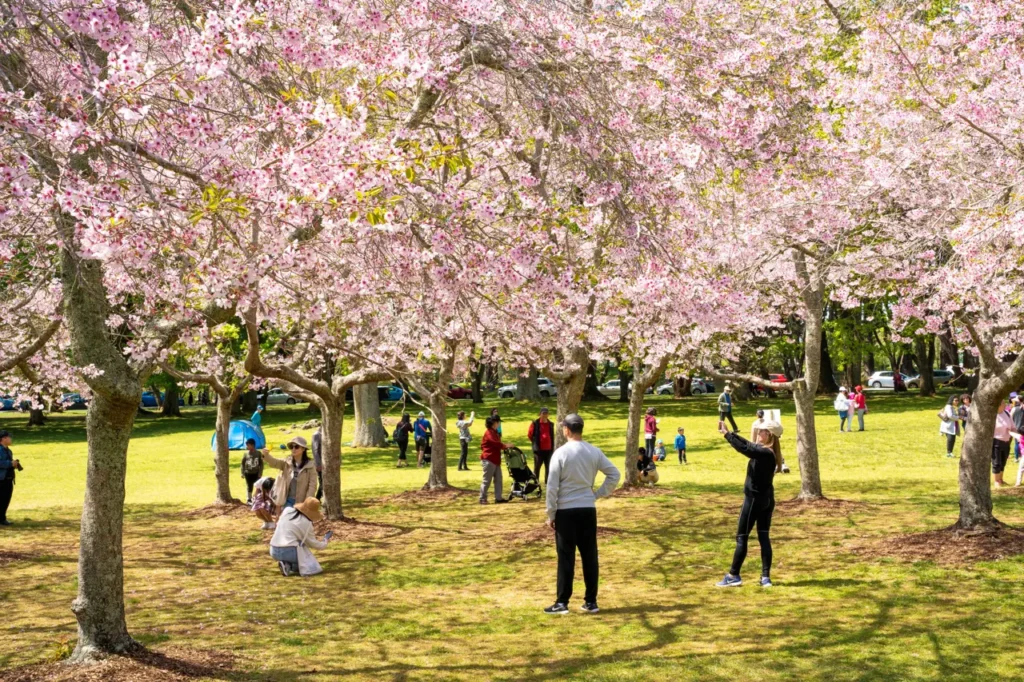
New Zealand weather in September is early spring, and it’s a month of contrasts. The days are getting longer and noticeably warmer, the ski fields are in their last weeks, and the clocks jump forward on the last Sunday of the month. But it’s also one of the windiest months of the year, with cold snaps, late snow on the mountain roads and a big difference between the sunny east and the soaked west. Highs range from about 12°C (54°F) in the mountains to 17°C (62°F) in the north, and in September 2025 the same month brought a 26°C (79°F) day to Hawke’s Bay and a −6.5°C (20°F) frost at Lake Pūkaki. In 2027 there’s one more thing to plan around: the Term 3 school holidays start on Saturday 25 September.
Most guides to New Zealand weather in September give you a few averages and stop. We’ll give you the averages too, for 18 places, but also what September has actually thrown at the country in recent years, so you can plan a trip that holds up when the forecast changes.
The quick answer: In short, New Zealand weather in September is a matter of where you are. Most of New Zealand sits between 12°C and 17°C (54–62°F) by day in September, with nights from about 1°C (Lake Tekapo) to 10°C (Auckland). It’s 1–3°C warmer than August, sunnier, and drier in the north and east, while the West Coast and Fiordland are still very wet. Expect wind, changeable days and cold mornings. Snow can still close alpine roads, UV is already strong enough to burn, and daylight saving starts on 26 September 2027.
In this guide
- September Weather in New Zealand by Place: The Numbers
- Averages Lie: What September Actually Looks Like
- North Island Weather in September, Region by Region
- South Island Weather in September, Region by Region
- Snow and the End of the Ski Season
- The Sun: September UV in New Zealand
- Daylight and Clocks in September
- What to Pack for New Zealand in September
- How to Plan Your Trip Around September Weather
- Severe Weather: Take the Warnings Seriously
- Crowds, Prices and Booking in September
- Frequently Asked Questions About New Zealand Weather in September
September Weather in New Zealand by Place: The Numbers
Here are the long-term September averages for the places most visitors actually go. They show what New Zealand weather in September looks like on paper, before any one year gets in the way. Rain days are days with at least 1 mm of rain. For scale, 25 mm is about an inch.
| Place | Avg high / low | Rain | Rain days | Sunshine (hours) |
|---|---|---|---|---|
| Bay of Islands (Kerikeri) | 17°C / 8°C (63°F / 47°F) | 159 mm | 14 | – |
| Auckland | 17°C / 10°C (62°F / 49°F) | 100 mm | 12 | 174 |
| Tauranga | 17°C / 8°C (62°F / 47°F) | 87 mm | 11 | 178 |
| Rotorua | 15°C / 6°C (58°F / 42°F) | 107 mm | 11 | – |
| Taupō | 14°C / 5°C (57°F / 40°F) | 79 mm | 11 | – |
| Napier | 17°C / 7°C (62°F / 44°F) | 58 mm | 7 | 189 |
| Wellington | 14°C / 8°C (56°F / 47°F) | 108 mm | 12 | 164 |
| Nelson | 15°C / 6°C (59°F / 43°F) | 85 mm | 10 | 193 |
| Christchurch | 16°C / 5°C (61°F / 41°F) | 40 mm | 6 | 169 |
| Lake Tekapo | 12°C / 1°C (54°F / 34°F) | 34 mm | 7 | 210 |
| Aoraki / Mount Cook | 12°C / 2°C (53°F / 35°F) | 361 mm | 15 | 121 |
| Queenstown | 14°C / 4°C (57°F / 39°F) | 81 mm | 9 | 151 |
| Dunedin | 13°C / 6°C (56°F / 42°F) | 47 mm | 8 | 147 |
| Invercargill | 13°C / 4°C (56°F / 38°F) | 90 mm | 14 | 151 |
| Stewart Island (Oban) | 13°C / 5°C (55°F / 41°F) | 123 mm | 16 | – |
| Milford Sound | 13°C / 4°C (56°F / 39°F) | 541 mm | 17 | – |
| Franz Josef | 14°C / 5°C (57°F / 41°F) | 520 mm | 17 | 91 |
| Greymouth | 14°C / 7°C (57°F / 44°F) | 202 mm | 17 | 143 |
Sources: Current Results (https://www.currentresults.com/Weather/New-Zealand/temperature-september.php), using Earth Sciences New Zealand national climate database data for 1991–2020. Rainfall and sunshine figures are from Current Results’ September rainfall (https://www.currentresults.com/Weather/New-Zealand/precipitation-september.php) and September sunshine (https://www.currentresults.com/Weather/New-Zealand/sunshine-average-september.php) tables.
The Southern Alps still divide the country. Lake Tekapo gets just 34 mm of rain in an average September and Christchurch 40 mm, while Milford Sound collects 541 mm and Franz Josef 520 mm. And the north-south gap is still wide: an average September night in Auckland (10°C) is nine degrees warmer than one at Lake Tekapo (1°C).
How September Compares With August
If you’ve read our August guide, here’s what changes:
- Days are 1–3°C warmer. Auckland’s high rises from 15°C to 17°C, Christchurch’s from 13°C to 16°C, Queenstown’s from 11°C to 14°C and Lake Tekapo’s from 9°C to 12°C.
- Frosts ease, but don’t disappear. Lake Tekapo’s average low rises from −1°C to 1°C and Queenstown’s from 2°C to 4°C, but frost is still common on clear nights in the south.
- The north and east get drier, the west gets wetter. Auckland falls from 117 mm to 100 mm, Wellington from 139 mm to 108 mm and Kerikeri from 186 mm to 159 mm. Milford Sound rises from 457 mm to 541 mm, Franz Josef from 427 mm to 520 mm and Aoraki / Mount Cook from 284 mm to 361 mm.
- It’s sunnier. Auckland gains about 22 hours of sun (152 to 174), Queenstown gains 31 (120 to 151) and Lake Tekapo gains 26 (184 to 210). Franz Josef is the exception, slipping from 104 to 91 hours.
Where Is the Weather Best in September?
If sunshine is your priority, the long-term numbers favour the top of the South Island and the east coast of the North Island:
- Lake Tekapo: 210 hours and only 34 mm of rain, the sunniest and driest place on the list, though nights are cold.
- Blenheim and Nelson: 199 and 193 hours, with 54–85 mm of rain.
- Napier and Gisborne: 189 hours each. Napier is also one of the driest in the North Island (58 mm).
- Akaroa, Tauranga and Auckland: 183, 178 and 174 hours.
The gloomiest places are Franz Josef (91 hours), Aoraki / Mount Cook (121 hours), Greymouth (143 hours), Dunedin (147 hours) and Queenstown and Invercargill (151 hours each). That doesn’t make them bad September destinations, but don’t expect every afternoon to be bright.
Averages Lie: What September Actually Looks Like
An average is a polite way of hiding the extremes. Look at five recent Septembers and you get a more honest picture.
September 2022: A fairly typical month, at 11.0°C nationally (the 19th-warmest September on record). It was wet in the eastern North Island and dry in the South Island, and the highest temperature was 24.2°C at Akaroa on the 29th.
September 2023: The warmest September on record, at 11.9°C, 1.3°C above average, with every region above or well above average. A spell of exceptionally high temperatures on 20–21 September took Timaru to 28.9°C, the fifth-highest September temperature ever recorded in New Zealand, and Oban on Stewart Island to 23.5°C, which is 6°C higher than its usual February afternoon. The second half of the month turned unsettled, with very strong westerly and north-westerly wind events.
September 2024: A warm, dry month for northern and eastern parts of both islands, at 11.2°C nationally. Frequent westerlies and the foehn effect (warm, dry wind descending from the mountains) boosted temperatures in the east, while the south-west was cool: Te Anau had its lowest September mean maximum on record, at 10.4°C.
September 2025: Warm, windy and damp, at 11.3°C (0.8°C above average, the 6th-warmest September on record). A strong westerly pattern split the country, with the west and south of the South Island very wet and the east dry. Cape Turnagain recorded a gust of 232 km/h on the 10th, Arthur’s Pass had 195 mm of rain in a day on the 17th, and Queenstown had 200 mm for the month (321% of normal). Meanwhile Hastings reached 26.4°C on the 28th, and Pūkaki fell to −6.5°C on the 11th.
September 2026: A mild month, at 11.0°C (0.4°C above average). By the end of September, a very strong El Niño was established in the tropical Pacific, and southwesterly winds were more frequent than normal. The month was dry for much of the North Island and the north of the South Island, and wet for most of the rest of the South Island and the southernmost North Island. It was warm in eastern and inland parts of the South Island south of Christchurch, western Tasman, southern Taranaki, Taupō, the western Bay of Plenty, the Coromandel, southern Northland and Kaipara. The highlights:
- Warmest: Whakatu in Hawke’s Bay reached 24.8°C on 27 September.
- Coldest: Pūkaki Aerodrome fell to −6.1°C on the 24th.
- Wettest: Mount Cook Village recorded 154 mm in one day on 3 September.
- Windiest: Cape Turnagain recorded a gust of 222 km/h on the 10th.
- Main centres: Tauranga was the warmest and driest of the six main centres, Christchurch was the coolest and sunniest, Wellington was the wettest and Hamilton was the least sunny.
For a fuller snapshot, here’s how the six main centres fared in September 2025:
| City | Mean temp | vs normal | Rainfall | % of normal | Sunshine (hours) |
|---|---|---|---|---|---|
| Auckland | 14.2°C | +1.2°C | 90 mm | 83% | 186 |
| Tauranga | 13.7°C | +1.2°C | 118 mm | 136% | 176* |
| Hamilton | 11.9°C | +0.5°C | 141 mm | 135% | 157 |
| Wellington | 11.5°C | +0.6°C | 103 mm | 95% | 197 |
| Christchurch | 10.2°C | +0.9°C | 32 mm | 76% | 247 |
| Dunedin | 10.5°C | +1.0°C | 46 mm | 98% | 194 |
*Missing one day of data.
Sources: Earth Sciences New Zealand, Climate Summary for September 2026, September 2025, September 2024, September 2023 and September 2022.
The national average only ranged from 11.0°C to 11.9°C across those five years, but the weather underneath was completely different: a record-warm spell with 29°C in Timaru, a wet, windy month on the west coast, or a cold, dry one in the south-west. September is the month when the weather has the most variety, so build some flexibility into your plan.
North Island Weather in September, Region by Region
Northland and the Bay of Islands
Northland is the warmest part of the country in September, with highs of 16–18°C (61–64°F) and nights of 8–11°C. Kerikeri averages about 159 mm over 14 rain days, so showers are still common, but the days are getting longer. In September 2025, Kaitaia, Kerikeri and Whitianga all recorded their warmest September on record, and in 2026 southern Northland was warmer than average in a month that was dry across much of the North Island. It’s a quiet, green and mild time to visit, but not beach weather. See Northland & Bay of Islands activities.
Auckland and Waiheke
Auckland is mild and fairly bright: 17°C by day, 10°C at night, about 100 mm of rain over 12 days and 174 hours of sun. Waiheke averages 17°C by day and 9°C at night. Showers are still frequent, so keep a light waterproof handy. After daylight saving begins on 26 September, evenings will be lighter again. Rainy-day options are in Auckland activities.
Coromandel and Bay of Plenty
The Bay of Plenty is one of the sunniest and driest parts of the North Island, with Tauranga averaging 178 hours of sun and 87 mm of rain, and highs of 17°C. The Coromandel is wetter (Whitianga averages 165 mm) and slightly cooler at night (8°C). Westerly winds can be strong: on 14 September 2025, about 13,500 customers lost power in the Coromandel and western Bay of Plenty after trees and powerlines came down. In September 2026, Tauranga was the warmest and driest of the six main centres. See Coromandel activities and Bay of Plenty activities.
Rotorua, Taupō and the Central Plateau
Inland, it’s still cool: Rotorua averages 15°C by day and 6°C at night, and Taupō 14°C and 5°C. Geothermal parks, Māori cultural evenings and hot pools are as good as ever on a cold morning. On the volcanoes, Whakapapa Village averages 9°C by day and 1°C at night, with 283 mm of rain over 17 days, so expect snow on the tops. Ruapehu’s ski fields can run into October, but dates depend on the snow, so check before you go. The Department of Conservation still treats the Tongariro Alpine Crossing as a winter route until the end of October, so ice axe and crampons skills are required, or a guide. Browse Rotorua, Taupō and Ruapehu.
Gisborne and Hawke’s Bay
This is the driest and sunniest part of the North Island. Napier and Gisborne both average about 189 hours of sun, with highs of 17°C, nights of 7°C, and only 58–71 mm of rain. Foehn winds can send temperatures soaring: Hastings reached 26.4°C on 28 September 2025, and Whakatu hit 24.8°C on 27 September 2026. Nights are cool, though, and frosts are possible inland. It’s a good month for winery visits, cycling and cafés, and it’s quiet before the summer crowds arrive. See our North Island itinerary for how it fits into a longer trip.
Wellington and the Wairarapa
Wellington is cool, bright and famously windy: 14°C by day, 8°C at night, about 108 mm of rain over 12 days and 164 hours of sun. Spring southerlies and north-westerlies are at their strongest, so a proper windproof layer matters. On 5 September 2025, strong winds closed the Remutaka Hill road and cancelled, delayed or diverted flights at Wellington Airport. In September 2026, Wellington was the wettest of the six main centres. The Wairarapa is drier (Masterton averages 73 mm) and warmer by day at 16°C. Allow slack around the Cook Strait ferry and flights. See Wellington & Wairarapa.
South Island Weather in September, Region by Region
Nelson, Abel Tasman and Marlborough
This is still the sunniest corner of the South Island. Nelson averages about 193 hours of sun and Blenheim 199, with highs of 15–16°C and low rainfall (Blenheim 54 mm). Nights are cool at 6°C, so mornings need a jacket. The Abel Tasman Great Walk season starts on 1 October, so late September is a good time for day walks and water taxis before the crowds arrive. In September 2026, the north of the South Island was drier than normal, and western Tasman was warmer than average. See Nelson Tasman and Marlborough.
Kaikōura, Christchurch and Canterbury
Christchurch is mild, dry and sunny: 16°C by day, 5°C at night, only about 40 mm of rain over 6 days and 169 hours of sun. In September 2025 the city had 247 hours of sun, and in September 2026 it was the coolest and sunniest of the six main centres. Kaikōura averages 14°C and 7°C, and Akaroa 15°C and 7°C. The catch is wind: strong north-westerlies and foehn gales are common in the east, and on 21 September 2025 fallen trees cut power across Canterbury and the TranzAlpine train was cancelled. Arthur’s Pass is much colder and wetter, averaging 10°C by day, 1°C at night and 453 mm of rain over 17 days. See Christchurch & Canterbury and Kaikōura & Hanmer Springs.
Lake Tekapo and Aoraki / Mount Cook
Tekapo is the sunniest place on our list: 12°C by day, 1°C at night, 210 hours of sun and only 34 mm of rain. Frosts are still common: Pūkaki fell to −6.5°C on 11 September 2025 and −6.1°C on 24 September 2026. The nights are still long and clear, so stargazing is excellent. Mount Cook Village, an hour up the road, is a different world: about 361 mm of rain over 15 days, and it recorded 154 mm in a single day on 3 September 2026. Book flights and boat trips for your first day and keep a spare. See Mt Cook & Mackenzie.
Queenstown, Wānaka and Central Otago
Queenstown averages 14°C by day and 4°C at night, with about 81 mm of rain and 151 hours of sun. September is a shoulder month: the ski fields (Coronet Peak, The Remarkables, Cardrona and Treble Cone) are in their final weeks, while lake cruises, wineries and walks start to get easier. The weather can still swing from sunny to stormy in a day. In September 2025, Queenstown had 200 mm of rain (321% of normal) and a blocked culvert flooded the One Mile roundabout on the 17th, while Middlemarch had only 12 mm. See Queenstown and Wānaka.
Dunedin, Southland and Stewart Island
The deep south is cool, breezy and changeable. Dunedin averages 13°C by day and 6°C at night, with only about 47 mm of rain and 147 hours of sun. Invercargill is 13°C and 4°C, with rain on about 14 days. Oban on Stewart Island is 13°C with rain on about 16 days, though it can surprise: it hit 23.5°C on 20 September 2023. Bring a windproof layer and warm hat. Wildlife viewing continues in any weather. See Dunedin & Otago, Southland and Stewart Island.
Fiordland: Milford Sound and Te Anau
Milford Sound averages about 541 mm in September over 17 rain days, with highs of just 13°C. Rain turns the cliffs into hundreds of temporary waterfalls, and that is when the fiord is at its most dramatic. But snow and avalanche risk can still close the Milford Road: it was closed overnight on 9–10 September 2025, so carry chains, leave plenty of time and check NZTA Journeys before you set off. Manapouri, near Te Anau, is much drier (106 mm), though in September 2025 it still received 852 mm at the West Arm Jetty. The Great Walks on the Milford and Routeburn tracks haven’t started yet, as their seasons begin in late October or November. See Fiordland.
West Coast and the Glaciers
Franz Josef averages about 520 mm of rain in September, with just 91 hours of sun, and Greymouth gets 202 mm. Highs are 14°C and nights 5–7°C. As always, give yourself two nights at the glaciers, not one, so a rained-off helicopter flight can move to the next morning. In September 2025, the West Coast was one of the wettest regions, and SH6 between Haast and Makarora was closed by surface flooding on the 17th. See West Coast.
Snow and the End of the Ski Season
September is the last month of the ski season, and for many people it’s the best: longer days, spring sunshine and a deep base. Most commercial ski areas close between late September and mid-October, and the exact dates depend on the snow, so check each resort’s website before you book. Some key points:
- Snow is still falling. Late-season storms can bring heavy snow to the mountains and, occasionally, to the roads. In September 2025, the Milford Road was closed overnight for snow and avalanche risk, and SH73 between Otira and Arthur’s Pass was closed on the 10th.
- Conditions change quickly. Mornings can be firm and icy, and afternoons soft and slushy, so goggles, sunscreen and layers matter.
- Roads need care. Carry chains on alpine roads such as the Crown Range, Lindis Pass and Arthur’s Pass, and check NZTA Journeys for closures.
- There’s a school-holiday rush at the end of the month. The Term 3 holidays begin on 25 September 2027, so book ski passes, lessons and accommodation early.
If skiing is your main reason for visiting, our July and August guides cover the main season.
The Sun: September UV in New Zealand
UV rises quickly through spring. In winter the UV Index is low, but by September the sun is higher in the sky, and on a clear day the noon UV Index in the south is typically around 4, rising to about 6.5 in the north, which is high enough to burn. It’s a classic spring trap: the air feels cool, there’s a sharp breeze, and you don’t realise how strong the sun is, especially on snow and water.
The Antarctic ozone hole also reaches its greatest extent in September and October. It stays over Antarctica, but in spring pockets of ozone-depleted air can drift over New Zealand. On 24 September 2023, a low-ozone event pushed the forecast noon UV Index in the north to as high as 8, compared with the usual value of around 6.5. That’s not extreme by New Zealand summer standards, but it’s very high.
- SunSmart’s guidance is that sun protection is needed from September through to early April.
- Use SPF 30+ and reapply every two hours (the Cancer Society’s advice).
- Wear a hat and sunglasses, especially on the water or on snow, where glare is intense.
- Don’t skip it on cloudy days. Cloud blocks far less UV than you’d think.
- Check the daily Sun Protection Alert on MetService, or the free UVNZ app.
Daylight and Clocks in September
Daylight saving begins on Sunday 26 September 2027. At 2am the clocks go forward to 3am, giving you an extra hour of evening light but costing you an hour’s sleep. Before the change, sunset is roughly 6pm to 6:20pm; afterwards it jumps to after 7pm. The spring equinox falls around 23 September, when day and night are about equal at 12 hours each, and from there the days lengthen quickly. Sunrise moves later by an hour after the change, so early starts, such as for sunrise hikes, scenic flights and ferry crossings, will be darker for a week or two.
The sea is still cold in September, especially in the south, so most people stick to hot pools rather than beaches. In September 2026, sea surface temperatures were near or above average around most of New Zealand, with the exception of the east of the North Island, where they were cooler than normal.
What to Pack for New Zealand in September
September is a layers month, with a bit of everything. Pack for three layers, and add sun protection.
- Base layer: merino or quick-dry tops, and long sleeves. They’re comfortable when it’s cold in the morning and warm by the afternoon.
- Warm layer: a fleece or light insulated jacket, plus a beanie and light gloves for the South Island, Tongariro and early mornings. Nights in Tekapo, Mount Cook, Queenstown and Invercargill average 1–4°C.
- Rain and wind layer: a waterproof, windproof jacket. September is breezy, and the west and south are very wet, so this matters.
Add sturdy shoes, sunglasses, a hat, SPF 30+ sunscreen and lip balm. If you’re skiing, add goggles and ski-appropriate gloves. For a longer checklist, see our must-have list before your New Zealand vacation.
How to Plan Your Trip Around September Weather
- Be ready for wind. September is one of the windiest months, so check forecasts for scenic flights, ferries, cruises and exposed walks, and keep a flexible day.
- Put weather-dependent activities early. Scenic flights, glacier helicopters, Milford Sound cruises and the Tongariro Alpine Crossing are the ones most likely to be cancelled. Schedule them on your first day in a region, with a spare day behind.
- Pair every outdoor plan with a backup. In Rotorua it’s a geothermal park or hot pools. In Queenstown it’s a winery or a scenic flight. Anywhere, a museum works.
- Plan the east and the west differently. The east (Christchurch, Tekapo, Nelson, Napier) is typically sunny and dry, while the West Coast and Fiordland are wet. If the forecast is poor in one, swap the order of your itinerary.
- Check alpine roads every morning. Snow and ice can close passes at short notice. Use NZTA’s Journeys site and carry chains where signs indicate.
- Use MetService for forecasts and warnings. MetService is the main source for forecasts, rain radar, mountain forecasts and severe weather warnings.
- Don’t over-pack the itinerary. Our South Island and North Island itineraries are built with slack for this reason.
Prefer someone else to handle the logistics and the rebooking? Browse our self-drive tours, such as the 9 Day South Island Self Drive Tour, or our small group tours.
Severe Weather: Take the Warnings Seriously
Early spring is a windy, unsettled time. Earth Sciences New Zealand describes very strong westerly and north-westerly wind events as a hallmark of early spring weather in New Zealand. Gusts of 222–232 km/h were recorded at Cape Turnagain in both September 2025 and September 2026. In September 2025, strong winds closed the Remutaka Hill road and disrupted flights at Wellington, cut power to thousands of customers in the Coromandel, western Bay of Plenty and Canterbury, and rolled a truck near Ashburton. Heavy rain flooded roads in Queenstown and closed SH6 near Haast, and snow closed the Milford Road and SH73.
- Subscribe to MetService warnings and follow local Civil Defence updates.
- If you’re told to evacuate or move, go straight away.
- Don’t drive through floodwater, fords or washed-out roads.
- Be careful on exposed roads and bridges in strong winds, particularly in a campervan or with a roof box.
- Take snow, ice and avalanche warnings seriously on alpine roads, and carry chains.
- Make sure your travel insurance covers weather disruption. See our travel insurance guide and health and safety page.
Crowds, Prices and Booking in September
September is shoulder season, and it’s often good value: the winter ski rush is over, the summer crowds haven’t arrived, and many accommodation providers and tour operators have lower rates. Most activities are running, and the weather is improving.
The main exception is the end of the month. In 2027, the Term 3 school holidays run from Saturday 25 September to Sunday 10 October, so expect a busy domestic travel period for the last week of September and the first week of October. Book ski passes, accommodation, rental cars and the Cook Strait ferry well in advance if you’re travelling on those dates.
A few other points to check:
- Ski fields typically close between late September and mid-October, and some run reduced terrain at the end of the season.
- Great Walks: the Abel Tasman Coast Track season starts on 1 October, but the Milford, Routeburn and Kepler tracks start later (in 2026, Kepler opened on 27 October and Milford and Routeburn on 1 November). Check the Department of Conservation website for the 2027 dates, and book early, as the Milford and Abel Tasman huts reached about 95% occupancy last summer.
- Seasonal operators such as some cruises and tours may be returning to full schedules, so confirm times before you book.
For more on New Zealand weather in September, our guides to visiting New Zealand in September, August and October will help you compare, and our best time to visit page covers the whole year. For general background, see our weather and climate overview.
Frequently Asked Questions About New Zealand Weather in September
What is New Zealand weather in September typically like?
Cool, changeable early-spring weather with a lot of wind. Most places reach 12–17°C (54–62°F) by day (Auckland 17°C, Christchurch 16°C, Wellington 14°C, Queenstown 14°C), with nights between about 1°C in the high country and 10°C in Auckland. The north and east are sunnier and drier, while the West Coast and Fiordland are very wet (Milford Sound averages about 541 mm). Warm spells can still push into the mid-20s, as in Hastings on 28 September 2025 (26.4°C), but frosts of −6°C happen in the Mackenzie Basin.
What type of clothing is essential for New Zealand’s North Island in September?
Layers. Pack T-shirts and light long sleeves, a fleece or light jacket for the mornings and evenings (Rotorua and Taupō drop to 5–6°C at night), and a proper waterproof and windproof layer, because showers and wind are frequent, particularly in Wellington. Long trousers are more practical than shorts, though you may use shorts on warm days in the north. Closed shoes for trails, a hat for the sun and sunglasses round it out.
Which travel agencies offer September tours to New Zealand with weather guarantees?
None can honestly guarantee New Zealand’s weather, and we’d be wary of any company that claims to. What you can look for is flexibility: itineraries with spare days, activities that can be rescheduled, clear rebooking and refund terms, and travel insurance that covers weather disruption. Always ask what happens if a helicopter flight, cruise or ferry is cancelled for weather. Read our booking terms before you pay, and browse our self-drive tours or small group tours.
Best lightweight waterproof jacket for spring travel in New Zealand?
There’s no single best jacket, because it depends on where you’re going. Look for a waterproof-breathable shell with taped seams, an adjustable hood, underarm zips for ventilation and a design that packs into its own pocket or a small bag. In September, a windproof shell you can wear over a fleece is more useful than a thin summer rain jacket. For Milford Sound, the West Coast, Stewart Island or any alpine area, choose a sturdier hooded jacket. Outdoor shops in every major city stock a wide range if you’d rather buy on arrival.
Best clothing brands for New Zealand September weather?
Fabric matters more than brand. Look for merino wool (New Zealand is famous for it) for base layers, a fleece or lightweight down mid-layer, and a waterproof, windproof shell. If you want to shop locally, New Zealand-founded outdoor retailers like Kathmandu and Macpac, and merino brands like Icebreaker, are easy to find in the main cities. That’s handy if you forget something or need a warmer layer for the South Island.
Where to find suitable hiking shoes for varied terrain in New Zealand in September?
Ideally buy them before you travel and wear them in. If not, outdoor stores in Auckland, Wellington, Christchurch and Queenstown stock trail shoes and boots. In September, waterproof boots with good grip and ankle support are worth it, as tracks are wetter, colder and often muddy or icy. For high routes such as the Tongariro Alpine Crossing, the winter route standard applies until the end of October: you’ll need boots suited to crampons, plus an ice axe, or a guided trip with the equipment provided. Browse our walking and hiking activities.
Are there any weather apps that specialize in New Zealand’s climate during September?
No app is September-specific, but a few are New Zealand-specific and worth installing. MetService is the main source for forecasts, rain radar, mountain forecasts and severe weather warnings. The free UVNZ app, endorsed by the Cancer Society, gives daily UV advice. NZTA Journeys shows road closures and chain requirements, and DOC’s website lists track alerts. Many travellers also use Windy for wind and rain maps.
How to compare prices for flights to Auckland arriving in September?
September is shoulder season, so fares and accommodation are often lower than in peak summer, but they can rise around the Term 3 school holidays (25 September to 10 October in 2027). Use a fare comparison tool to check several dates, and compare prices a day or two either side, since fares can shift a lot. Consider flying into Auckland and out of Christchurch or Queenstown (an “open-jaw” ticket) to avoid backtracking. From the US you cross the International Date Line, so you’ll lose a calendar day and usually arrive two days after you leave. See our guide to the best way to get to New Zealand.
How do weather conditions in New Zealand in September affect outdoor adventure gear choices?
Cool nights, wind and rain mean spring-layer gear. Take a fleece, beanie and light gloves for the South Island and the volcanic plateau, where nights fall to 1–5°C and frost is likely, plus a waterproof, windproof shell and a dry bag or pack cover. Sun protection matters more than people expect, so add a hat, sunglasses and sunscreen. For skiing, add goggles and waterproof gloves. For Abel Tasman and kayaking, quick-dry layers and a spray jacket are better than summer kit.
What kind of sun protection factor is recommended for New Zealand’s sun in September?
The Cancer Society recommends at least SPF 30, reapplied every two hours, and many people choose SPF 50+ broad-spectrum, water-resistant sunscreen. UV rises rapidly in spring, with the typical noon UV Index around 4 in the south and 6.5 in the north, and snow and water reflect it. SunSmart recommends sun protection from September, and whenever the UV Index is 3 or above. Add a hat, sunglasses and covering clothing around the middle of the day.
Where can I book flights from the US to New Zealand for September with flexible weather cancellation policies?
Most airlines only offer refunds or free rebooking if the airline cancels, not because of bad weather at your destination. For flexibility, look at flexible or refundable fares, check the airline’s current change and cancellation rules before you book, and buy travel insurance that covers weather disruption. For maximum flexibility, some insurers offer cancel-for-any-reason upgrades. We can’t verify any airline’s current policy, so always check the terms directly.
Are there specific insect repellents effective against New Zealand spring bugs?
Repellents containing DEET or picaridin are widely recommended and available at New Zealand pharmacies and supermarkets. Sandflies are the main nuisance, especially on the West Coast and in Fiordland, though they’re usually much less active in cool weather and increase as it warms up. Their bites are itchy but sandflies in New Zealand aren’t known to spread disease. Apply sunscreen first and repellent on top, and cover up with light long sleeves if you’re in a damp, shady spot.
Is September a good time to visit New Zealand?
Yes, if you like fewer crowds, good value, spring light and the chance of a late ski day. The days are getting longer, it’s sunnier than winter, and the east and north are often lovely. The trade-offs are wind, cool nights, changeable weather and the chance of late snow on alpine roads. In 2027, the school holidays start on 25 September, so book early for the last week of the month.
Does it rain a lot in New Zealand in September?
It depends where you are. Christchurch gets about 40 mm and Lake Tekapo about 34 mm, while Milford Sound averages about 541 mm and Franz Josef about 520 mm. The north and east are drier than in August, and the west and south-west are wetter. Spring weather can vary a lot: in September 2025 Queenstown had more than three times its normal rain, while in 2024 much of the north and east was dry.
Is it windy in New Zealand in September?
Yes. Early spring is one of the windiest times of the year, with strong westerlies and north-westerlies and frequent cold fronts. Cape Turnagain recorded gusts of 232 km/h in September 2025 and 222 km/h in September 2026, though those are exposed coastal sites. Wellington, Canterbury and the Southern Alps are the places where wind most often disrupts flights, ferries, roads and scenic activities.
Are the ski fields open in September?
Many are, but it’s the last month of the season. Most commercial ski areas close between late September and mid-October, depending on snow, and some run reduced terrain late in the season. Check each ski field’s website for current dates and conditions. The end-of-season school holidays (25 September to 10 October in 2027) can be busy.
Does it snow in New Zealand in September?
Yes, in the mountains, and occasionally on alpine roads. In September 2025, snow and avalanche risk closed the Milford Road overnight on 9–10 September, and SH73 between Otira and Arthur’s Pass was closed on the 10th. Snow at sea level is rare in September. Carry chains on alpine roads, and check NZTA Journeys before you set off.
Is the Tongariro Alpine Crossing open in September?
The track is usually open, but the Department of Conservation treats it as a winter route until the end of October. That means snow and ice are likely, and you’ll need crampons, an ice axe and the skills to use them, or a guided trip with the equipment provided. Always check the DOC website and forecast before you go.
When does daylight saving start in New Zealand?
On the last Sunday in September, which is 26 September in 2027. At 2am the clocks go forward one hour to 3am, so evenings are lighter but mornings are darker.
Is it worth visiting Milford Sound in the rain?
Yes. Rain creates dozens of temporary waterfalls down the cliffs, and many visitors rate it as the most dramatic way to see the fiord. Bring a proper rain jacket and warm layers, and check road and cruise conditions before you go.
Plan Your September Trip With Us
Want a trip that’s built around New Zealand weather in September, with the right regions on the right days and backup options already in place? Browse our New Zealand tours, explore our tours with flexible self-drive itineraries, or request a custom itinerary.