

New Zealand Weather in July: What It’s Really Like, Region by Region
New Zealand weather in July is the heart of winter: typically the coldest month of the year, with highs of about 7–16°C (45–61°F) and average night-time lows from −3°C (27°F) at Lake Tekapo to 8°C (46°F) in Auckland. Frost is routine across the South Island and the central North Island, snow builds on the mountains, and the ski season is in full swing. It’s also the winter school-holiday month. The weather can swing widely: July 2022 was the wettest July on record nationally, and July 2026 split the country, with a warm, record-wet South Island (Dunedin Airport received 445% of its normal rain) and a dry North Island, while Lake Tekapo fell to −13.5°C on the 12th.
The quick answer: Most places sit between 9°C and 16°C (48–61°F) by day in July, with 7°C at Lake Tekapo and Aoraki / Mount Cook, and nights from about −3°C (Lake Tekapo) to 8°C (Auckland). The north and west are the wettest, the east and Nelson are drier and sunnier, and hard frosts are normal inland. Days are slowly lengthening, but sunset is still around 5pm. It’s peak ski season and a quiet time for hot pools, wine, wildlife and cities, but not for beaches or high-country hiking. In 2027, the school holidays run from 3 to 18 July, so book early.
In this guide
- July Weather in New Zealand by Place: The Numbers
- Averages Lie: What July Actually Looks Like
- North Island Weather in July, Region by Region
- South Island Weather in July, Region by Region
- Skiing and Snow in July
- The Sun: July UV in New Zealand
- Daylight in July
- What to Pack for New Zealand in July
- How to Plan Your Trip Around July Weather
- Winter Driving in July
- Severe Weather: Take the Warnings Seriously
- Crowds, Prices and Booking in July
- Frequently Asked Questions About New Zealand Weather in July
- Plan Your July Trip With Us
July Weather in New Zealand by Place: The Numbers
Here are the long-term July averages for the places most visitors go. Rain days are days with at least 1 mm of rain. For scale, 25 mm is about an inch.
| Place | Avg high / low | Rain | Rain days | Sunshine (hours) |
|---|---|---|---|---|
| Bay of Islands (Kerikeri) | 15°C / 7°C (59°F / 45°F) | 227 mm | 16 | – |
| Auckland | 15°C / 8°C (58°F / 46°F) | 137 mm | 15 | 148 |
| Tauranga | 15°C / 6°C (58°F / 43°F) | 133 mm | 12 | 150 |
| Rotorua | 12°C / 4°C (54°F / 39°F) | 137 mm | 11 | – |
| Taupō | 11°C / 3°C (52°F / 37°F) | 100 mm | 11 | – |
| Napier | 14°C / 5°C (57°F / 41°F) | 97 mm | 9 | 144 |
| Wellington | 12°C / 7°C (53°F / 44°F) | 147 mm | 13 | 121 |
| Nelson | 13°C / 3°C (55°F / 37°F) | 79 mm | 8 | 160 |
| Christchurch | 12°C / 2°C (53°F / 35°F) | 64 mm | 8 | 128 |
| Lake Tekapo | 7°C / −3°C (44°F / 27°F) | 50 mm | 6 | 149 |
| Aoraki / Mount Cook | 7°C / −2°C (45°F / 28°F) | 289 mm | 13 | 80 |
| Queenstown | 9°C / 0°C (48°F / 32°F) | 73 mm | 8 | 85 |
| Dunedin | 10°C / 3°C (51°F / 37°F) | 52 mm | 8 | 115 |
| Invercargill | 10°C / 1°C (50°F / 33°F) | 73 mm | 13 | 98 |
| Stewart Island (Oban) | 10°C / 3°C (50°F / 37°F) | 131 mm | 17 | – |
| Milford Sound | 9°C / 2°C (49°F / 35°F) | 468 mm | 15 | – |
| Franz Josef | 12°C / 3°C (53°F / 38°F) | 318 mm | 13 | 94 |
| Greymouth | 12°C / 4°C (53°F / 40°F) | 197 mm | 14 | 114 |
Sources: Current Results (https://www.currentresults.com/Weather/New-Zealand/temperature-july.php), using Earth Sciences New Zealand data for 1991–2020, plus its July rainfall (https://www.currentresults.com/Weather/New-Zealand/precipitation-july.php) and July sunshine (https://www.currentresults.com/Weather/New-Zealand/sunshine-average-july.php) tables.
The Southern Alps still divide the country. Nelson, Christchurch, Dunedin and Lake Tekapo are relatively dry, while Milford Sound averages 468 mm of rain in July, more than seven times Christchurch’s total (64 mm). The average night in Auckland (8°C) is 11 degrees warmer than one at Lake Tekapo (−3°C).
How July Compares With June
If you’ve read our June guide, here’s what changes:
- Days are about the same, or 1°C cooler. Auckland’s high falls from 16°C to 15°C, while Wellington, Christchurch, Queenstown and Lake Tekapo stay at 12°C, 12°C, 9°C and 7°C.
- Nights are a degree colder. The average low at Lake Tekapo falls from −2°C to −3°C, at Aoraki / Mount Cook from −1°C to −2°C, at Queenstown from 1°C to 0°C and at Auckland from 9°C to 8°C.
- The North Island gets wetter and the West Coast drier. Auckland goes from 119 mm to 137 mm, Kerikeri from 198 mm to 227 mm, Napier from 79 mm to 97 mm and Wellington from 124 mm to 147 mm, while Franz Josef eases from 456 mm to 318 mm and Greymouth from 233 mm to 197 mm.
- Sunshine starts to return. Auckland rises from 128 to 148 hours, Wellington from 101 to 121, Queenstown from 69 to 85 and Dunedin from 96 to 115.
Where Is the Weather Best in July?
If sunshine is your priority, the long-term numbers favour the top of the South Island and the North Island’s east and north:
- Nelson and Blenheim: 160 hours each, with only 64–79 mm of rain.
- Tauranga and Auckland: 150 and 148 hours, though both are wetter (133 and 137 mm).
- Lake Tekapo: 149 hours and just 50 mm, but with highs of 7°C and nights down to −3°C.
- Napier: 144 hours and 97 mm, the driest of the main North Island places after Taupō’s 100 mm.
The gloomiest places are Aoraki / Mount Cook (80 hours), Queenstown (85), Franz Josef (94), Invercargill (98), Greymouth (114) and Dunedin (115). That’s under three hours of sun a day in Queenstown.
Averages Lie: What July Actually Looks Like
An average is a polite way of hiding the extremes. Look at five recent Julys and you get a more honest picture.
July 2022: The wettest July on record nationally, and the 4th-warmest (9.1°C, 1.3°C above the 1981–2010 average). A run of storms from 11 July gave 20 locations their wettest July ever, and Christchurch received 310 mm, its wettest month of any month on record. Aoraki / Mount Cook received 725 mm for the month and 371 mm in a day on the 18th, and Kerikeri 572 mm. Mount Cook Airport also fell to −11.6°C on the 17th.
July 2023: A warm one, at 9.1°C nationally (1.1°C above average, the 4th-warmest July). Dunedin had its warmest July on record, Wairoa reached 21.1°C on the 18th, and Cass in inland Canterbury fell to −9.1°C on the 7th. Akaroa received 199 mm of rain on the 22nd.
July 2024: Mild and dry for much of the country, at 9.0°C nationally (0.9°C above average, the 8th-warmest July). A large, slow-moving high brought a long fine spell and regular heavy frosts inland. From 1 to 14 July, Tūrangi’s mean minimum was −3.6°C, 5.2°C below its July average.
July 2025: A mild continuation of winter, at 9.2°C nationally (1.1°C above average, the 4th-warmest July). Nine locations had their warmest July on record, including Hokitika and the Chatham Islands, and Waipara West reached 22.7°C on 29 July.
July 2026: A month that split the country, at 8.9°C nationally (0.8°C above average, the 12th-warmest July):
- A frosty, settled start. High pressure brought clear weather and hard frosts, and Lake Tekapo fell to −13.5°C on 12 July, the coldest temperature in the country that month.
- A very wet week in the east. From 5 to 9 July a broad low delivered consecutive days of heavy rain. Dunedin Airport received 176 mm for the month (445% of normal, its wettest July on record), including 116 mm on the 5th, and Oamaru had 110 mm in a day. Local states of emergency were declared in Waitaki, Kaikōura and Wairoa.
- A warm South Island. Greymouth and Milford Sound had their warmest July on record, and Dunedin its second-warmest.
- A dry North Island. Rainfall was about half of normal in the three northernmost main centres, and Tūrangi received just 55 mm (36% of normal). It was a cool month in Taupō (1.1°C below average), and Auckland and Hamilton were 0.5°C and 0.6°C below average.
- Of the six main centres, Auckland was the warmest, Christchurch the coolest and driest, Tauranga the sunniest, Wellington the wettest and Dunedin the least sunny. The final week was cool, with a southerly flow.
The national average only ranged from 8.9°C to 9.2°C over those five years, but the weather inside those numbers went from the wettest July on record to frosts of −13.5°C. Sources: Earth Sciences New Zealand’s July 2026, July 2025, July 2024, July 2023 and July 2022 summaries.
North Island Weather in July, Region by Region
Northland and the Bay of Islands
Mild but wet: highs around 15–16°C and nights of 7–8°C, with Kerikeri averaging about 227 mm over 16 rain days. It’s green and quiet, and heavy rain can cut roads.
Auckland and Waiheke
Cool and damp: 15°C by day, 8°C at night, about 137 mm of rain over 15 days and 148 hours of sun. Museums, Waiheke wineries and food-led days work whatever the weather. Rainy-day options are in Auckland activities.
Coromandel and Bay of Plenty
Tauranga is one of the sunnier North Island spots, with 150 hours of sun and highs of 15°C. Whitianga is wetter (230 mm). A good month for hot pools and coastal walks, not for swimming.
Rotorua, Taupō and the Central Plateau
Rotorua averages 12°C by day and 4°C at night, Taupō 11°C and 3°C. Geothermal parks and hot pools are at their best in the cold. Whakapapa Village averages just 7°C by day and −1°C at night, with 280 mm of rain over 16 days, and the Tongariro Alpine Crossing is a winter route needing ice axe, crampons and the skills to use them, or a guide.
Gisborne and Hawke’s Bay
The driest and sunniest part of the North Island: Napier averages 14°C by day, 5°C at night, about 97 mm of rain and 144 hours of sun. Pleasant for wineries and cafés, with cold nights, but heavy rain can still flood the east, as it did in Wairoa in July 2026.
Wellington and the Wairarapa
Cool, wet and windy: 12°C by day, 7°C at night, about 147 mm of rain over 13 days and 121 hours of sun. A proper windproof layer is essential, and you should allow slack around the Cook Strait ferry and flights.
South Island Weather in July, Region by Region
Nelson, Abel Tasman and Marlborough
The sunniest corner of New Zealand: Nelson and Blenheim both average 160 hours of sun, with highs of 13°C and low rainfall (Blenheim 64 mm). Nights are cold at 3°C, with frosts inland.
Kaikōura, Christchurch and Canterbury
Christchurch is cold and fairly dry: 12°C by day, 2°C at night, about 64 mm of rain over 8 days and 128 hours of sun. Frosts are routine, though July can deliver a deluge, as in 2022. Arthur’s Pass is far colder and wetter, averaging 6°C by day, −2°C at night and 328 mm of rain over 13 days.
Lake Tekapo and Aoraki / Mount Cook
Tekapo is cold, dry and clear: 7°C by day, −3°C at night, with 149 hours of sun and about 50 mm of rain. It’s one of the coldest places in the country, and the long nights are ideal for stargazing. Mount Cook Village gets about 289 mm of rain and just 80 hours of sun.
Queenstown, Wānaka and Central Otago
Queenstown averages 9°C by day and 0°C at night, with about 73 mm of rain and 85 hours of sun. It’s the gateway to Coronet Peak, The Remarkables and Cardrona, and the Crown Range Road can need chains.
Dunedin, Southland and Stewart Island
Cool and cloudy. Dunedin averages 10°C by day, 3°C at night and 115 hours of sun, though July 2026 brought record flooding rain. Invercargill is 10°C by day and 1°C at night, with rain on about 13 days, and Oban on Stewart Island is 10°C with rain on about 17 days. Bring a windproof layer and warm hat.
Fiordland: Milford Sound and Te Anau
Milford Sound averages about 468 mm over 15 rain days, with highs of just 9°C. Rain turns the cliffs into hundreds of waterfalls, but the Milford Road can close for snow or avalanche risk. Manapouri, near Te Anau, is far drier (94 mm).
West Coast and the Glaciers
Franz Josef averages about 318 mm of rain with 94 hours of sun, and Greymouth gets 197 mm. Highs are 12°C. Give yourself two nights at the glaciers so a rained-off helicopter flight can move to the next morning.
Skiing and Snow in July
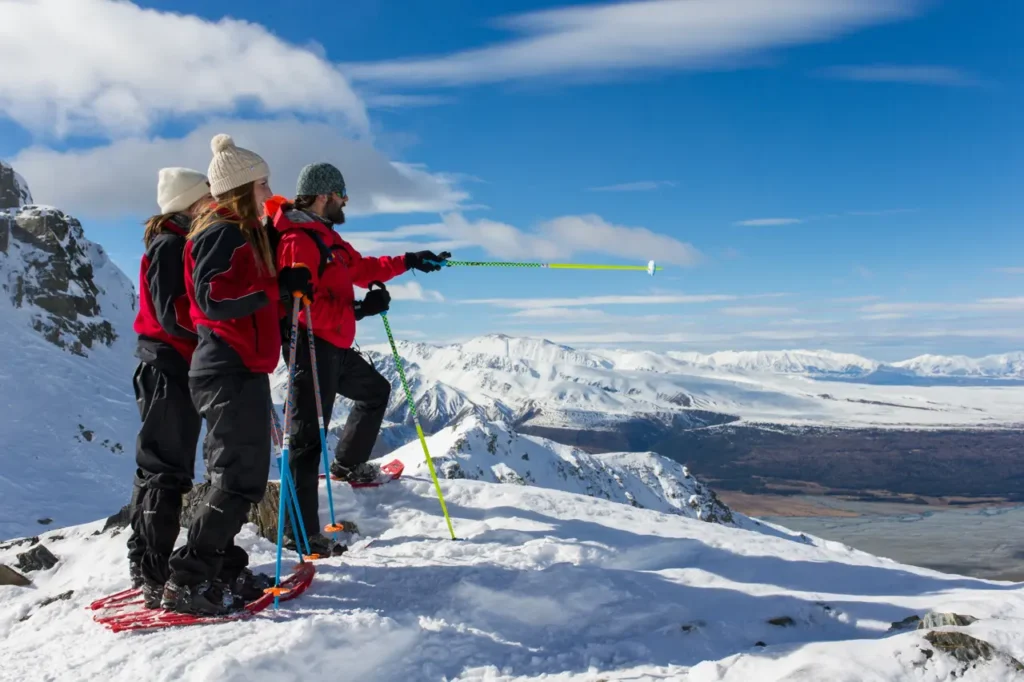
July is peak ski season: the main commercial ski areas are typically operating, and snow is at its most reliable. Weather can still close lifts, with wind, low cloud and heavy snow the usual causes. The 3 to 18 July school holidays are the busiest weeks, so book lift passes, lessons, gear hire and accommodation early, and check each ski area’s website for conditions before you drive up. If you’re not skiing, snowshoeing, hot pools and scenic drives are good alternatives.
The Sun: July UV in New Zealand
UV levels are very low in July, and across much of the country the UV Index often stays below 3, so sun protection isn’t always needed. But snow reflects UV and altitude intensifies it, so ski days still call for sunscreen and sunglasses or goggles. SunSmart recommends sun protection whenever the UV Index reaches 3 or above. Check the daily Sun Protection Alert on MetService, or the free UVNZ app.
Daylight in July
The days are still short, but they start lengthening from late June, and by the end of July you gain roughly 45 minutes to an hour of daylight compared with the winter solstice. Sunrise is between about 7:30am and 8:15am, and sunset between about 5pm and 5:20pm. Plan your driving so that you arrive before dark, especially on mountain roads where frost and ice form early. Long, dark, often clear nights make July a great month for stargazing at places such as Lake Tekapo and Aoraki / Mount Cook.
What to Pack for New Zealand in July
July means proper winter gear, especially for the South Island and ski days. Pack for three layers, and make each one a good one.
- Base layer: thermal or merino tops and leggings.
- Warm layer: a fleece or down jacket, plus a beanie, gloves and warm socks. Nights in Tekapo, Mount Cook, Queenstown and Invercargill average from −3°C to 1°C, with hard frost common.
- Rain layer: a waterproof, windproof jacket, essential for the North Island, the West Coast, Fiordland, Stewart Island and Wellington’s wind.
Add waterproof boots with good grip, sunglasses, lip balm and moisturiser. For ski days, add goggles, waterproof gloves and sunscreen, or hire gear in resort. For a longer checklist, see our must-have list before your New Zealand vacation.
How to Plan Your Trip Around July Weather
- Book early for the school holidays. Accommodation, rental cars, ski passes and flights get busy and expensive from 3 to 18 July 2027, especially in Queenstown, Wānaka and Ruapehu.
- Play to July’s strengths. Skiing, hot pools, geothermal parks, wine, food, museums and wildlife are all excellent in cold weather.
- Pair every outdoor plan with a backup. In Rotorua it’s a geothermal park or hot pools. In Queenstown it’s a winery or a scenic flight. Anywhere, a museum works.
- Be flexible with scenic flights and cruises. Fog, low cloud and wind cause cancellations. Schedule them early in your stay, with a spare day behind.
- Check forecasts daily on MetService, and road closures on NZTA’s Journeys site.
- Drive in daylight. With sunset around 5pm, aim to arrive by mid-afternoon.
- Check that seasonal operators are running. Some cruises, tours and attractions close or cut timetables for winter.
Winter Driving in July
May to September is the winter driving season on the Milford Road (SH94), and similar conditions apply on Arthur’s Pass, the Crown Range, the Lindis Pass and other alpine roads.
- Carry snow chains when signs say so. Chains can be hired in Te Anau and Queenstown; practise fitting them before you set off.
- Expect frost and black ice in shaded corners, especially in the morning, even when the sun is out.
- Respect avalanche zones. The Milford Road between the Hollyford Road junction and The Chasm is a no-stopping zone.
- Check your rental agreement for road and chain restrictions.
- Check conditions every morning on NZTA’s Journeys site. If you’re not confident, take a coach.
Severe Weather: Take the Warnings Seriously
July can bring heavy rain, flooding and snow. In July 2026, a low sat over the east of the country from 5 to 9 July and flooded Dunedin, Mosgiel and Oamaru, with local states of emergency in Waitaki, Kaikōura and Wairoa. In July 2022, five significant weather events between 11 and 31 July made it the wettest July on record.
- Subscribe to MetService warnings and follow local Civil Defence updates.
- If you’re told to evacuate or move, go straight away.
- Don’t drive through floodwater, fords or washed-out roads.
- Take fog, frost and ice seriously on mountain and rural roads.
- Make sure your travel insurance covers weather disruption. See our travel insurance guide and health and safety page.
Crowds, Prices and Booking in July
July is the busiest part of winter. In 2027, the Term 2 school holidays run from Saturday 3 July to Sunday 18 July, and Term 3 starts on Monday 19 July. Expect busy roads, flights and ski areas, and the highest winter prices in Queenstown, Wānaka and Ruapehu. Matariki falls in June in 2027 (Friday 25 June), but it’s in July in some years: 10 July in 2026 and 14 July in 2028. Elsewhere, you’ll often have hot pools, geothermal parks and wineries to yourself, and prices outside the ski towns are lower than in summer.
The trade-offs are that some seasonal cruises, tours and cafés scale back or close, the Great Walks season is over, and alpine roads need care. If your trip is built around a particular activity, check that it’s operating on your dates. School holiday dates come from the Ministry of Education.
Our guides to visiting New Zealand in July, June and August will help you compare, and our best time to visit page covers the whole year. For general background, see our weather and climate overview.
Frequently Asked Questions About New Zealand Weather in July
What is the typical weather like in New Zealand in July?
Cold midwinter weather with short days. Most places reach 9–16°C (48–61°F) by day (Auckland 15°C, Wellington 12°C, Christchurch 12°C, Queenstown 9°C), with nights between about −3°C in the high country and 8°C in Auckland. The north and west are wet, the east and Nelson drier and sunnier, and hard frosts are common inland.
Is July the coldest month in New Zealand?
Typically yes. The long-term average lows are −3°C at Lake Tekapo, −2°C at Aoraki / Mount Cook and 0°C at Queenstown, and July is usually the coldest month nationally. Individual Julys vary: July 2022 and July 2025 were 1.3°C and 1.1°C above average, and July 2026 was 0.8°C above.
Does it snow in New Zealand in July?
Yes, in the mountains. The Southern Alps, the central plateau and the high passes see regular snow, and heavy falls can close roads. Snow in Auckland or Wellington is very rare, and it only occasionally reaches low levels in the south.
Are the ski fields open in July?
Generally yes. July is peak ski season, though weather can close lifts, so check each ski area’s website before you set off.
When are the New Zealand school holidays in July 2027?
The Term 2 school holidays run from Saturday 3 July to Sunday 18 July 2027, and Term 3 starts on Monday 19 July. Expect higher prices and fuller ski towns.
Can I drive the Milford Road in July?
Usually yes, but winter conditions apply. Carry chains when signs say so, check NZTA Journeys before you leave, and expect ice in shaded areas and occasional avalanche closures. If you’re not confident, take a coach.
Does it rain a lot in New Zealand in July?
It depends where you are. Christchurch gets about 64 mm and Lake Tekapo about 50 mm, while Milford Sound averages about 468 mm and Franz Josef about 318 mm. July varies enormously from year to year: in 2022 it was the wettest on record nationally, and in 2026 the South Island was very wet and the North Island dry.
Is July a good time to visit New Zealand?
Yes, if you want skiing, hot pools, wine, wildlife and cities in crisp winter weather. It’s not the best month for beaches or high-country hiking, and you’ll need warm layers. Book early if you’re travelling in the school holidays, and check that seasonal operators are running.
Plan Your July Trip With Us
Want a New Zealand July trip that’s built around the weather, with the right regions on the right days and backup options already in place? Browse our New Zealand tours, explore our flexible self-drive itineraries, or request a custom itinerary.