

New Zealand Weather in March: What It’s Really Like, Region by Region
New Zealand weather in March is early autumn at its most forgiving. The days are still warm, the sea hasn’t cooled yet and the summer crowds have thinned out, but the nights are noticeably crisper and the weather is far less predictable than the calendar suggests. On the same March day you can be sitting in 23°C (73°F) sunshine in Auckland, shivering at 6°C (43°F) beside Lake Tekapo that night, and watching rain pour down Milford Sound, which collects about 571 mm in an average March. In 2027 there’s an extra twist: Easter falls in March, so the last week of the month is a long weekend.
Most weather guides give you a few averages and stop. We’ll give you the averages too, for 18 places, but also what March has actually thrown at the country in recent years, so you can plan a trip that survives a bad forecast.
Quick answer: Most of New Zealand sits between 18°C and 23°C (64–73°F) by day in March, with nights from about 6°C (Lake Tekapo) to 15°C (Auckland). The north and east are sunniest, and the South Island is generally drier than in January. The West Coast and Fiordland are still by far the wettest. The UV index is lower than in summer but still strong enough to burn, so pack sunscreen.
In this guide
- March Weather in New Zealand by Place: The Numbers
- Averages Lie: What March Actually Looks Like
- North Island Weather in March, Region by Region
- South Island Weather in March, Region by Region
- The Sun: March UV in New Zealand
- Daylight and Sea Temperature in March
- What to Pack for New Zealand in March
- How to Plan Your Trip Around March Weather
- Severe Weather: Take the Warnings Seriously
- Crowds, Prices and Booking in March
- Frequently Asked Questions About New Zealand Weather in March
March Weather in New Zealand by Place: The Numbers
Here are the long-term March averages for the places most visitors actually go. Rain days are days with at least 1 mm of rain. For scale, 25 mm is about an inch.
| Place | Avg high / low | Rain | Rain days | Sunshine (hours) |
|---|---|---|---|---|
| Bay of Islands (Kerikeri) | 23°C / 14°C (73°F / 56°F) | 136 mm | 9 | – |
| Auckland | 23°C / 15°C (73°F / 59°F) | 75 mm | 8 | 218 |
| Tauranga | 23°C / 14°C (73°F / 57°F) | 95 mm | 8 | 221 |
| Rotorua | 21°C / 11°C (70°F / 52°F) | 100 mm | 8 | – |
| Taupō | 21°C / 10°C (69°F / 50°F) | 66 mm | 7 | – |
| Napier | 22°C / 12°C (72°F / 54°F) | 62 mm | 7 | 207 |
| Wellington | 19°C / 13°C (66°F / 55°F) | 100 mm | 8 | 204 |
| Nelson | 21°C / 12°C (70°F / 53°F) | 71 mm | 6 | 231 |
| Christchurch | 21°C / 11°C (69°F / 51°F) | 44 mm | 6 | 191 |
| Lake Tekapo | 20°C / 6°C (67°F / 43°F) | 29 mm | 5 | 227 |
| Aoraki / Mount Cook | 18°C / 7°C (65°F / 44°F) | 315 mm | 11 | 158 |
| Queenstown | 21°C / 9°C (69°F / 47°F) | 60 mm | 7 | 180 |
| Dunedin | 18°C / 10°C (64°F / 50°F) | 54 mm | 8 | 165 |
| Invercargill | 18°C / 7°C (64°F / 45°F) | 76 mm | 10 | 158 |
| Stewart Island (Oban) | 16°C / 8°C (61°F / 47°F) | 139 mm | 15 | – |
| Milford Sound | 19°C / 9°C (65°F / 49°F) | 571 mm | 14 | – |
| Franz Josef | 19°C / 9°C (66°F / 49°F) | 397 mm | 12 | 116 |
| Greymouth | 19°C / 11°C (66°F / 53°F) | 175 mm | 12 | 178 |
Sources: Current Results (https://www.currentresults.com/Weather/New-Zealand/temperature-march.php), using Earth Sciences New Zealand national climate database data for 1991–2020. Rainfall and sunshine figures are from Current Results’ March rainfall (https://www.currentresults.com/Weather/New-Zealand/precipitation-march.php) and March sunshine (https://www.currentresults.com/Weather/New-Zealand/sunshine-average-march.php) tables.
Two patterns jump out. First, the Southern Alps still split the country: the east side (Christchurch, Tekapo, Blenheim) is dry and sunny, while the west side gets drenched. Second, the rainfall gap is huge over short distances. Lake Tekapo gets 29 mm in an average March. Aoraki / Mount Cook, just over an hour’s drive away, gets more than ten times that.
How March Compares With January
If you’ve read our January guide, a few things change:
- Days cool by only 1–2°C, but nights drop faster. Auckland’s high slips from 24°C to 23°C, but Lake Tekapo’s night-time low falls from 9°C to 6°C and Queenstown’s from 11°C to 9°C.
- The north gets wetter. Auckland goes from 58 mm to 75 mm, Kerikeri from 112 mm to 136 mm and Wellington from 79 mm to 100 mm.
- The south gets drier. Queenstown drops from 79 mm to 60 mm, Dunedin from 71 mm to 54 mm and Milford Sound from 667 mm to 571 mm.
- Sunshine falls. Auckland loses about 50 hours of sun (269 in January, 218 in March), mostly because the days are shorter.
Where Is the Weather Best in March?
If sunshine is your priority, the long-term numbers point to a few clear winners:
- Blenheim and Nelson: 233 and 231 hours, or about 8 hours a day, with low rainfall. The top of the South Island keeps winning “sunniest region” lists.
- New Plymouth and Lake Tekapo: 227 hours each. Tekapo is also very dry.
- Tauranga and Auckland: 221 and 218 hours.
- Napier and Wellington: 207 and 204 hours.
The gloomiest places on the sunshine list are Franz Josef (116 hours), Aoraki / Mount Cook and Invercargill (158 hours each) and Dunedin (165 hours). That doesn’t make them bad March destinations. It just means you shouldn’t build a whole day around blue skies there.
Averages Lie: What March Actually Looks Like
An average is a polite way of hiding the extremes. Look at five recent Marches and you get a more honest picture.
March 2022: A warm one. The national average was 16.9°C, the equal 8th-warmest March on record, and 18 locations recorded their highest-ever March mean maximum. It also brought a record-setting downpour in Northland, and Tolaga Bay on the East Coast logged 167 mm in a single day on the 22nd.
March 2023: Near average nationally at 15.9°C, but with big regional differences. Auckland was the sunniest and driest of the six main centres, while Wellington was the wettest. Sea temperatures east of the South Island were the warmest on record for March.
March 2024: The opposite of 2022. It was the coldest March in 12 years, with a national average of just 14.8°C, almost 1°C below normal. More than 25 locations recorded record or near-record low mean temperatures, and Waipara North in Canterbury fell to −4.9°C on the 16th. That’s a hard frost in what the calendar calls late summer.
March 2025: A warm, dry one, at 16.3°C nationally (0.5°C above average). Most of the South Island ran above average, and soil moisture ended the month well below normal across most of the North Island.
March 2026: Earth Sciences New Zealand called it a mild and mostly settled month, but one with a sting in the tail. The national average temperature of 15.8°C was right on the long-term average, but that number hides a wild ride:
- The month started cold. On 2 March, seven locations recorded record or near-record cold daytime highs, including Paraparaumu, which managed only 12.2°C. Pūkaki Airport dropped to −2.6°C on the 3rd, and Rotorua, Taupō and Hamilton fell to between 3°C and 6°C that morning. A dusting of snow even settled on the Ruahine Ranges in Hawke’s Bay.
- Then it turned warm. Alexandra hit 30.9°C on 7 March, and Dunedin reached 30.4°C on the 6th, its second-hottest March day on record.
- On 25–26 March, a deep subtropical low brought flooding, slips and a red rain warning to Northland. The Far North and Whangārei mayors declared states of emergency, and police estimated 400–500 residents were evacuated from Kaitaia. Cathedral Cove on the Coromandel recorded 214 mm in a single day.
- Meanwhile, large parts of the lower North Island and the central and eastern South Island were drier than normal. Whakatu in Hawke’s Bay had just 6 mm of rain all month, its driest March on record.
Here’s how the six main centres fared that month:
| City | Mean temp | vs normal | Rainfall | % of normal | Sunshine (hours) |
|---|---|---|---|---|---|
| Auckland | 18.8°C | −0.1°C | 113 mm | 126% | 240 |
| Tauranga | 18.8°C | +0.4°C | 177 mm* | 186% | 230 |
| Hamilton | 16.9°C | −0.2°C | 67 mm | 84% | 235 |
| Wellington | 15.5°C | −0.4°C | 68 mm | 68% | 180 |
| Christchurch | 14.6°C | −0.3°C | 63 mm | 139% | 203 |
| Dunedin | 14.9°C | +1.0°C | 45 mm | 84% | 221 |
*Missing one day of data.
Sources: Earth Sciences New Zealand, Climate Summary for March 2026, March 2025, March 2024, March 2023 and March 2022.
Notice how much the temperature swung from year to year: the national average ranged from 14.8°C in 2024 to 16.9°C in 2022. That’s the real March risk in New Zealand. It’s rarely one extreme, but a month that can run cold, warm or wet depending on which weather systems arrive. One month isn’t a forecast, but it’s a good reminder to build flexibility into your plan.
North Island Weather in March, Region by Region
Northland and the Bay of Islands
Expect highs around 22–23°C (72–73°F) and warm, humid nights of 14–16°C. Kerikeri averages about 136 mm over 9 rainy days, so showers are normal and usually pass quickly. March is still tropical-system season, and Northland is first in line. On 25 March 2026, Kerikeri recorded 190 mm in a single day, the third-highest March day on record there, and Kaitaia ended the month with 242 mm, nearly three times its normal. Don’t squeeze Cape Reinga and a Hole in the Rock cruise into the only two days you have. See Northland & Bay of Islands activities.
Auckland and Waiheke
Auckland is warm and fairly bright: 23°C by day, 15°C at night, about 75 mm of rain and 218 hours of sun. Waiheke is a touch warmer by day at 24°C. The sea off the city is still around 21°C, so beach days work well. Evenings are noticeably shorter than in January, and showers can still roll through, so keep a light jacket in the car. Rainy-day options are in Auckland activities.
Coromandel and Bay of Plenty
This is classic beach country, with Auckland-like temperatures (23°C highs) and plenty of sun. Tauranga averages 221 hours. It’s also where the March 2026 storm hit hardest: Whitianga Airport recorded 197 mm on 26 March, Te Puke 148 mm, and State Highway 25 was closed in several places. Check the forecast and road status before you commit to Cathedral Cove, Hot Water Beach or a Mount Maunganui sunset, and have a fallback ready like Hobbiton or a hot pool. See Coromandel activities and Bay of Plenty activities.
Rotorua, Taupō and the Central Plateau
Inland, it’s cooler, around 21°C by day and 10–11°C at night, so you’ll want a proper layer for evenings, and early mornings can be cold. Rotorua’s geothermal parks, Māori cultural evenings and hot pools don’t care about the weather, which makes it one of the best rainy-day bases in the country. Up at Whakapapa Village on Mount Ruapehu, the average high is only 16°C with a 6°C low and about 161 mm of rain over 11 days, so the Tongariro Alpine Crossing needs proper layers, a warm hat and a flexible day. Browse Rotorua, Taupō and Ruapehu.
Gisborne and Hawke’s Bay
This is the sunny, dry side of the North Island: highs of 22–23°C, around 207 hours of sun at Napier and only about 62 mm of rain. It’s also a very pleasant time for food and wine, as the vineyards around Napier and Hastings are in harvest season. Plan winery visits and outdoor activities for the morning, and don’t be surprised by a cool night. Remember that this region can swing too: Gisborne had a cooler-than-average March in 2026, while Whakatu had its driest March on record. See our North Island itinerary for how it fits into a longer trip.
Wellington and the Wairarapa
Wellington is the coolest of the main North Island cities (19°C by day, 13°C at night) and famously windy, so a light jacket is your friend even in March. Rain is moderate at about 100 mm over 8 days. The Wairarapa across the hills is drier and warmer by day, with Masterton averaging 23°C, but its nights are cool at about 10°C. The Cook Strait can get rough: in March 2026 two ferry sailings were cancelled on the 2nd because of southerly swells and winds just over 80 km/h, and sailings were delayed the next morning by swells of about three metres. Fog also cancelled 12 flights at Wellington Airport on 20 March. Don’t plan tight connections on either side of a crossing. See Wellington & Wairarapa.
South Island Weather in March, Region by Region
Nelson, Abel Tasman and Marlborough
This is the sunniest corner of the South Island. Nelson gets about 231 hours of sun and Blenheim 233, with highs of 21–22°C and low rainfall (Blenheim averages just 39 mm). Abel Tasman’s golden beaches and Marlborough’s cellar doors are at their best, and Marlborough’s grapes are being harvested. Nights can be surprisingly cold, though. In March 2026, Blenheim’s average overnight low was 7.8°C, its second-lowest on record. Higher up in the Nelson Lakes mountains, rain is closer to 121 mm at Lake Rotoiti, and the 25–26 March low dumped 131 mm on Motueka in a day, so don’t assume the whole region is dry. See Nelson Tasman and Marlborough.
Kaikōura, Christchurch and Canterbury
Christchurch is dry and pleasant: 21°C by day, 11°C at night, only about 44 mm of rain over 6 days. Kaikōura is a little warmer at night (19°C / 12°C) and also dry on paper (about 66 mm), but it can get a sharp cold snap: on 2 March 2026 its daytime high was only 10.2°C. Fog can also disrupt flights, as it did at Christchurch Airport on 24 March 2026, when eight domestic flights were cancelled. If you’re driving over Arthur’s Pass, remember that the pass itself averages 321 mm in March and a high of only 16°C, so check conditions first. See Christchurch & Canterbury and Kaikōura & Hanmer Springs.
Lake Tekapo and Aoraki / Mount Cook
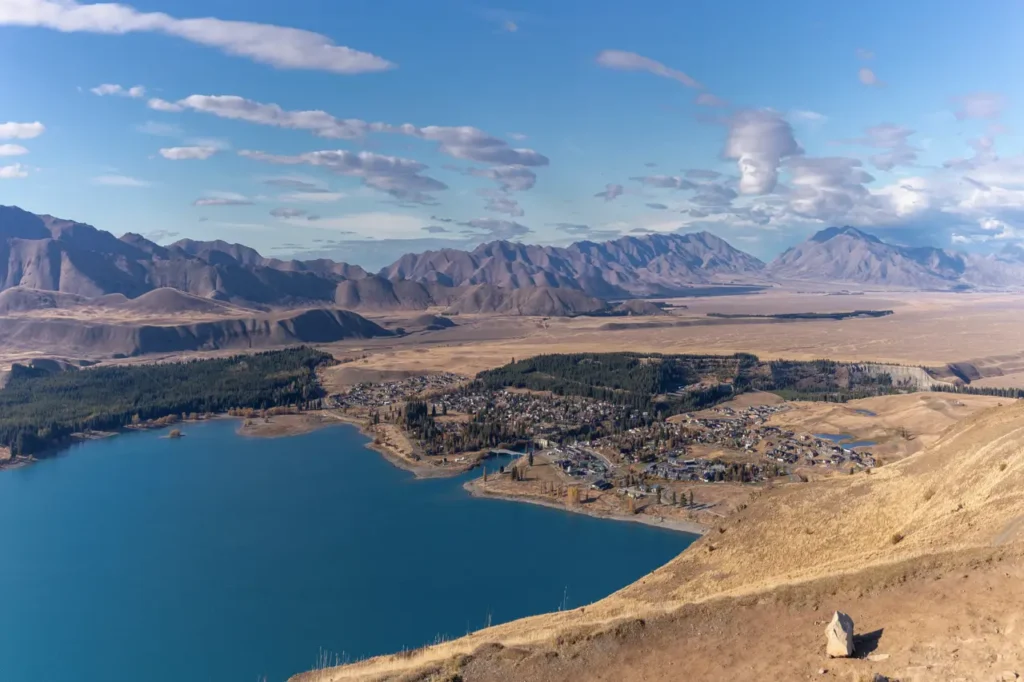
Tekapo is sunny, dry and properly cool at night (20°C by day, 6°C after dark), and frosts are possible. It’s still a great place for stargazing, and darkness arrives earlier than in January. Mount Cook Village, an hour or so up the road, is a different world: about 315 mm of rain and 11 rain days. Book flights and boat trips for your first day there and keep a spare day. See Mt Cook & Mackenzie.
Queenstown, Wānaka and Central Otago
Queenstown averages 21°C by day and 9°C at night, with about 60 mm of rain and 180 hours of sun. Days are pleasant for lake cruises, wine tasting and walks, but the evenings are properly cool, so that gap between afternoon and night is what to pack for. Central Otago can still deliver real heat: Alexandra reached 30.9°C on 7 March 2026, and Cromwell had only 7 mm of rain all month. By the end of the month the first autumn colours start to appear around Arrowtown and Lake Hayes, with the main display usually arriving in April. See Queenstown and Wānaka.
Dunedin, Southland and Stewart Island
The deep south is cooler and cloudier. Dunedin averages 18°C by day, with only 165 hours of sun, but it had a standout March in 2026: a 30.4°C day on the 6th, a mean temperature a full degree above normal and 221 hours of sun. Don’t count on that. Invercargill is 18°C by day and 7°C at night, with rain on about 10 days. Oban on Stewart Island is 16°C with rain on about 15 days. Bring a windproof layer, and don’t write off the wildlife days. Penguins and albatross don’t mind drizzle. See Dunedin & Otago, Southland and Stewart Island.
Fiordland: Milford Sound and Te Anau
Milford Sound is one of the wettest places on earth, averaging about 571 mm in March over 14 rain days. And honestly? That’s not a disaster. Rain turns the cliffs into hundreds of temporary waterfalls, which many people say is the best way to see the fiord. Bring a proper rain jacket and insect repellent, because sandflies are part of the deal. Interestingly, Manapouri, about 20 km from Te Anau, averages only 83 mm, so the drier side of the range is close by. Nights are cool (about 6–9°C), so pack a warm layer. See Fiordland.
West Coast and the Glaciers
Franz Josef averages about 397 mm of rain in March with just 116 hours of sun, and Greymouth gets 175 mm. The honest advice is to give yourself two nights, not one, so a rained-off helicopter flight can move to the next morning. Rain is a lottery here though: in March 2026, most of Westland had below-normal or well-below-normal rainfall. See West Coast.
The Sun: March UV in New Zealand
Don’t pack the sunscreen away just because the weather is cooling down. New Zealand’s UV levels are highest in summer but remain high in autumn too, and the ozone layer over New Zealand is at its thinnest in autumn, which gives UV an easier path through. The sun is lower in the sky than in January and UV falls as the month goes on, but it’s still easily strong enough to burn, especially in the north and at altitude. And because it’s often cool, with sea breezes and cloud, people don’t feel the burn happening.
- SunSmart recommends sun protection whenever the UV Index reaches 3 or above, and that’s regularly the case in March.
- Use SPF 30+ and reapply every two hours (the Cancer Society’s advice).
- Cover up around the middle of the day, when UV is strongest.
- Wear a wide-brimmed hat and sunglasses.
- Don’t skip it on cloudy days. Cloud blocks far less UV than you’d think.
- Check the daily Sun Protection Alert on MetService, or the free UVNZ app.
Daylight and Sea Temperature in March
Days are still a decent length but shrinking quickly. The equinox falls around 20 March, when day and night are roughly equal at about 12 hours each. Because daylight saving runs until Sunday 4 April 2027, sunset slides from around 8pm at the start of March to around 7pm by the end. That’s still plenty of time for an afternoon activity and a drive, but it’s worth planning to arrive before dusk, especially on unfamiliar mountain or rural roads.
The sea is past its warmest but hasn’t cooled much. Typical March sea temperatures are around 21°C off Auckland, 15°C off Christchurch and 13°C off Dunedin. In practice, northern beaches are comfortable for swimming and southern ones are bracing. Rivers and alpine lakes are colder again. Note that sea temperatures vary from year to year: in March 2026 they were cooler than average along the North Island’s east and west coasts and Cook Strait, but warmer than average around the South Island.
What to Pack for New Zealand in March
Forget “summer clothes”. Pack for three layers, and add a bit more warmth than you would for January.
- Sun layer: shorts, T-shirts, a sun hat, sunglasses, SPF 30+ sunscreen, swimwear for the north.
- Warm layer: a fleece or light puffer, plus a beanie and light gloves if you’re heading to Tongariro, Mount Cook or Queenstown. Nights in Tekapo, Mount Cook, Queenstown and Invercargill average 6–9°C, and Wellington’s wind cuts through.
- Rain layer: a packable waterproof jacket. If you’re heading to Milford Sound, the West Coast or Stewart Island, make it a proper one.
Add sturdy shoes for trails, insect repellent for sandflies, and a reusable water bottle. For a longer checklist, see our must-have list before your New Zealand vacation.
How to Plan Your Trip Around March Weather
- Put weather-dependent activities early. Scenic flights, glacier helicopters, Milford Sound cruises, the Tongariro Alpine Crossing and Cathedral Cove are the ones that get cancelled. Schedule them on your first day in a region, with a spare day behind.
- Pair every outdoor plan with a backup. In Rotorua it’s a geothermal park or hot pools. In Queenstown it’s a winery or a scenic flight. Anywhere, a museum works.
- Allow slack on travel days. In March 2026, fog and rough seas disrupted flights and ferries in Wellington and Christchurch. Avoid booking a tight connection on the morning you fly out or cross Cook Strait.
- Check forecasts daily. Use MetService for forecasts and warnings, and NZTA’s Journeys site for road closures.
- Don’t over-pack the itinerary. Our South Island and North Island itineraries are built with slack for this reason.
Prefer someone else to handle the logistics and the rebooking? Browse our self-drive tours, such as the 9 Day South Island Self Drive Tour, or our small group tours.
Severe Weather: Take the Warnings Seriously
Most March days are lovely. But the tropical-cyclone season runs until April, and March can still produce a sharp storm. On 25–26 March 2026, a deep subtropical low prompted a red rain warning for Northland, orange warnings for rain or wind across several other regions, states of emergency in the Far North and Whangārei, power outages, and evacuations from Kaitaia. That is a good reminder that evacuation notices and red warnings are not suggestions.
- Subscribe to MetService warnings and follow local Civil Defence updates.
- If you’re told to evacuate or move, go straight away.
- Don’t drive through floodwater, fords or washed-out roads.
- Be careful camping or parking beneath steep slopes, cliffs or hillsides in heavy rain.
- Remember that ex-tropical systems usually hit the north of the North Island first.
- Make sure your travel insurance covers weather disruption. See our travel insurance guide and health and safety page.
Crowds, Prices and Booking in March
March is shoulder season, and it’s one of the sweet spots on the calendar. The school summer holidays are over, so beaches, campsites and attractions are quieter and you’ll often find better accommodation rates, although prices in the first week or two of March can still look like summer. Rental car prices also start to ease as the month goes on. Restaurants, tour operators and attractions are all still fully open.
There’s one big exception in 2027: Easter falls in March. Good Friday is 26 March and Easter Monday is 29 March, so expect a surge of Kiwi families travelling, with popular beaches, holiday parks, ferries and rental cars filling up quickly. If your dates overlap, book accommodation, rental cars and the Cook Strait ferry well in advance. The Great Walks (such as the Milford and Routeburn tracks) are still in season, so book those early too. March is also busy with festivals, and examples that are usually held around this time include Auckland’s Pasifika Festival, Wellington’s CubaDupa and Balloons Over Waikato in Hamilton, but check the exact dates for the year you travel.
Our guides to visiting New Zealand in March, February and April will help you compare, and our best time to visit page covers the whole year. For general background, see our weather and climate overview.
Frequently Asked Questions About New Zealand Weather in March
What is the typical weather like in New Zealand in March?
Mild early-autumn weather with cooler nights and changeable spells. Most places reach 18–23°C (64–73°F) by day (Auckland 23°C, Christchurch 21°C, Queenstown 21°C, Wellington 19°C), with nights between about 6°C in the mountains and 15°C in Auckland. The north and east are sunnier, while Fiordland and the West Coast are very wet (Milford Sound averages about 571 mm). Warm spells can still push into the 30s: Alexandra reached 30.9°C (88°F) on 7 March 2026. Sun protection is still essential.
What type of clothing is essential for New Zealand’s North Island in March?
Light, breathable layers: T-shirts, shorts or lightweight trousers, swimwear in the north, a sun hat and sunglasses. Add a fleece or light jacket for evenings, since Rotorua and Taupō drop to 10–11°C at night and Wellington is windy. Pack a packable waterproof too, because Northland and the Bay of Plenty can still get heavy tropical downpours. Humidity in Auckland and Northland makes cotton slow to dry, so quick-dry synthetics or merino work better. Closed shoes for trails and sandals for the beach cover most days.
Which travel agencies offer March tours to New Zealand with weather guarantees?
None can honestly guarantee New Zealand’s weather, and we’d be wary of any company that claims to. What you can look for is flexibility: itineraries with spare days, activities that can be rescheduled, clear rebooking and refund terms, and travel insurance that covers weather disruption. Always ask what happens if a helicopter flight, cruise or ferry is cancelled for weather. Read our booking terms before you pay, and browse our self-drive tours or small group tours.
Best lightweight waterproof jacket for autumn travel in New Zealand?
There’s no single best jacket, because it depends on where you’re going. Look for a waterproof-breathable shell with taped seams, an adjustable hood, underarm zips for ventilation and a design that packs into its own pocket or a small bag. A light shell is plenty for the North Island, Christchurch or Queenstown. For Milford Sound, the West Coast, Stewart Island or any alpine walk, choose a sturdier hooded jacket. Outdoor shops in every major city stock a wide range if you’d rather buy on arrival.
Best clothing brands for New Zealand March weather?
Fabric matters more than brand. Look for merino wool (New Zealand is famous for it), quick-dry synthetics, and UPF-rated sun shirts and hats. If you want to shop locally, New Zealand-founded outdoor retailers like Kathmandu and Macpac, and merino brands like Icebreaker, are easy to find in the main cities. That’s handy if you forget something or need a warmer layer for the South Island evenings.
Where to find suitable hiking shoes for varied terrain in New Zealand in March?
Ideally buy them before you travel and wear them in. If not, outdoor stores in Auckland, Wellington, Christchurch and Queenstown stock trail shoes and boots. In March, grippy trail shoes are fine for most day walks like the Hooker Valley Track or Abel Tasman coastal sections. For rocky, exposed tracks such as the Tongariro Alpine Crossing, where mornings can be cold, a sturdy boot with ankle support and good grip is safer. Also pack sandals or water shoes for beaches and river crossings. Browse our walking and hiking activities.
Are there any weather apps that specialize in New Zealand’s climate during March?
No app is March-specific, but a few are New Zealand-specific and worth installing. MetService is the main source for forecasts, rain radar, mountain forecasts and severe weather warnings. The free UVNZ app, endorsed by the Cancer Society, gives daily UV advice. NZTA Journeys shows road closures, and DOC’s website lists track alerts. Many travellers also use Windy for wind and rain maps.
How to compare prices for flights to Auckland arriving in March?
March is shoulder season, so fares are often a little lower than in the peak summer months, but they can jump around Easter (26–29 March in 2027). Use a fare comparison tool to check several dates, and compare prices a day or two either side, since fares can shift a lot. Consider flying into Auckland and out of Christchurch or Queenstown (an “open-jaw” ticket) to avoid backtracking. From the US you cross the International Date Line, so you’ll lose a calendar day and usually arrive two days after you leave. See our guide to the best way to get to New Zealand.
How do weather conditions in New Zealand in March affect outdoor adventure gear choices?
Sun and UV still call for a sun shirt, hat, sunglasses and plenty of water. Rain in places like Fiordland and the West Coast calls for a waterproof shell and a dry bag or pack cover. Cool nights and altitude (Aoraki / Mount Cook, Tongariro) mean a fleece, beanie and light gloves, because average night temperatures fall to 6–7°C and frost is possible. For Abel Tasman and kayaking, quick-dry layers and water shoes work best. Add insect repellent, as sandflies bite in many wet, forested areas.
What kind of sun protection factor is recommended for New Zealand’s sun in March?
The Cancer Society recommends at least SPF 30, reapplied every two hours, and many people choose SPF 50+ broad-spectrum, water-resistant sunscreen. Apply it before you go out and again after swimming or sweating. SunSmart recommends sun protection whenever the UV Index is 3 or above, and the ozone layer is at its thinnest in autumn, so don’t assume the cooler weather means you’re safe. Add a hat, sunglasses and covering clothing around the middle of the day.
Where can I book flights from the US to New Zealand for March with flexible weather cancellation policies?
Most airlines only offer refunds or free rebooking if the airline cancels, not because of bad weather at your destination. For flexibility, look at flexible or refundable fares, check the airline’s current change and cancellation rules before you book, and buy travel insurance that covers weather disruption. For maximum flexibility, some insurers offer cancel-for-any-reason upgrades. We can’t verify any airline’s current policy, so always check the terms directly.
Are there specific insect repellents effective against New Zealand autumn bugs?
Repellents containing DEET or picaridin are widely recommended and available at New Zealand pharmacies and supermarkets. Sandflies are the main nuisance, especially on the West Coast, in Fiordland (including Milford Sound) and around Abel Tasman. Their bites are itchy but sandflies in New Zealand aren’t known to spread disease. Apply sunscreen first and repellent on top, cover up with light long sleeves, and expect more bites in still, damp, shady spots and around dawn and dusk.
Is March a good time to visit New Zealand?
Yes. Many people consider it one of the best months to go: it’s still warm, the long summer holiday crowds are gone, most activities are open and the wine regions are in harvest. The trade-offs are cooler nights, shorter days and the chance of a wet spell, especially in the north. In 2027, Easter falls at the end of the month, so book early if your dates overlap.
Does it rain a lot in New Zealand in March?
It depends where you are. Christchurch gets about 44 mm and Lake Tekapo about 29 mm, while Milford Sound averages about 571 mm and Franz Josef about 397 mm. The east and the central South Island are generally drier, and the north, the south-west and the West Coast are wetter.
Is March cyclone season in New Zealand?
Tropical cyclone season runs from November to April, with the peak from late summer into early autumn. Ex-tropical systems can bring heavy rain and wind to the north and east of the North Island, as happened on 25–26 March 2026.
Is it warm enough to swim in New Zealand in March?
In the north, yes. Sea temperatures are around 21°C off Auckland, and northern beaches stay comfortable. Further south it’s much cooler (about 15°C off Christchurch and 13°C off Dunedin), so expect a quick, bracing dip rather than a long swim.
Can you see autumn colours in New Zealand in March?
Only the start of them. The first autumn colours begin to appear late in the month in Central Otago and the Southern Lakes, such as around Arrowtown, but the main show usually arrives in April. March is better known for the grape harvest in regions like Marlborough, Hawke’s Bay and Central Otago.
Is it worth visiting Milford Sound in the rain?
Yes. Rain creates dozens of temporary waterfalls down the cliffs, and many visitors rate it as the most dramatic way to see the fiord. Bring a proper rain jacket and insect repellent, and check road and cruise conditions before you go.
Plan Your March Trip With Us
Want a New Zealand March trip that’s built around the weather, with the right regions on the right days and backup options already in place? Browse our New Zealand tours, explore our tours with flexible self-drive itineraries, or request a custom itinerary.