
Great Barrier Island New Zealand: Medlands Beach and Beyond
Ninety kilometres off the coast of Auckland sits one of the country’s most overlooked escapes. Great Barrier Island New Zealand, known to Māori as Aotea, is the largest island in the Hauraki Gulf. It has no mains power, no traffic lights, and around 1,100 permanent residents. At its heart sits Medlands Beach, a 1.5-kilometre stretch of white sand that rarely sees a crowd.
This guide covers what makes the island worth the trip. It also explains why Medlands Beach is its standout stop, and how to get there yourself.
Quick facts:
- Location: Hauraki Gulf, roughly 90km from Auckland
- Māori name: Aotea
- Population: around 1,100 permanent residents
- Getting there: 30-minute flight or 4.5-hour ferry from Auckland
- Signature feature: Aotea Dark Sky Sanctuary, one of only a handful in the world
Great Barrier Island New Zealand: An Introduction
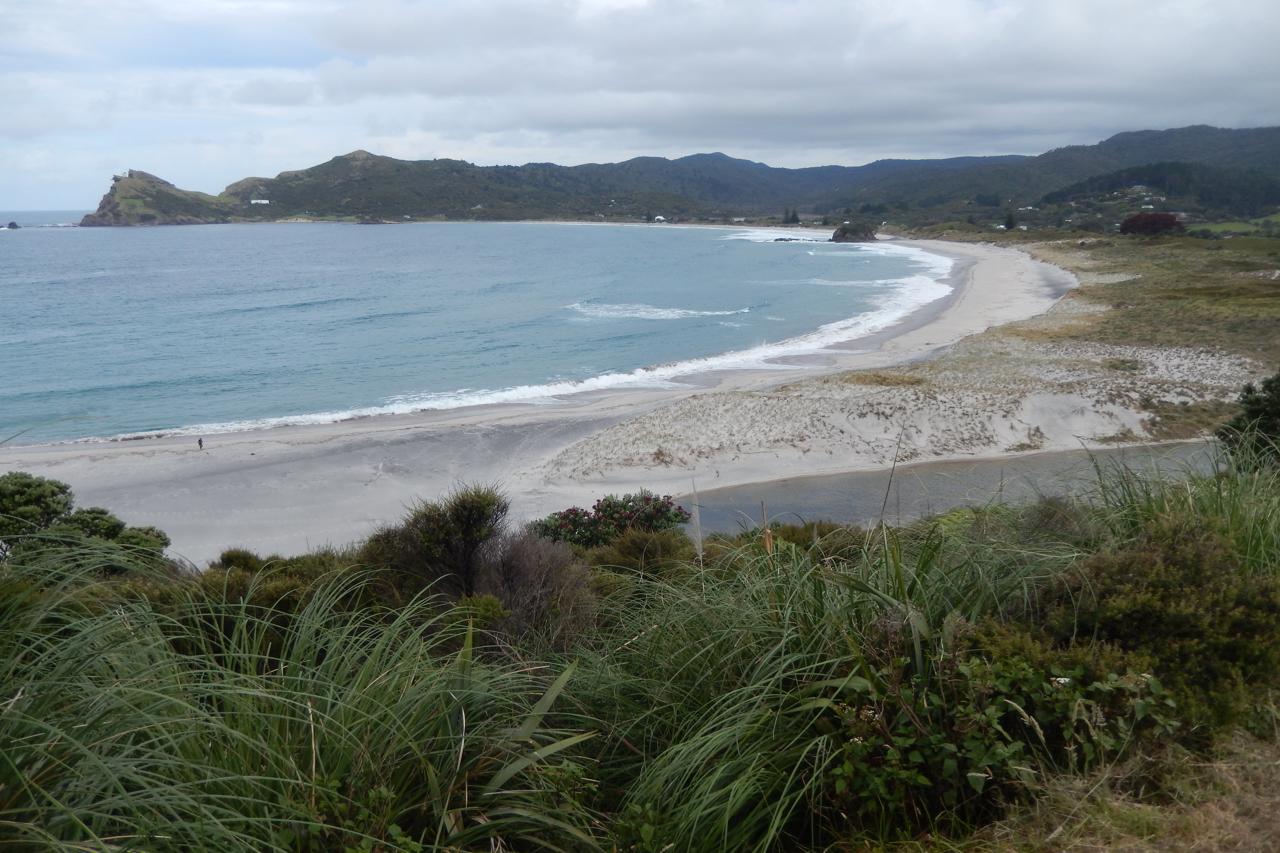
Great Barrier Island sits at the outer edge of the Hauraki Gulf. It’s close enough to Auckland to feel accessible, remote enough to feel like a genuine escape. The island is New Zealand’s sixth-largest, and over 70% of its land is protected conservation park. It runs entirely on solar, wind, and generated power, since there’s no connection to the national grid.
A few details capture what makes Great Barrier Island NZ so different from a typical New Zealand destination:
- Cell coverage is patchy across much of the island, which many visitors treat as a selling point rather than an inconvenience
- The island has no big supermarkets, so most visitors plan ahead rather than relying on shops once they arrive
- In 2017, Aotea was designated an International Dark Sky Sanctuary, one of only a handful worldwide
- The island’s history includes New Zealand’s first mine, established in 1842, along with an early kauri milling industry
Medlands Beach Great Barrier Island: The Island’s Signature Stop
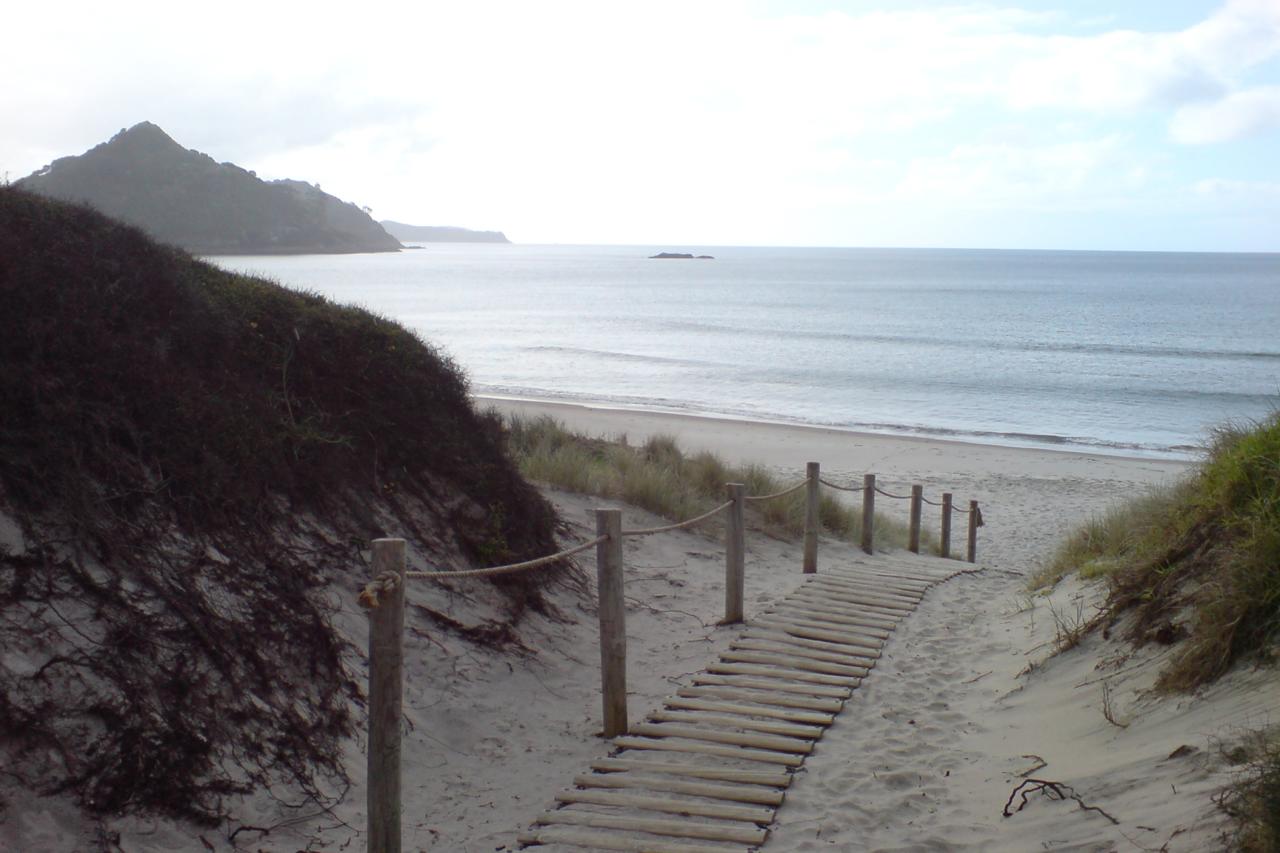
If Great Barrier Island has one beach that defines the visitor experience, it’s Medlands. Medlands Beach Great Barrier Island runs for roughly 1.5 kilometres along the island’s east coast, facing directly into the Hauraki Gulf. Walking its full length takes about 40 minutes at a relaxed pace. At low tide, the hard-packed sand is firm enough for running.
A few things make Medlands stand out among the island’s many beaches:
- It’s considered the most accessible beach on Great Barrier Island, reachable by a short, sealed drive from Claris Airport or Tryphena
- The beach faces northeast, catching consistent left and right-hand surf breaks that work on most swells
- An estuary at the southern end is sheltered and safe for swimming, distinct from the open surf further along the beach
- The Sugarloaf headland marks the beach’s northern point, separating Medlands from neighbouring Kaitoke Beach
Great Barrier Island keeps its infrastructure deliberately minimal. Because of this, Medlands has no ice cream van, no parking warden, and often no one else on the sand at all.
Great Barrier Island Ferry and Flight Options
Reaching Great Barrier Island NZ takes more planning than most New Zealand destinations. It’s genuinely an island getaway rather than a day trip. Two main options cover the journey from Auckland.
By air: Barrier Air operates the most frequent scheduled flights. The trip takes around 30 minutes from Auckland’s Domestic Terminal to Claris Airport. On a clear day, the flight offers views stretching from the Coromandel to the Bay of Islands.
By Great Barrier Island ferry: SeaLink operates the main ferry service, sailing to Tryphena in around 4.5 hours. Ferries run up to seven times a week in summer and less frequently over winter. Bringing a vehicle is possible, though it adds meaningfully to the cost. Many visitors instead fly in and arrange a rental car on the island itself.
A few practical points worth knowing before booking:
- During peak season, transport can book out up to a year in advance
- Rental vehicles on the island are often older and higher-mileage than mainland rentals, due to the rougher roads
- DOC enforces strict biosecurity checks for pests before boarding, since the island’s isolation protects its native wildlife
Comparing Ways to Reach the Island
| Method | Duration | Best For |
| Barrier Air flight | ~30 minutes | Short stays, travelers short on time |
| SeaLink ferry (passenger) | ~4.5 hours | Budget travelers, scenic crossing |
| SeaLink ferry (with vehicle) | ~4.5 hours | Longer stays needing a reliable car |
| Charter boat / water taxi | Varies | Flexible groups, alternative to scheduled services |
Great Barrier Island Accommodation Near Medlands
The island’s population is small. Because of this, Great Barrier Island accommodation tends toward boutique lodges, holiday baches, and campsites rather than large hotels. Medlands itself is a popular base, with several properties sitting within an easy walk of the beach.
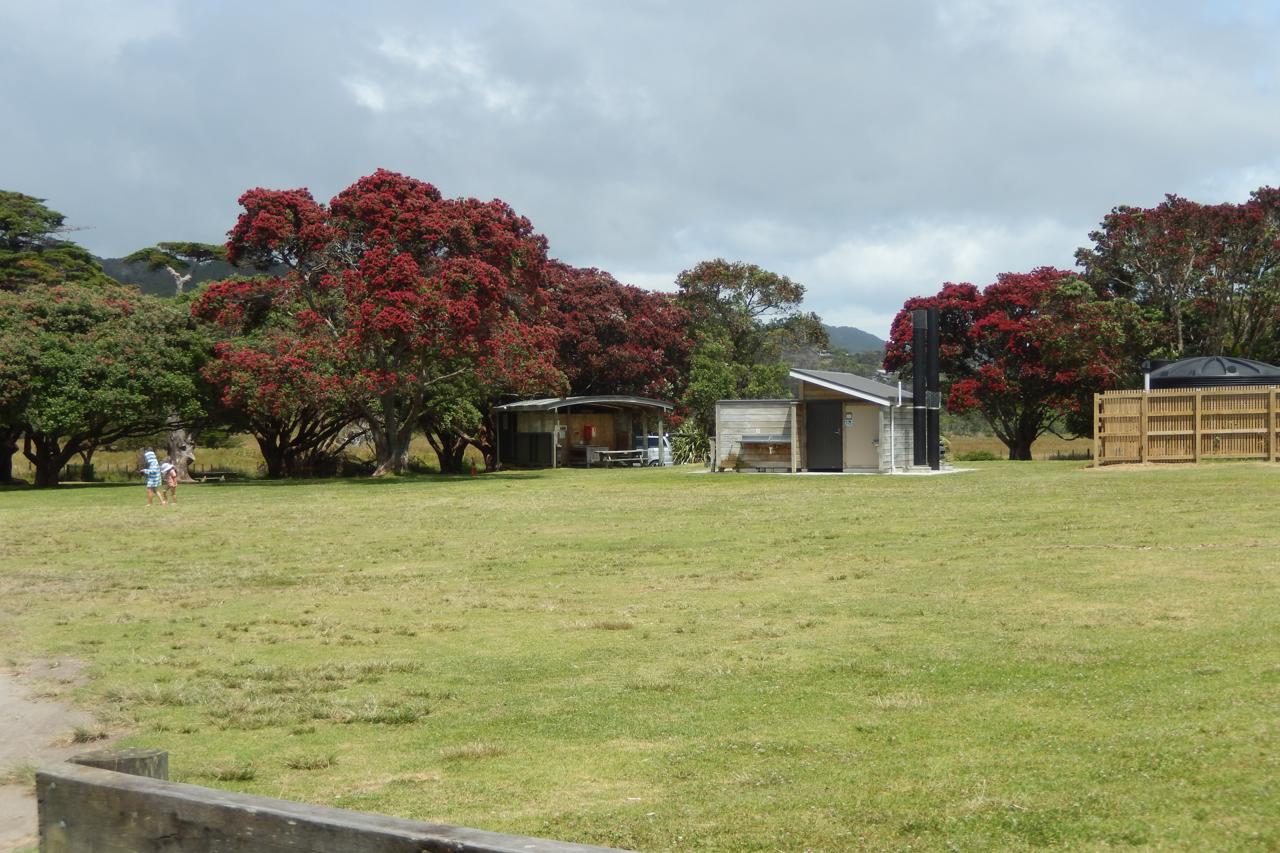
For travelers who prefer to camp, the Department of Conservation operates a campsite at the southern end of Medlands Beach. It sits among mature trees and overlooks a tidal stream. Camp hosts are on-site from Christmas until mid-February. Even so, it operates on a strict pack-in, pack-out basis with no rubbish facilities on-site. For more comfortable stays, several small lodges and holiday homes sit within walking distance of the beach, often just a short walk down through native bush.
Beyond Medlands: Other Things to Do on the Island
Medlands Beach anchors most visits. Still, Great Barrier Island offers plenty else across its conservation park and coastline:
- Aotea Dark Sky Sanctuary stargazing: with virtually no light pollution, the island offers some of the clearest night skies in the world
- Kaitoke Hot Springs: a natural thermal pool reached via a bush walk, popular after a day on the beach
- Mount Hobson (Hirakimata) summit track: the island’s highest point, rewarding hikers with sweeping views across the Hauraki Gulf
- Windy Canyon: a shorter, dramatic walk through rock formations near the island’s Great Barrier Forest
- Fishing and diving: charter boats operate from Tryphena, with the surrounding waters considered world-class by local operators
A Brief History of Aotea
Great Barrier Island’s story stretches back long before European settlers arrived. Māori settlement on Aotea dates back centuries, with the island’s name referring to the great white cloud sighted by early Polynesian voyagers navigating toward Aotearoa. Today, the island remains home to several hapū with deep ancestral ties to its land and coastline.
European history on the island includes a mix of mining, timber, and maritime trade. Copper mining briefly took hold in the 1840s, followed by decades of kauri logging that shaped much of the island’s accessible bushland. One of the more unusual chapters in the island’s past involved a regular airmail service carried by homing pigeons between 1897 and 1908, connecting Aotea to the mainland long before reliable phone lines existed. Much of that same isolation that once made communication difficult is what continues to draw visitors today.
Planning a Trip to Great Barrier Island
Getting to Great Barrier Island NZ takes real planning. Because of this, it works best as a dedicated multi-day stay rather than a rushed add-on to an Auckland visit. Our things to do in Auckland guide covers the city itself, useful if you’re basing a night or two there either side of your island trip. Our cruising and sailing New Zealand guide also covers the wider Hauraki Gulf, including nearby Waiheke Island. This is useful if you’d like to combine multiple gulf islands into one trip.
For travelers weighing up Waiheke against Great Barrier Island, our Waiheke Island Explorer Tour covers the gulf’s more developed, wine-focused island. It’s a useful contrast to Great Barrier’s rougher, off-grid character. If you’d rather have a trip shaped entirely around your own interests, our customizable New Zealand vacation packages can build Great Barrier Island into a longer North Island itinerary. You can also add it directly to your custom vacation package wishlist.
If you’re weighing up other New Zealand beaches alongside Medlands, our best beaches in New Zealand guide rounds up the wider country’s coastline.
When to Visit
Conditions on Great Barrier Island shift meaningfully by season:
- Summer (December–February): the busiest season, with the most reliable weather and the widest range of transport options
- Spring (September–November): often underrated, with good surf, green scenery from winter rain, and fewer crowds before school holidays begin
- Winter (June–August): the locals’ favourite season, with cooler water and Medlands Beach largely to yourself, though transport runs less frequently
Booking transport in advance matters more here than almost anywhere else in New Zealand, regardless of season. This is especially true given how limited the flight and ferry schedules become outside peak periods.
New Zealand’s Off-Grid Escape
Most visitors arrive expecting a quiet beach getaway. They leave having experienced something closer to a different country entirely. That’s the real appeal of Great Barrier Island New Zealand. There’s no mains power, no rush, and a beach at Medlands that looks the same today as it likely did decades ago.
You might be drawn here for Medlands Beach itself, the island’s Dark Sky Sanctuary status, or simply the chance to properly disconnect. Either way, Great Barrier Island rewards travelers willing to trade a little convenience for genuine isolation.
Browse our things to do in Auckland or get in touch to start planning a trip built around Great Barrier Island and the wider Hauraki Gulf.