
Central Otago Touring Route: Following the Gold Rush Trail | 341 kilometres (212 miles)
In the 1860s, thousands of miners poured into the dry hills of Central Otago with one dream. They were chasing gold. They came from Australia, Britain, Ireland, China and beyond, and they built towns almost overnight. Many of those towns faded when the gold ran out. Others survived and now welcome a new kind of traveller.
The Central Otago Touring Route follows in the footsteps of those miners. It runs for 341 km from Dunedin to Queenstown, through wide plains, tiny stone villages and some of the best Pinot Noir country in the world. This guide tells the story of the gold rush as you drive, so every stop has a tale behind it.
What Is the Central Otago Touring Route?
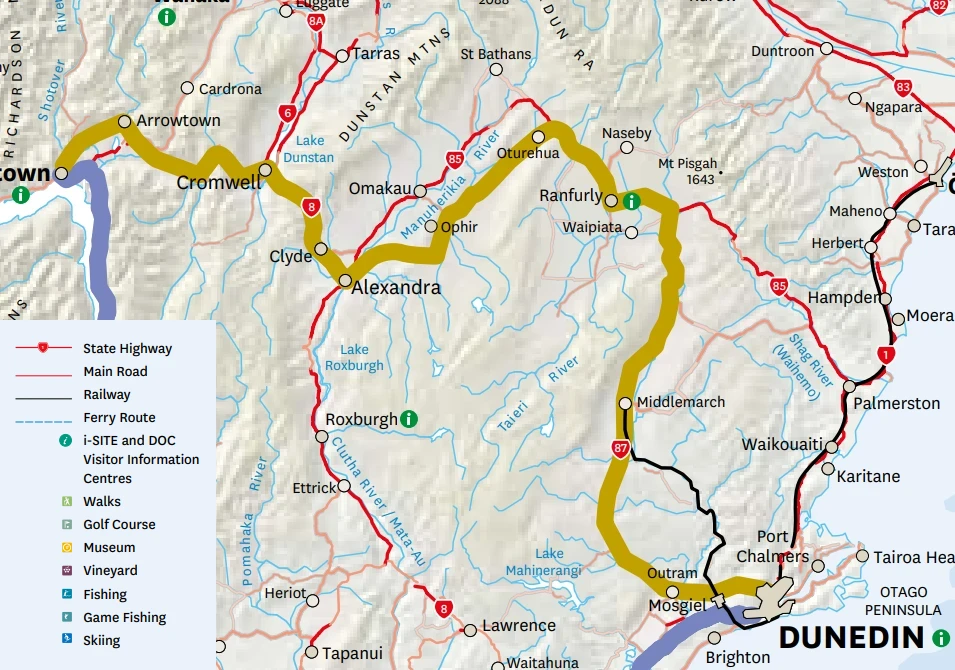
The Central Otago Touring Route was launched in 2020 as a way to share the hidden heart of Otago. Most visitors fly straight into Queenstown and miss the inland towns entirely. This route links Dunedin on the east coast with Queenstown in the mountains, taking the long and scenic way through the Strath Taieri and Maniototo plains.
Along the way you pass Middlemarch, Ranfurly, Naseby, St Bathans, Clyde, Alexandra, Cromwell and Arrowtown. Many of these towns began as gold mining camps. Today they are known for heritage buildings, cycling trails, orchards and wineries.
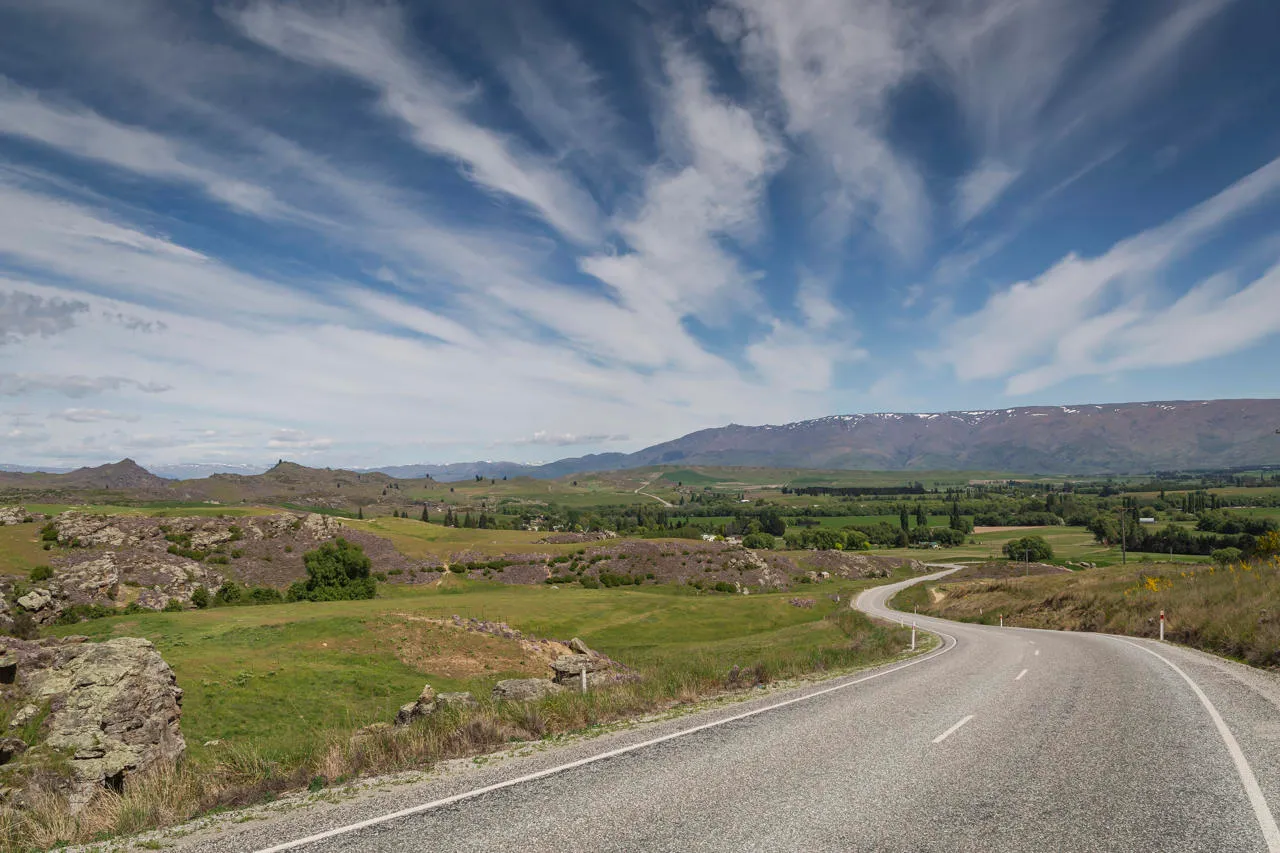
The landscape is unlike anywhere else in New Zealand. Central Otago has hot, dry summers and cold, frosty winters. Golden tussock covers the hills, and big skies stretch over rocky ranges. It feels closer to the American West than to the green farmland most people picture.
Driving the full route takes around four and a half hours without stops. To enjoy it properly, allow at least three or four days.\
Central Otago Touring Route Map
A Short History of the Central Otago Gold Rush
The Central Otago gold rush began in 1861, when Gabriel Read found gold in a gully near Lawrence. News spread quickly, and miners rushed in from the Victorian goldfields in Australia. Dunedin grew rapidly and for a time became the largest and richest city in New Zealand.
In 1862 two miners, Horatio Hartley and Christopher Reilly, arrived in Dunedin with a huge haul of gold from the Clutha River near present-day Clyde and Cromwell. The news set off a new rush inland. Within months, tent towns sprang up along the rivers.
Chinese miners began arriving from 1866. Many worked old claims that others had given up on, and they faced hard conditions and discrimination. Their stone huts still stand in places such as Arrowtown.
As the easy gold ran out, miners turned to sluicing. They used powerful jets of water to wash away whole hillsides. The scars of this work can still be seen across the region, and in one place it created something remarkable.
The Central Otago Touring Route, Town by Town
Dunedin to Middlemarch
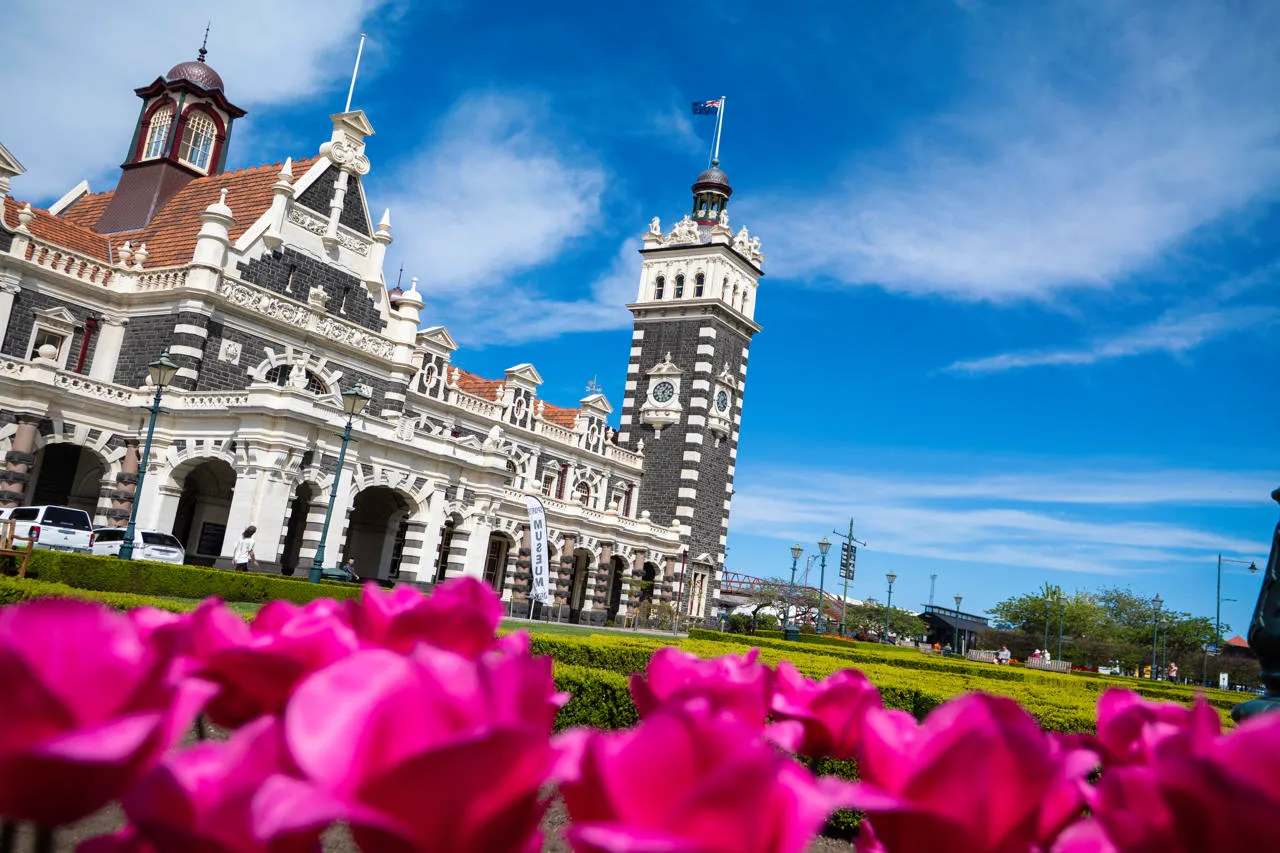
Start in Dunedin, the city built on gold. Its grand stone buildings, including the famous railway station, were paid for by the wealth of the goldfields. Our Dunedin and Otago activities page has plenty of ideas before you leave.
Head inland to Middlemarch, a small town on the Strath Taieri plain. It sits at the eastern end of the Otago Central Rail Trail. If you can, check whether heritage train trips are running from Dunedin through the Taieri Gorge. The old railway line was once the lifeline for miners and farmers in the interior.
The Otago Central Rail Trail
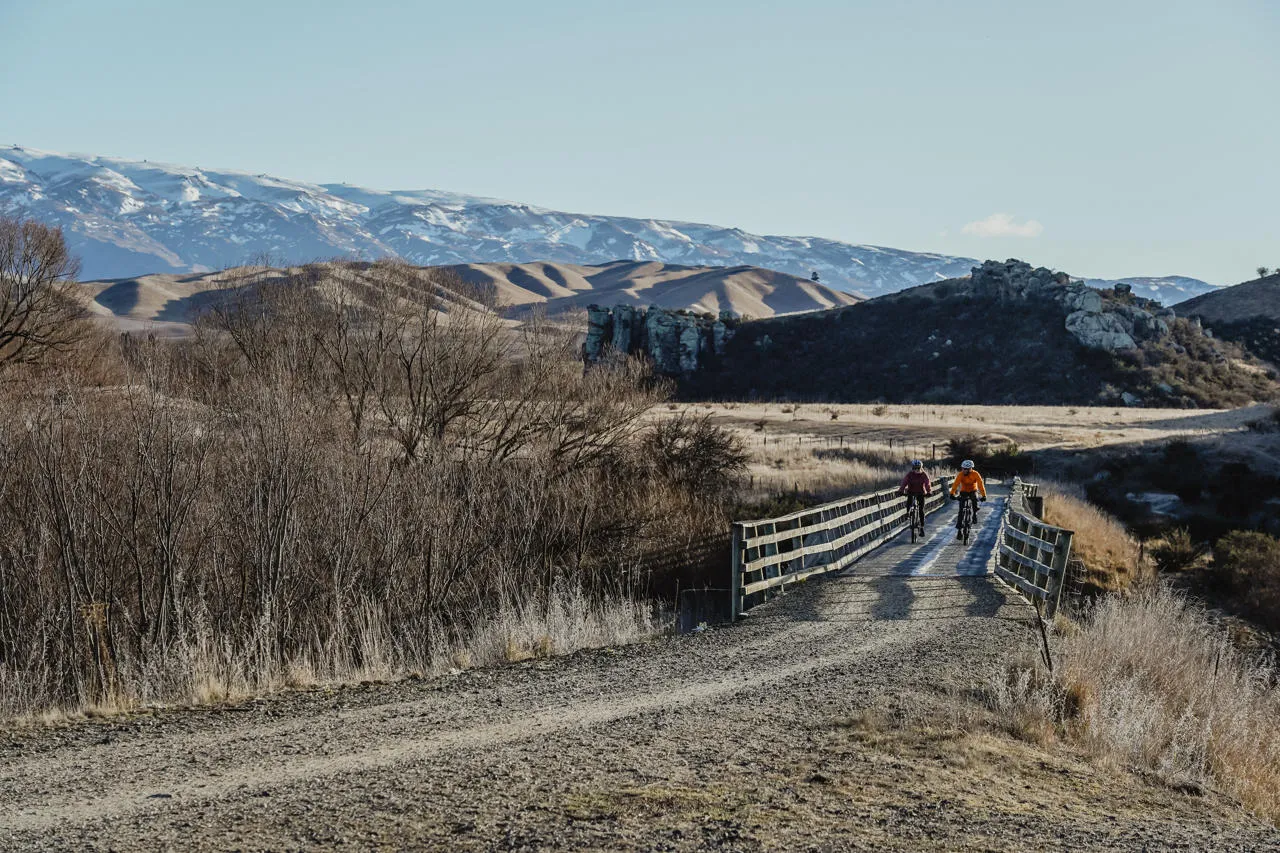
The Otago Central Rail Trail follows the route of the old Otago Central Railway for about 152 km between Middlemarch and Clyde. It opened in 2000 and was the first of New Zealand’s Great Rides. The trail passes through old railway tunnels and over historic viaducts, with gentle gradients suitable for most riders.
You do not need to ride the full trail to enjoy it. Many visitors hire bikes for a single section, such as the tunnels near Lauder or the stretch across the Ida Valley. Our guide to the Ida Valley filming locations shows how this landscape starred in The Power of the Dog.
Ranfurly and Naseby
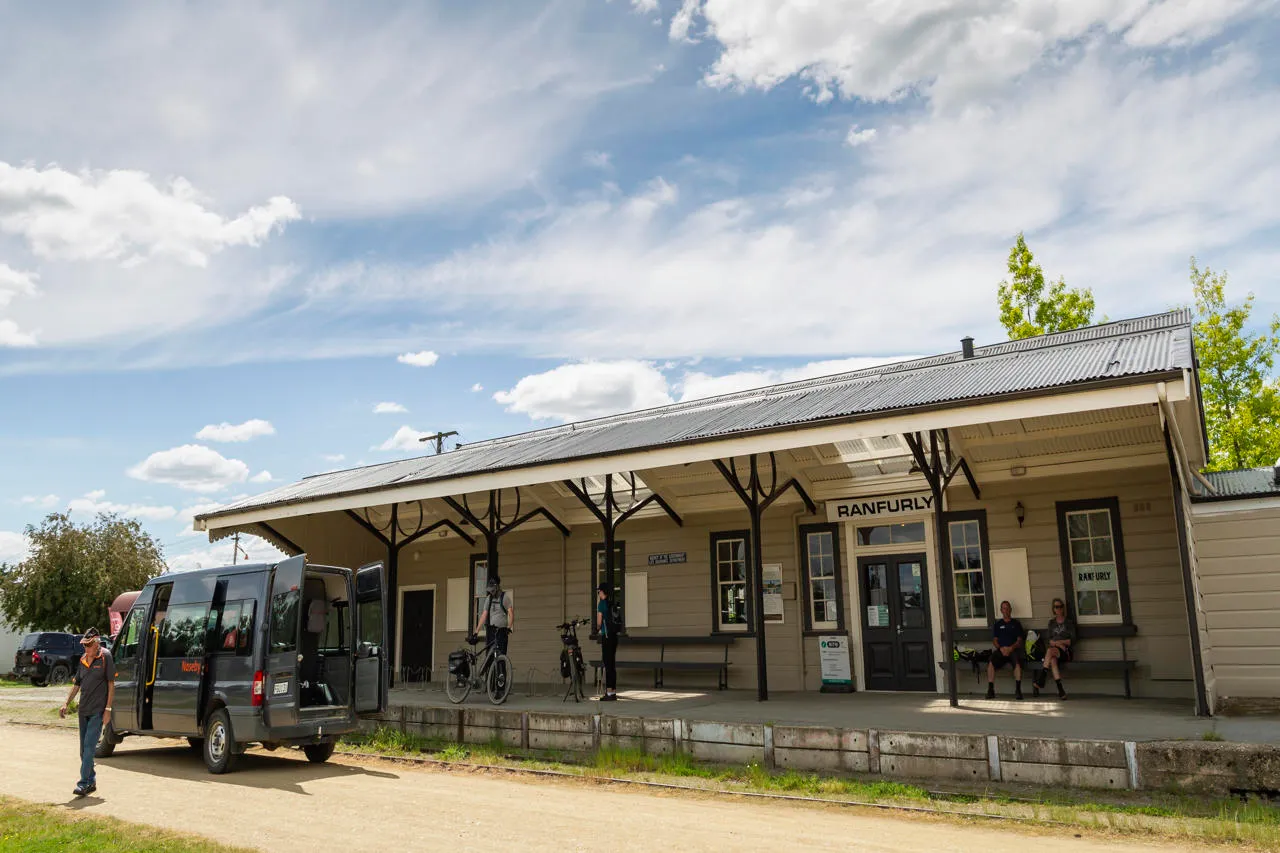
Ranfurly is known for its colourful Art Deco buildings, many restored from the 1930s. Stroll the main street and look out for the quirky details on the shopfronts.
Nearby Naseby began as a gold mining town and still has many original buildings. Today it is best known for curling. Its indoor ice rink lets visitors try the sport all year, and outdoor curling takes place on frozen ponds in the depths of winter.
Oturehua and the Ida Valley
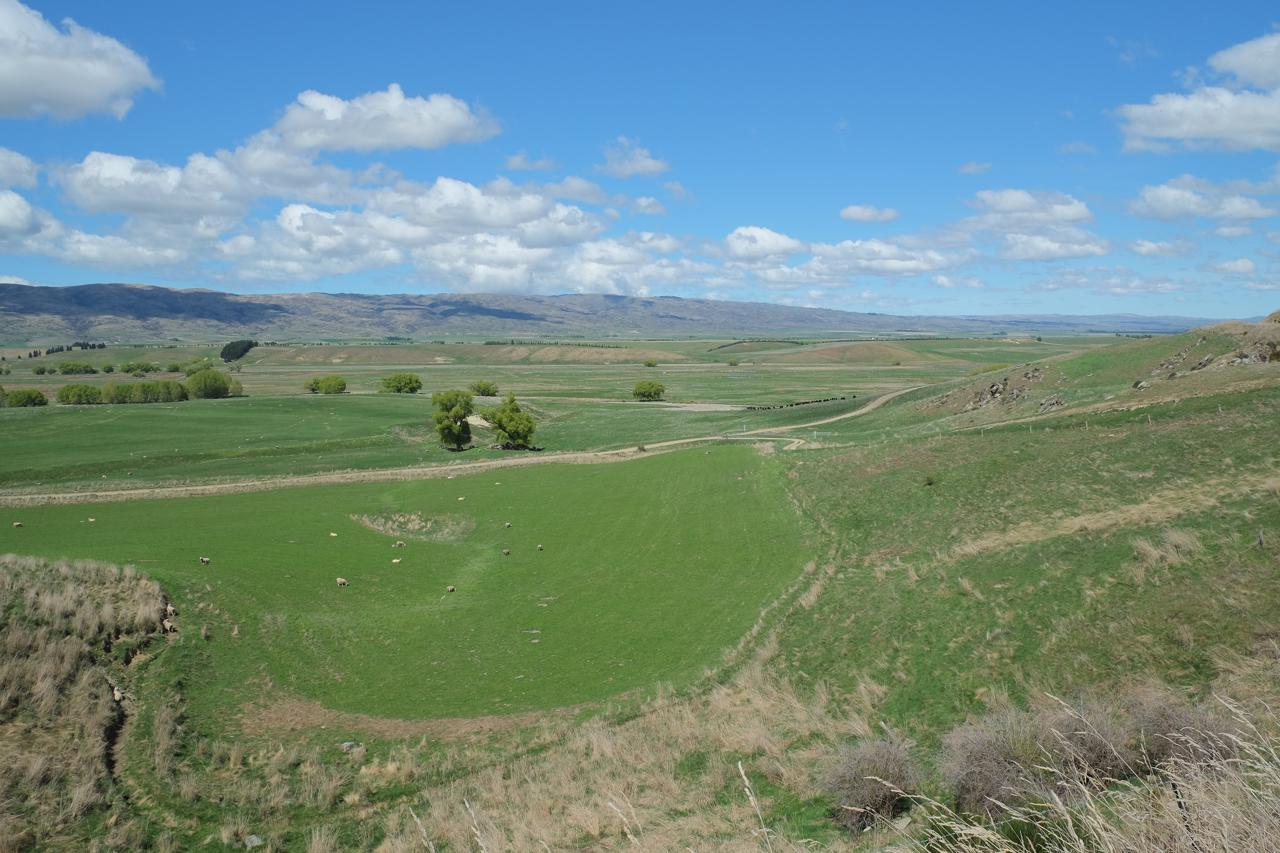
The tiny village of Oturehua is home to Gilchrist’s Store, one of the oldest general stores in New Zealand. Just down the road, Hayes Engineering Works and Homestead tells the story of Ernest Hayes, a local inventor whose farm tools were sold around the world.
St Bathans and the Blue Lake
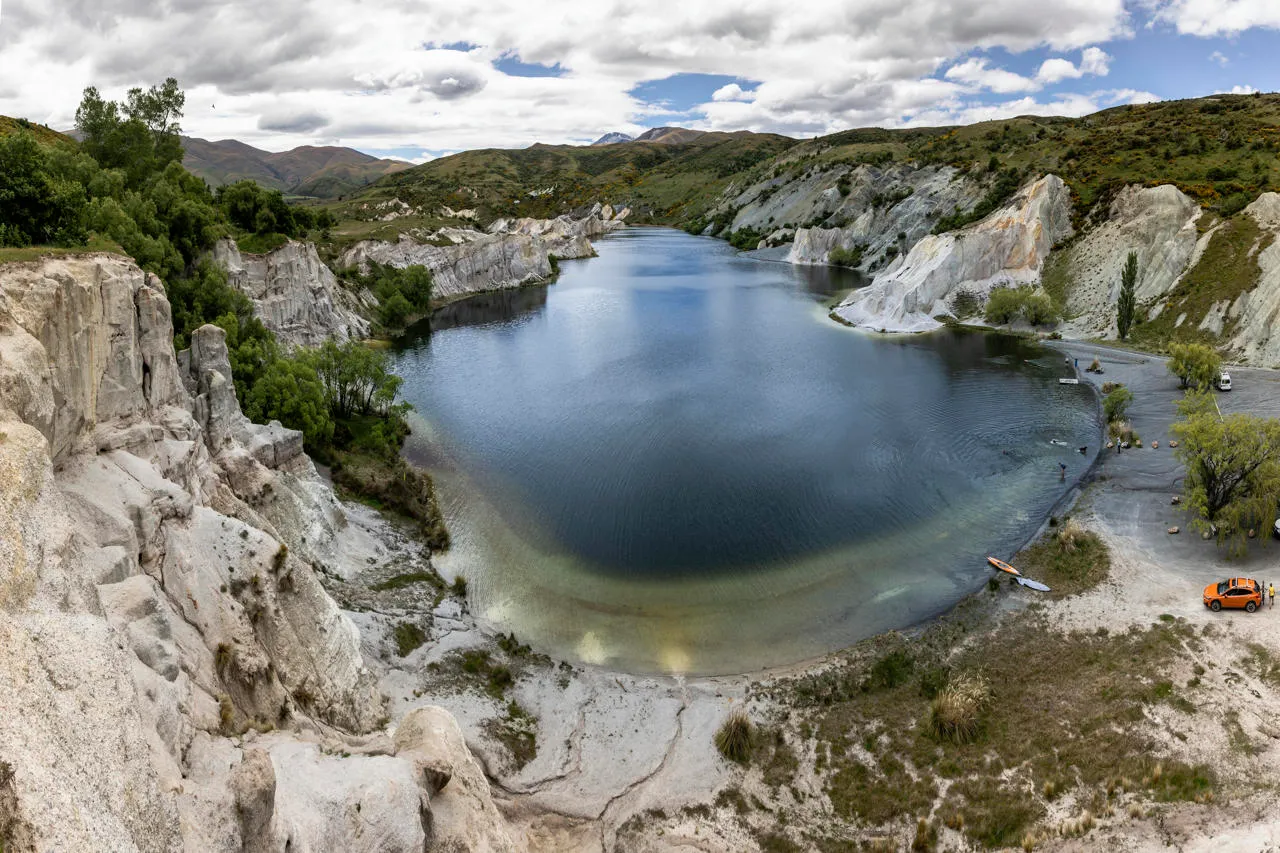
St Bathans is one of the most atmospheric gold rush towns in the region. Once home to more than 2,000 people, it now has only a handful of permanent residents. The historic Vulcan Hotel is said to be haunted.
The St Bathans Blue Lake is the town’s big surprise. It was once a hill. Miners sluiced away the whole hill in search of gold, leaving a deep pit that later filled with water. Today the lake glows bright blue against pale, eroded cliffs. A walking track circles the lake and makes a great short stop.
Clyde and Alexandra
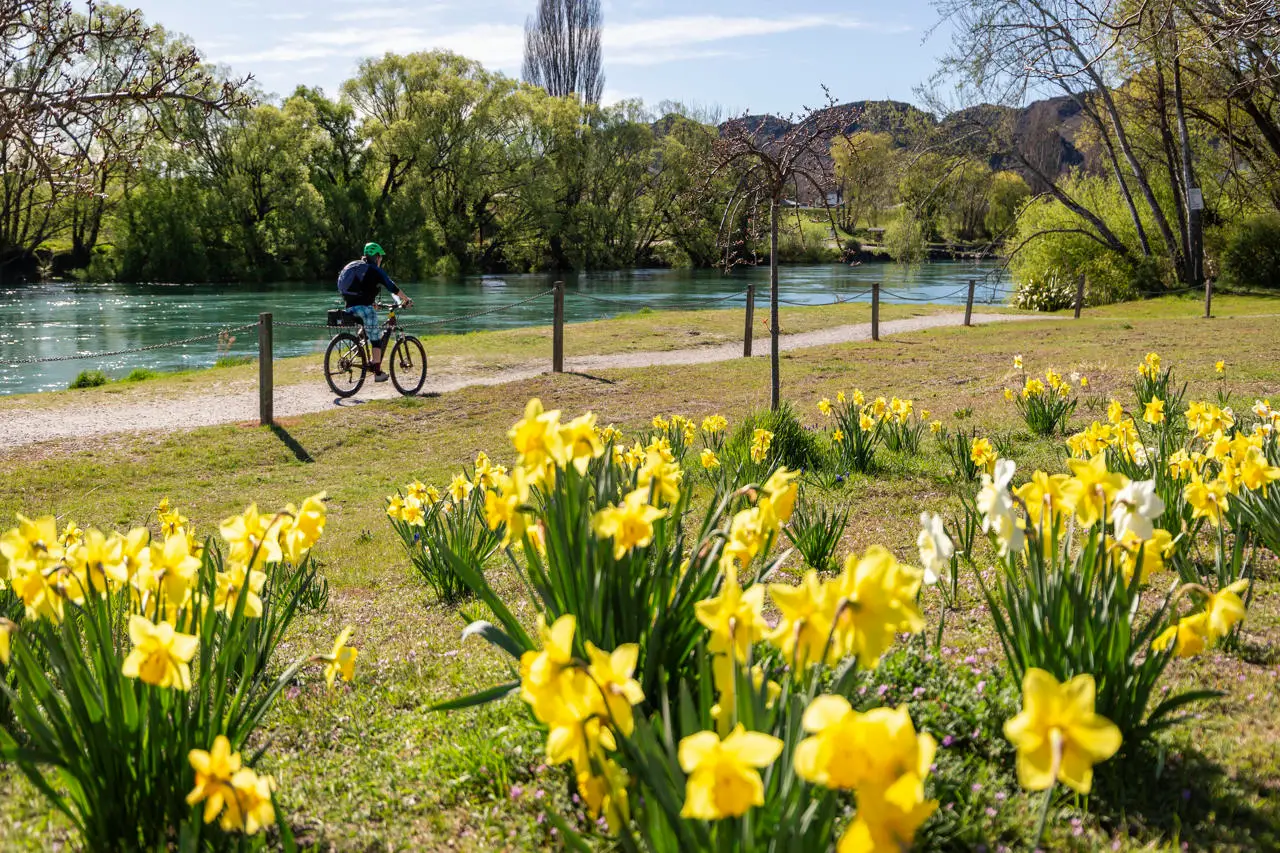
Clyde was at the centre of the Dunstan gold rush. Its stone buildings now house cafés, restaurants and boutique hotels. Clyde is also the western end of the Otago Central Rail Trail, so it is full of happy cyclists.
Above the town stands the Clyde Dam, which created Lake Dunstan. The new Lake Dunstan Trail links Clyde with Cromwell along the edge of the lake, with dramatic cliff-hung boardwalks. Nearby Alexandra is a larger town known for its orchards and spring blossom.
Cromwell and Bannockburn
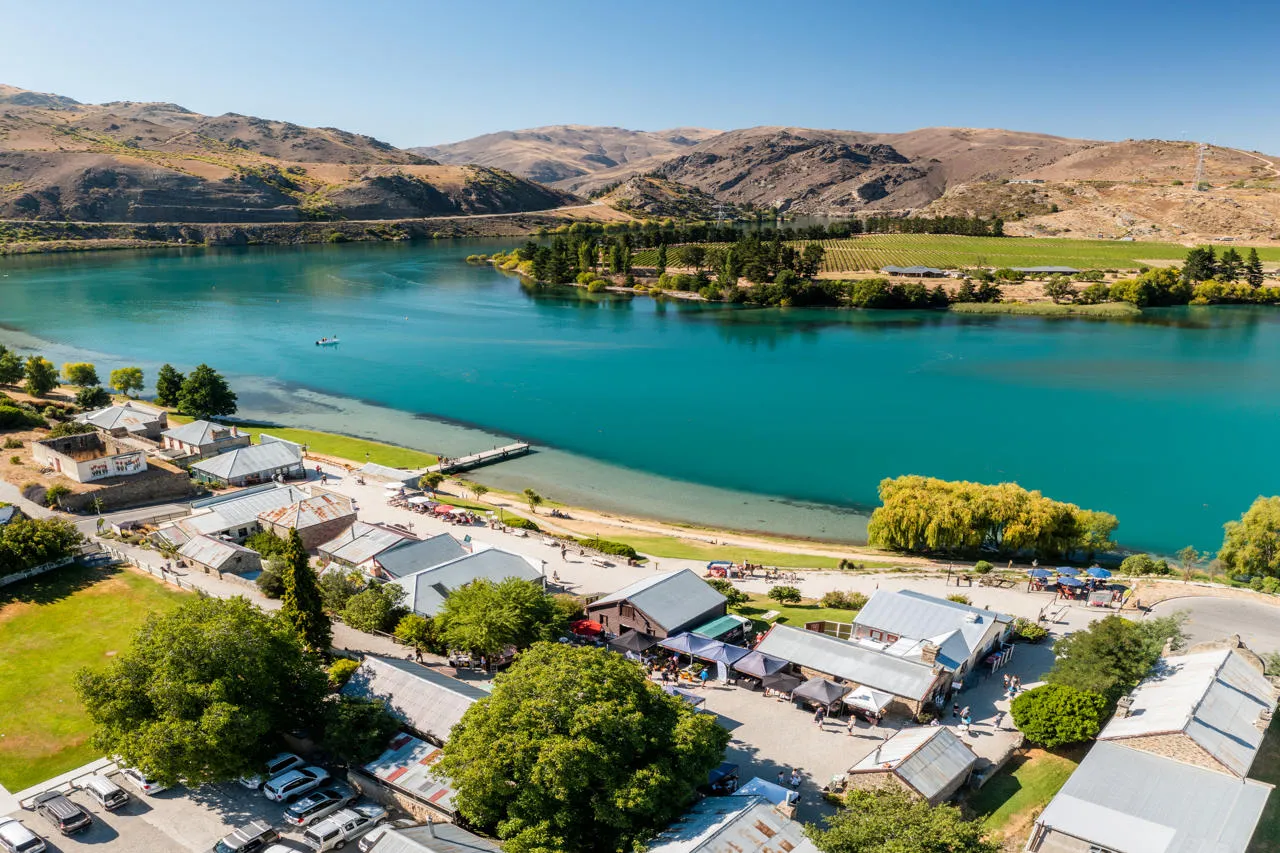
When the Clyde Dam filled Lake Dunstan, part of old Cromwell disappeared under the water. Before the flooding, locals moved many historic buildings to higher ground. Today the Cromwell Heritage Precinct is a lively spot with cafés, galleries and a weekend market.
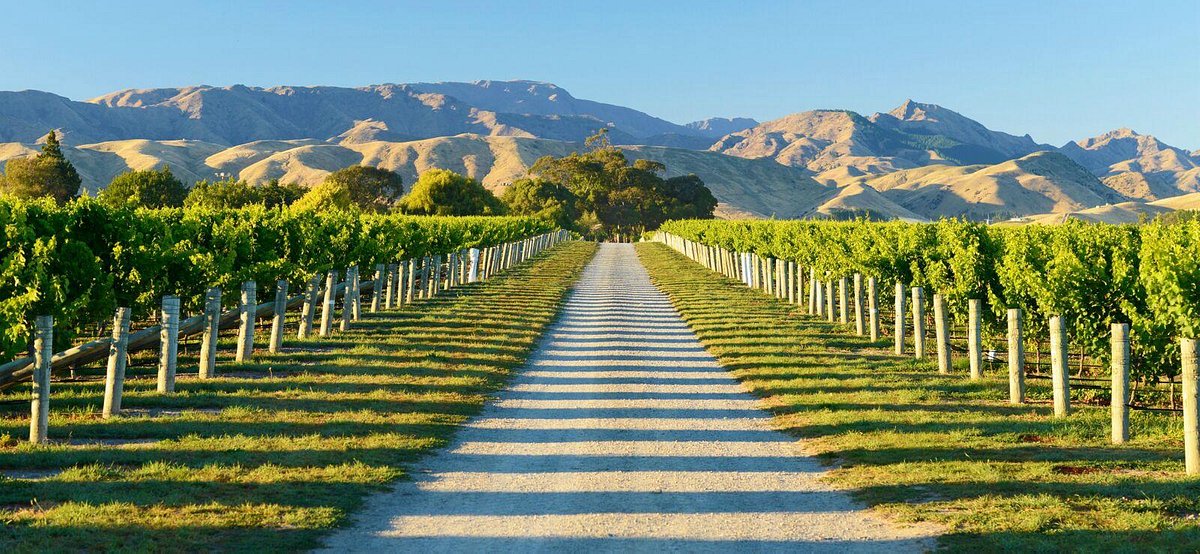
Bannockburn, just across the water, is one of the best places to taste Central Otago Pinot Noir. The region has more than 50 cellar doors and wineries. Many sit among old sluicing scars, so you can taste wine where miners once dug for gold. Our guide to the best New Zealand wine tours can help you plan without driving.
Arrowtown
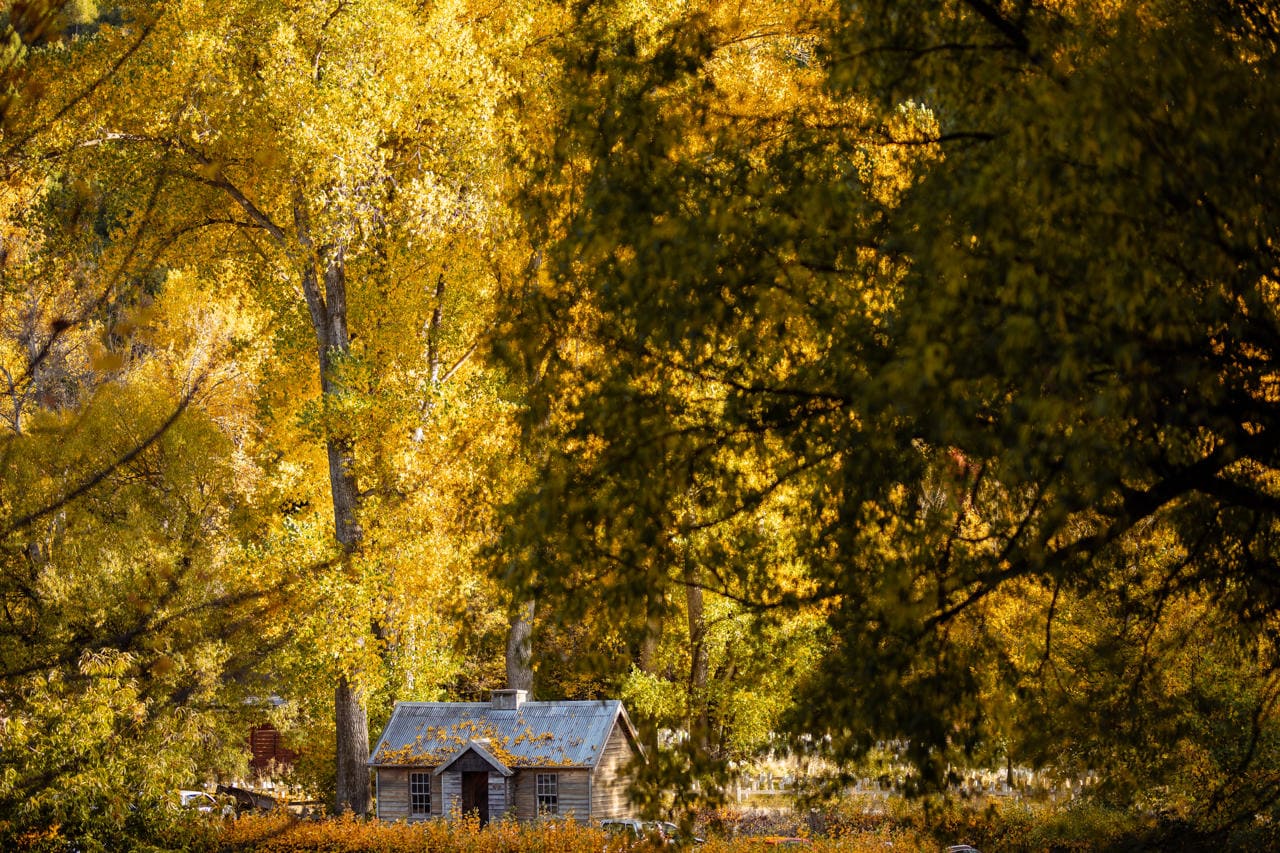
Arrowtown is the best preserved gold rush town on the route. Gold was found in the Arrow River in 1862, and the town grew fast. Its main street of old wooden and stone buildings is now lined with cafés and shops.
Visit the restored Chinese Settlement on the edge of town to learn about the Chinese miners who lived here. Then try gold panning in the Arrow River, where small flakes are still found today. If you want more gold rush history, the road through Skippers Canyon near Queenstown is one of the most dramatic in the country.
Queenstown
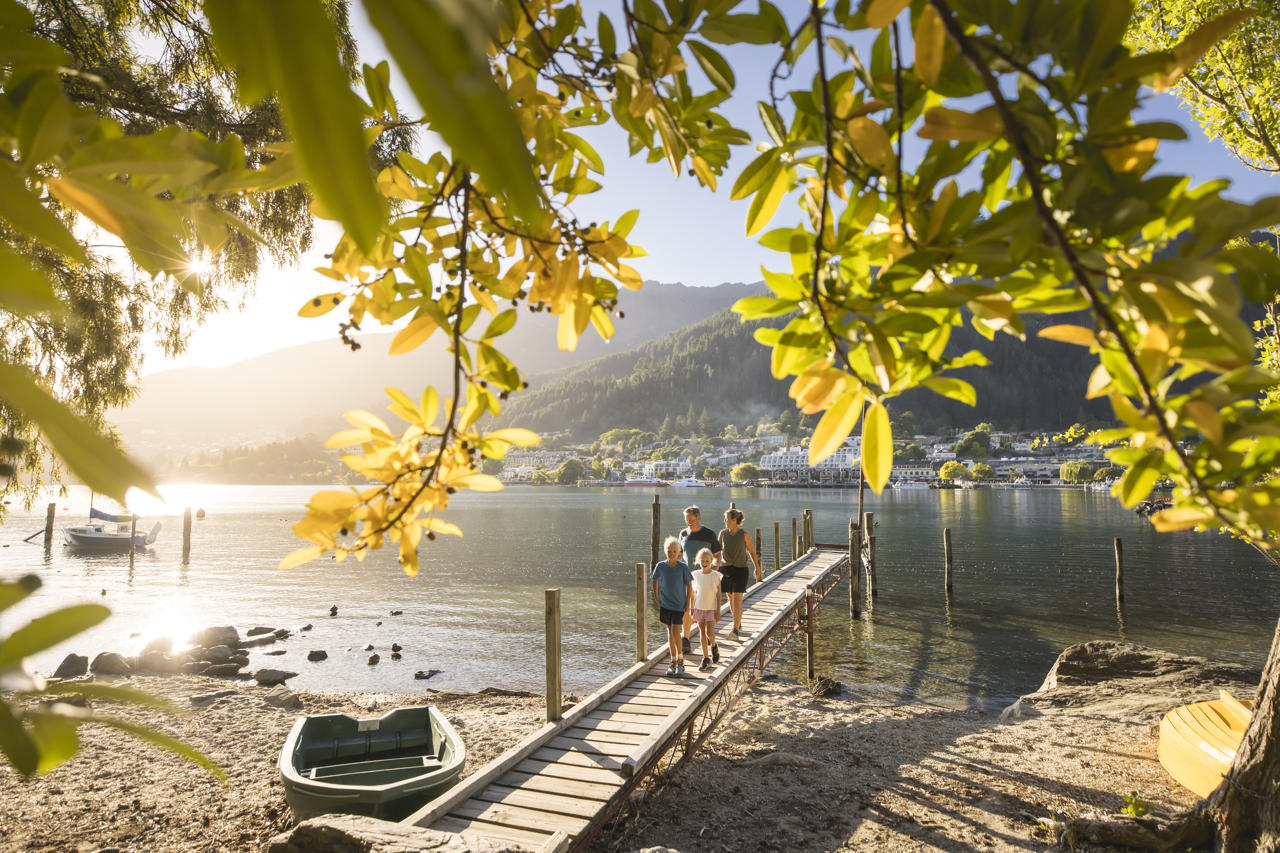
The Central Otago Touring Route ends in Queenstown, the adventure capital of New Zealand. After days of quiet backroads, the lively lakeside town feels like a big finale. Our Queenstown activities page has plenty of ideas for your stay.
Things to Do in Central Otago Along the Route
If you want a quick list, these are the top things to do in Central Otago on this drive:
- Cycle a section of the Otago Central Rail Trail
- Walk around the St Bathans Blue Lake
- Try curling in Naseby
- Taste Pinot Noir in Bannockburn
- Ride the Lake Dunstan Trail
- Pan for gold in Arrowtown
- Visit the Chinese Settlement in Arrowtown
Planning Your Dunedin to Queenstown Scenic Drive
- Allow three to four days. The towns are small and spread out, and you will want time to explore.
- Fuel up in the bigger towns. Fuel is available in Middlemarch, Ranfurly, Alexandra and Cromwell, but distances between towns can be long.
- Book accommodation early. Small towns have limited beds, especially during the cycling season.
- Prepare for extremes. Summers can be very hot and dry, while winter mornings are often icy.
Read our guide to driving in New Zealand for more road tips.
Best Time to Drive the Central Otago Touring Route
Autumn is the most popular season, and for good reason. From March to May, the poplars and willows turn bright gold, especially around Arrowtown. Read our tips on visiting New Zealand in autumn to plan your trip.
Summer is ideal for cycling and wine tasting, with long dry days. Winter brings frosty mornings, clear skies and curling in Naseby. Spring is blossom season, when the orchards around Alexandra and Cromwell burst into flower.
Final Thoughts
The Central Otago Touring Route is a journey through the story of the gold rush. Each town has its own chapter, from the grand buildings of Dunedin to the Blue Lake of St Bathans and the old stone huts of Arrowtown. Add in bike trails, Pinot Noir and wide open skies, and you have one of the most rewarding road trips in the South Island. For more ideas, see our Central Otago activities page.
Frequently Asked Questions
How long is the Central Otago Touring Route?
The route is 341 km long. It takes around four and a half hours to drive without stops, but most people spend three to four days.
Where does the Central Otago Touring Route start and end?
It runs between Dunedin and Queenstown. You can drive it in either direction.
Is this a good Dunedin to Queenstown scenic drive?
Yes. It is much more scenic and interesting than the faster main highway, with gold rush towns, lakes and wineries along the way.
Can you still pan for gold in Central Otago?
Yes. Arrowtown is the most popular spot, and pans can be hired in town. Always follow local rules for public panning areas.
Do I need to cycle the whole Otago Central Rail Trail?
No. Many visitors ride a single section for a few hours. Bike hire and shuttle services make it easy to choose a short ride.
What is the St Bathans Blue Lake?
It is an artificial lake that formed in a deep pit left by gold sluicing. It is now one of the most photographed spots in Central Otago.