
Piha Beach Auckland: The West Coast’s Black Sand Icon
Forty-five minutes west of downtown Auckland, the city skyline gives way to native bush and a coastline unlike anything closer to home. Piha Beach Auckland is the region’s most famous stretch of coast. It’s known for its black ironsand, the landmark of Lion Rock splitting the bay in two, and some of the country’s most powerful surf. Around 600 people live here year-round, and the village has never pretended to be a resort.
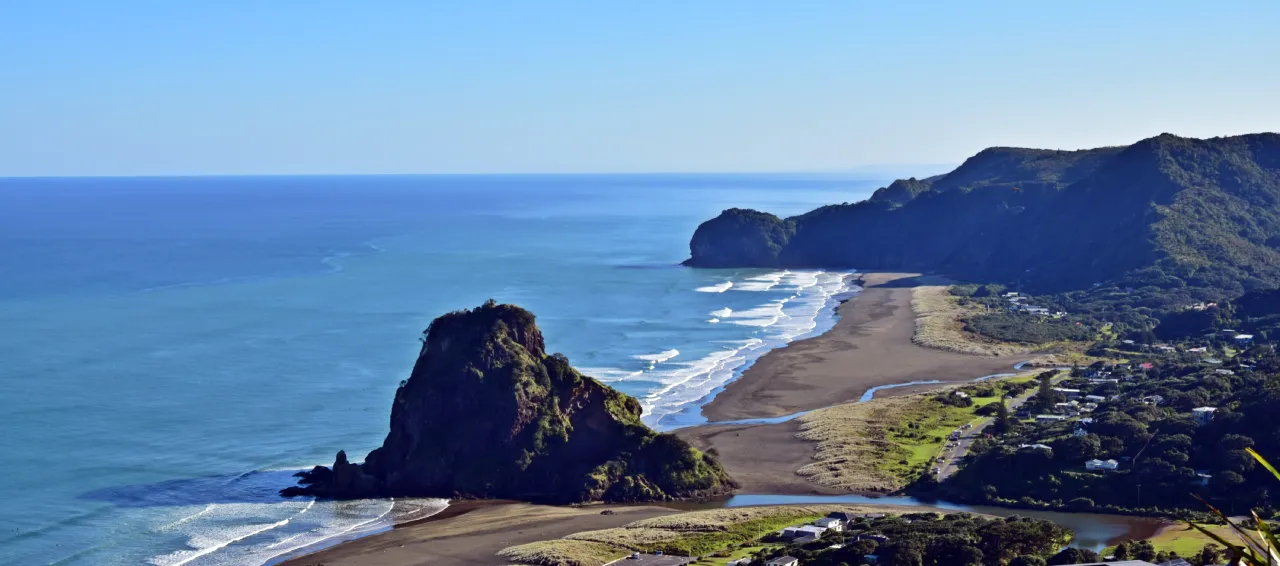
This guide covers what makes Piha Beach New Zealand’s most photographed west coast destination. It also covers the safety, walks, and access details worth knowing before you go.
Quick facts:
- Location: Waitākere Ranges Regional Park, roughly 40–45 minutes west of central Auckland
- Sand type: black ironsand, volcanic in origin
- Landmark: Lion Rock, a 100-metre basalt outcrop at the beach’s centre
- Nearby walk: Kitekite Falls, a 40-metre waterfall reached via an easy return walk
- Safety note: swim only between the patrol flags; Piha has one of New Zealand’s highest rescue rates
Piha Black Sand Beach: What Makes It Different
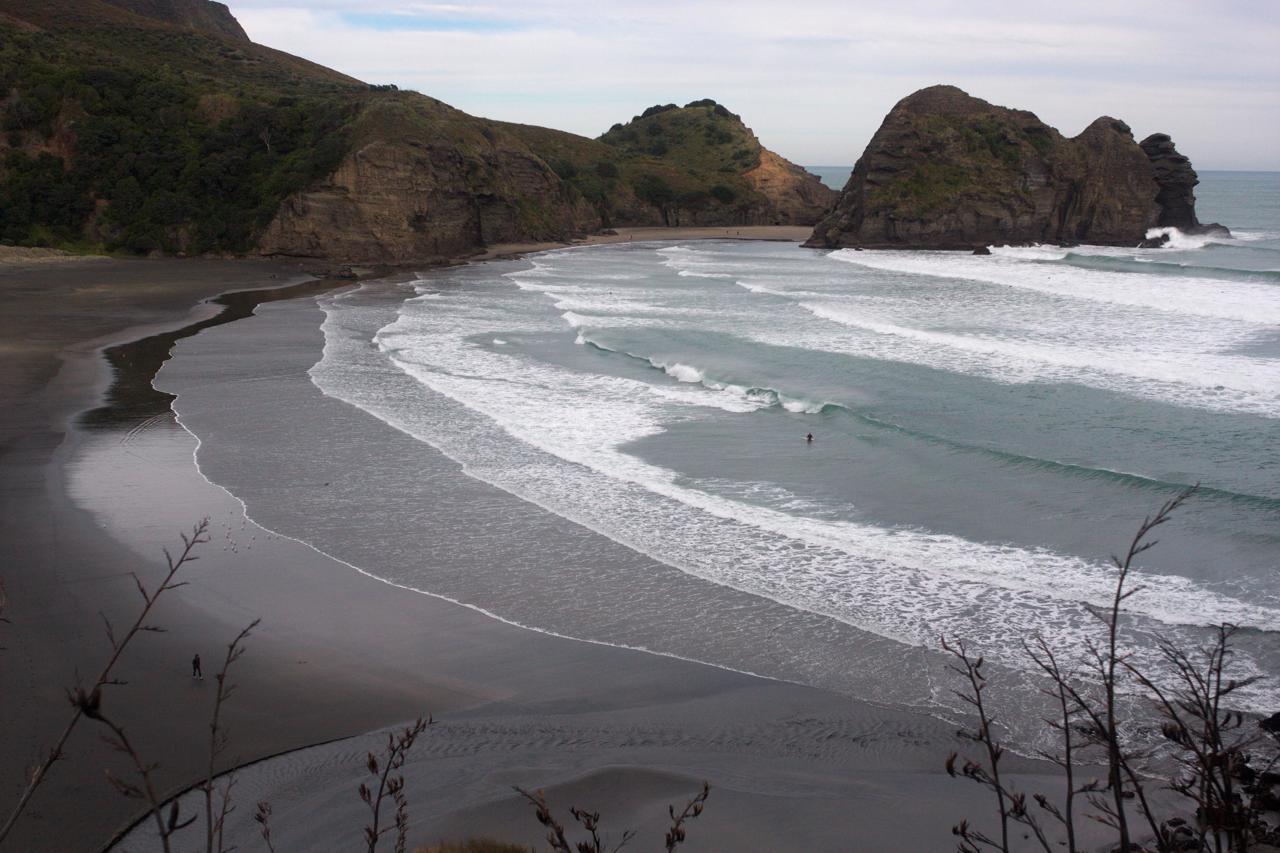
Piha’s black sand is the first thing most visitors notice. Piha’s ironsand is volcanic, heavier, and coarser underfoot than the pale quartz sand found on much of the North Island’s east coast. It absorbs heat quickly, so walking barefoot across the dry sand on a hot afternoon can genuinely catch people out.
A few details help explain how this Piha black sand beach came to look the way it does:
- The sand’s dark colour comes from titanomagnetite, an iron-rich mineral eroded from volcanic rock further up the coast
- The Waitākere Ranges backing the beach are dense native bush, home to nikau palms, kauri, rimu, and tree ferns
- Despite sitting only 40 kilometres from New Zealand’s largest city, the beach retains a genuine sense of wilderness
Piha has no beachfront hotels or big commercial development. Because of this, the black sand and native bush remain very much the main attraction, rather than a backdrop to anything else.
Lion Rock Piha: The Beach’s Defining Landmark
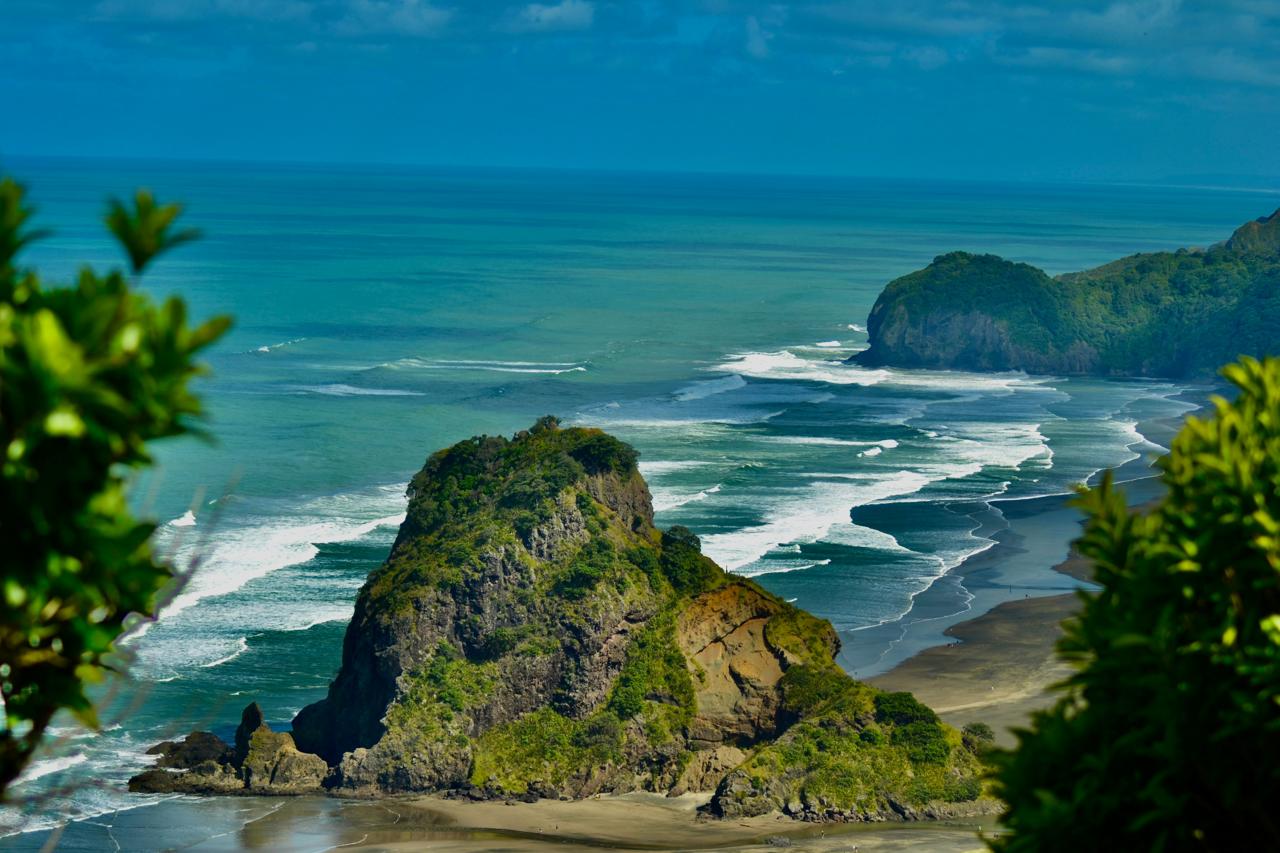
Lion Rock Piha rises from the middle of the beach. It splits the coastline into North Piha and South Piha. The 100-metre basalt outcrop is visible from kilometres offshore and gives the beach its most recognisable silhouette, especially at sunset.
A short, steep track climbs partway up the landward side of Lion Rock. A few details are worth knowing before attempting it:
- The climb takes roughly 15 to 30 minutes return and suits fit walkers and children aged 8 and up
- A viewing platform partway up offers panoramic views back over the beach, though the true summit remains closed to visitors
- The rock is considered tapu, or sacred, in Māori tradition, and visitors are asked to behave respectfully at the top
- The volcanic rock becomes extremely slippery when wet, and falls have occurred; the climb is best avoided in rain or poor light
The rock splits the beach in two. Because of this, it also functions as a natural landmark for wayfinding. Locals often refer to conditions as being better or worse “north of the rock” or “south of the rock.”
Kitekite Falls Piha: The Bush Walk Worth the Detour
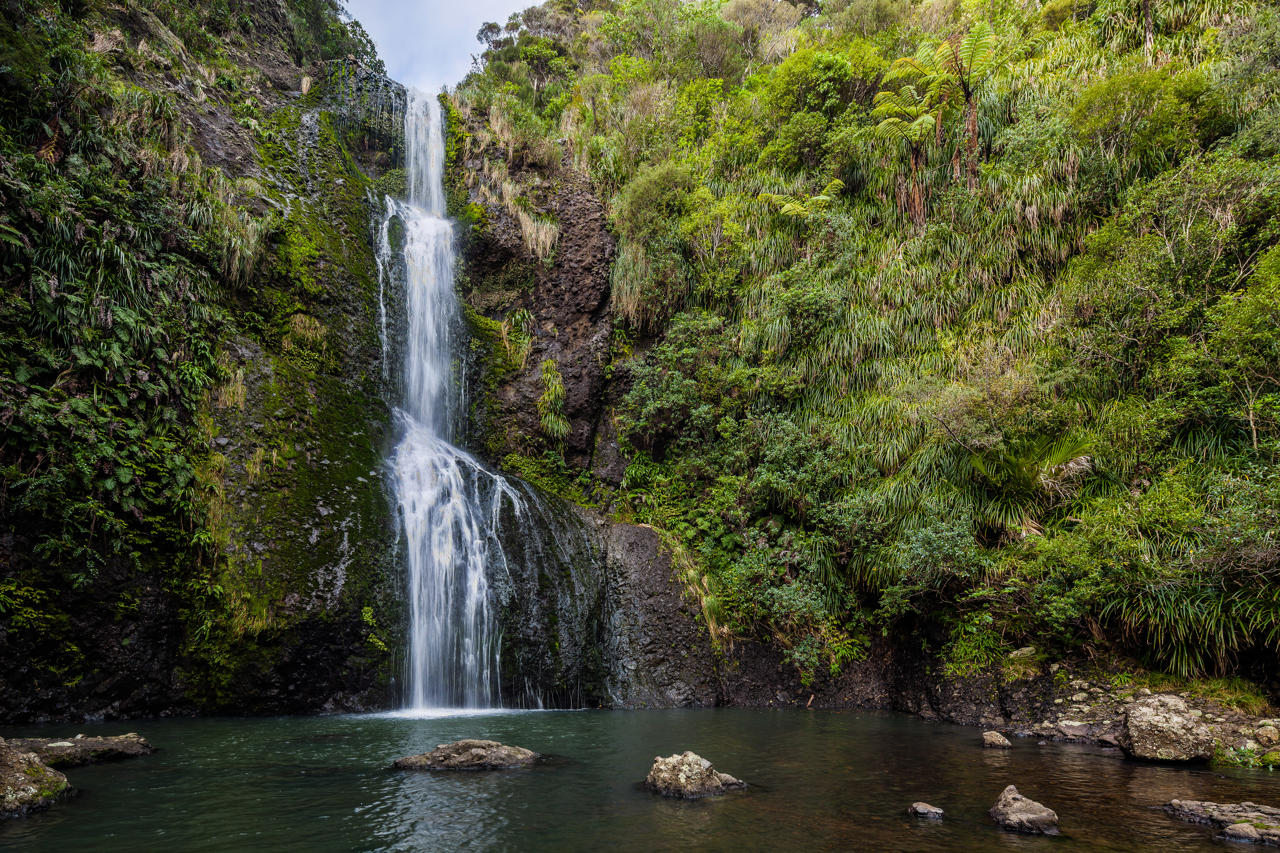
A short drive inland from the beach, Kitekite Falls Piha is widely considered Auckland’s most rewarding waterfall walk. The multi-tiered, 40-metre falls sit at the end of an easy return walk through native rainforest. The walk usually takes around an hour to an hour and a half, depending on the route taken.
A few practical notes make the difference between a good visit and a frustrating one:
- The small car park at the start of the walk fills quickly on sunny weekends, so a morning or weekday visit is worth planning for
- A cool plunge pool sits at the base of the falls, though flow and swimming conditions vary seasonally
- The track crosses a stream that can surge after heavy rain, so it’s worth avoiding a crossing if water levels look high
Most visitors combine Kitekite Falls with beach time on the same day. The walk works well as a cooler, shaded contrast to the exposed sand and surf.
Piha Beach Surfing: New Zealand’s Best-Known Break
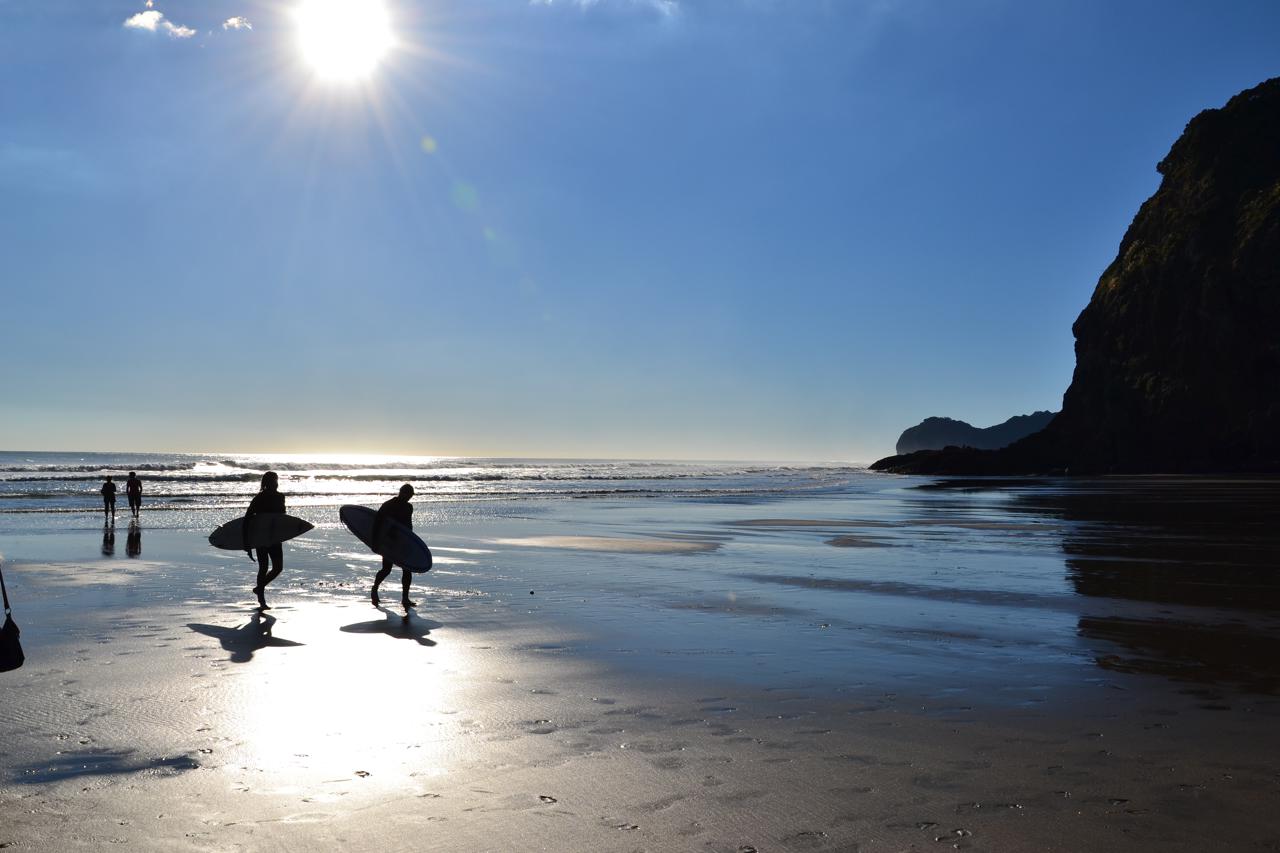
Piha Beach surfing has a reputation that extends well beyond Auckland. Open Tasman swell makes the beach one of New Zealand’s most powerful and consistent surf breaks. It draws everyone from casual bodyboarders to serious big-wave riders.
That same power also makes the beach genuinely dangerous outside the patrolled area:
- Piha has one of the highest drowning and rescue rates of any beach in the country, driven by strong, unpredictable rip currents
- Swimming is only considered safe between the lifeguard flags, and only when patrols are actually operating
- North Piha, on the far side of Lion Rock, is not always patrolled and tends to have more variable conditions
- Local surf schools operate directly from the beach, offering lessons that build in proper rip-current awareness alongside the surfing itself
Conditions can look deceptively calm even when they’re not. Because of this, first-time visitors are generally better off booking a lesson, or sticking close to the flagged area rather than assessing the surf alone.
Comparing Piha’s Main Attractions
| Attraction | Time Needed | Best For |
| Main beach & swimming | 1–3 hours | Sunbathing, swimming between the flags, watching the surf |
| Lion Rock climb | 15–30 minutes return | Photography, panoramic views, a short leg-stretch |
| Kitekite Falls walk | 1–1.5 hours return | Native bush, a waterfall swim, escaping the sun |
| Piha Surf School lessons | 2+ hours | First-time surfers wanting proper rip-current guidance |
Getting to Piha Beach New Zealand
Piha Beach New Zealand sits about 40 to 45 minutes’ drive from central Auckland, reached via winding roads through the Waitākere Ranges. Piha is a small village rather than a resort town. Because of this, it’s worth knowing there’s no petrol station, ATM, or supermarket on-site, so it’s best to arrive prepared.
For travelers who’d rather not navigate the roads themselves, several operators run guided day trips from the city. Our Wilderness Experience Tour covers the Waitākere Ranges and Piha’s black sand beach together in a single guided outing, including a stop at the Arataki Visitor Centre en route. Our things to do in Auckland guide rounds up the wider city if you’re building Piha into a longer Auckland stay.
Beyond Piha: The Wider West Coast
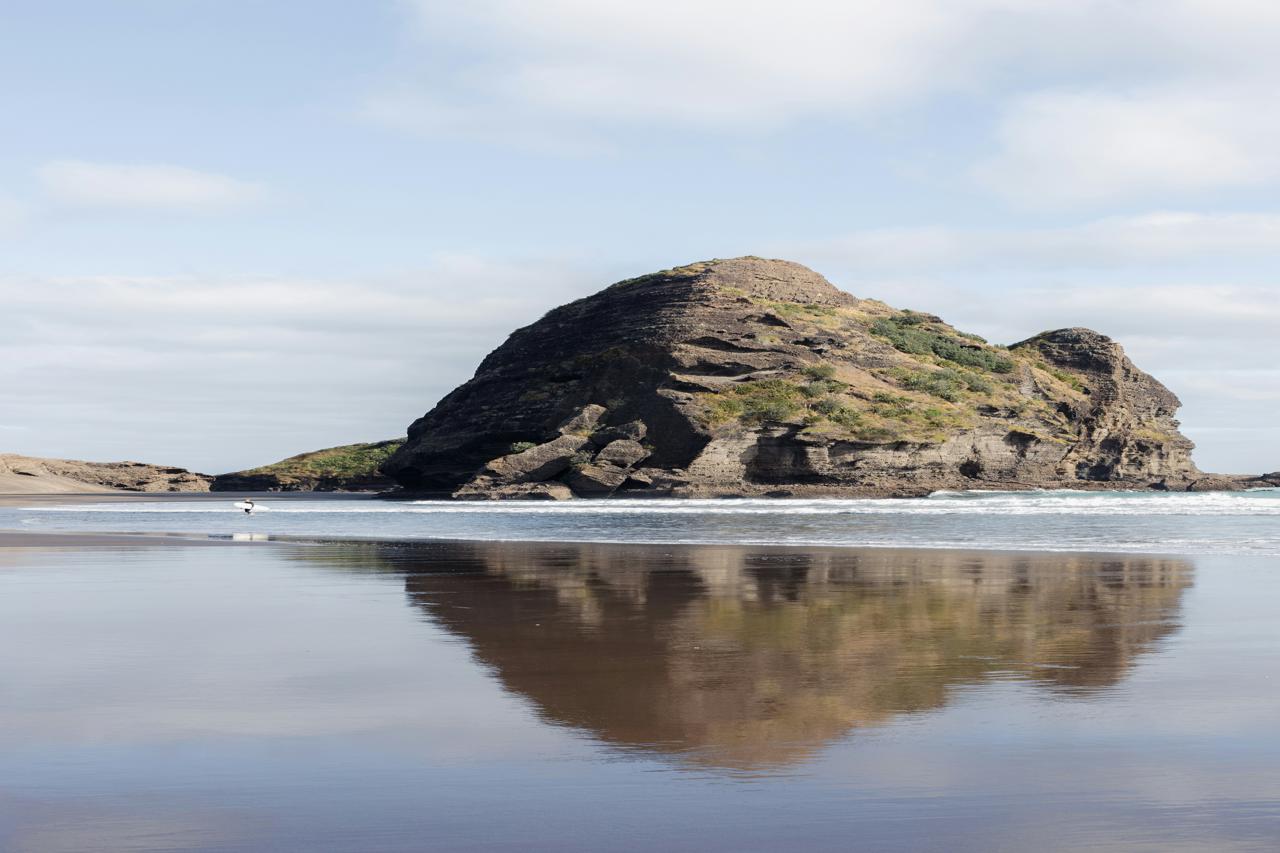
Piha isn’t the only black sand beach along this stretch of coast. Karekare, a smaller and more sheltered beach roughly 3 kilometres south, offers its own waterfall and a quieter alternative. It also carries a certain cinematic history of its own. Muriwai, further north, adds a rare mainland gannet colony to the mix of black sand and cliffside walking tracks.
If you’re planning a longer coastal itinerary, our best hikes in New Zealand guide includes a longer Piha-area track taking in Lion Rock and the Te Mata rock formations. Our best beaches in New Zealand guide and recent top New Zealand beaches roundup both feature Piha among their standout North Island picks.
Planning Your Trip
Piha sits so close to Auckland that it works well as a half-day or full-day trip. It doesn’t require an overnight stay, though the village does offer some accommodation for those who want to linger. A North Island self-drive tour can weave Piha and the Waitākere Ranges into a longer route around the North Island. Alternatively, our customizable New Zealand vacation packages can shape a trip entirely around your own interests. You can also add Piha Beach directly to your custom vacation package wishlist.
When to Visit
Conditions at Piha shift with the seasons, though the beach remains active year-round:
- Summer (December-February): the busiest season, with lifeguards patrolling and the warmest water for swimming
- Autumn (March-May): still fully operational for surfing, with water temperatures around 18–20°C and consistent, well-shaped swells
- Winter (June-August): cooler and quieter, with surf schools generally running on weekends rather than daily
Piha’s rips don’t take a break just because the flags aren’t up. Regardless of season, checking lifeguard patrol hours before swimming is essential.
Auckland’s Wildest Beach
Most first-time visitors arrive expecting a typical city beach. They leave having experienced something closer to genuine wilderness, just 40 minutes from the CBD. Lion Rock still dominates the skyline. Kitekite Falls still rewards the short walk inland. The surf remains exactly as powerful as its reputation suggests.
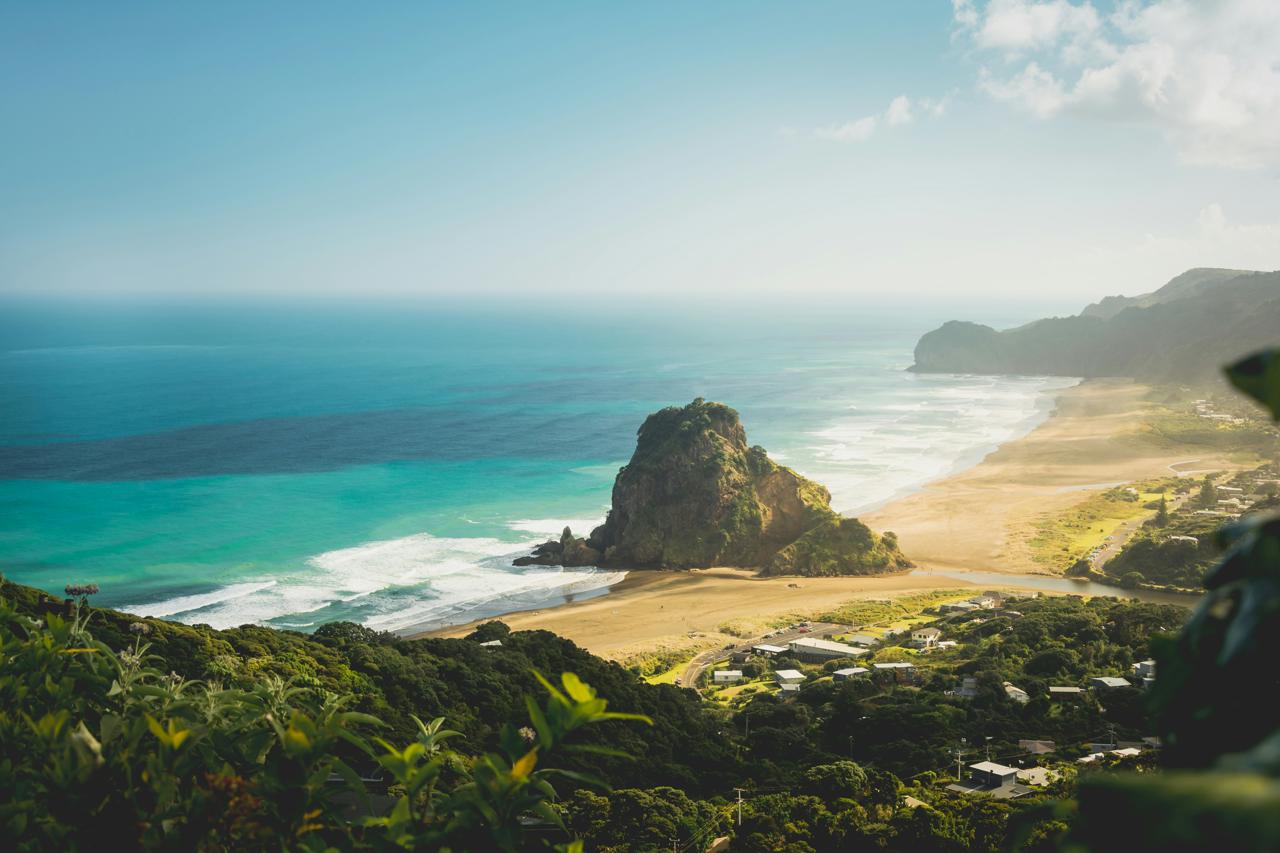
You might be drawn here for the Piha Beach surfing, the climb up Lion Rock, or simply the contrast of black sand against native bush. Either way, this stretch of coast remains one of Auckland’s most rewarding day trips.
Browse our Wilderness Experience Tour or get in touch to start planning a trip built around Piha Beach and the Waitākere Ranges.