

The New Zealand Oyster Trail at a Glance
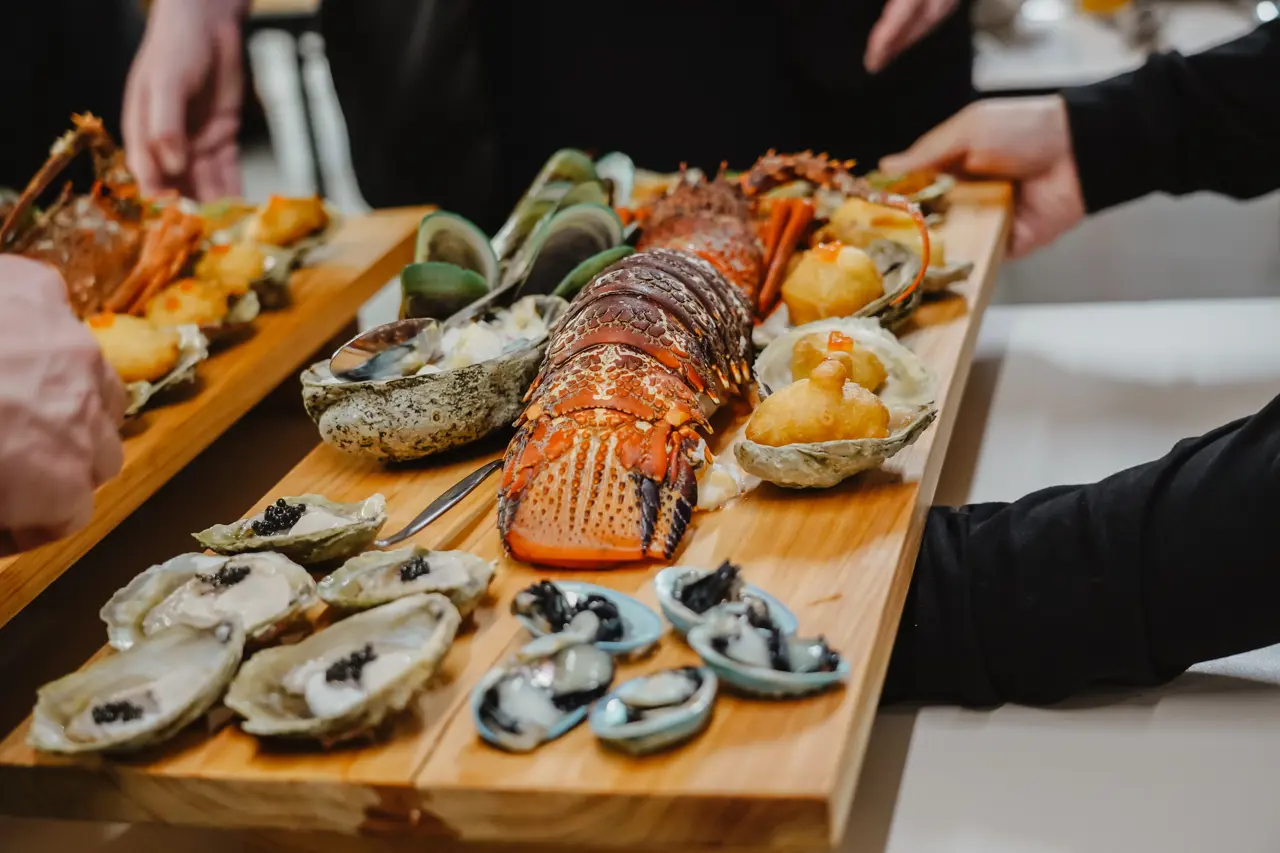
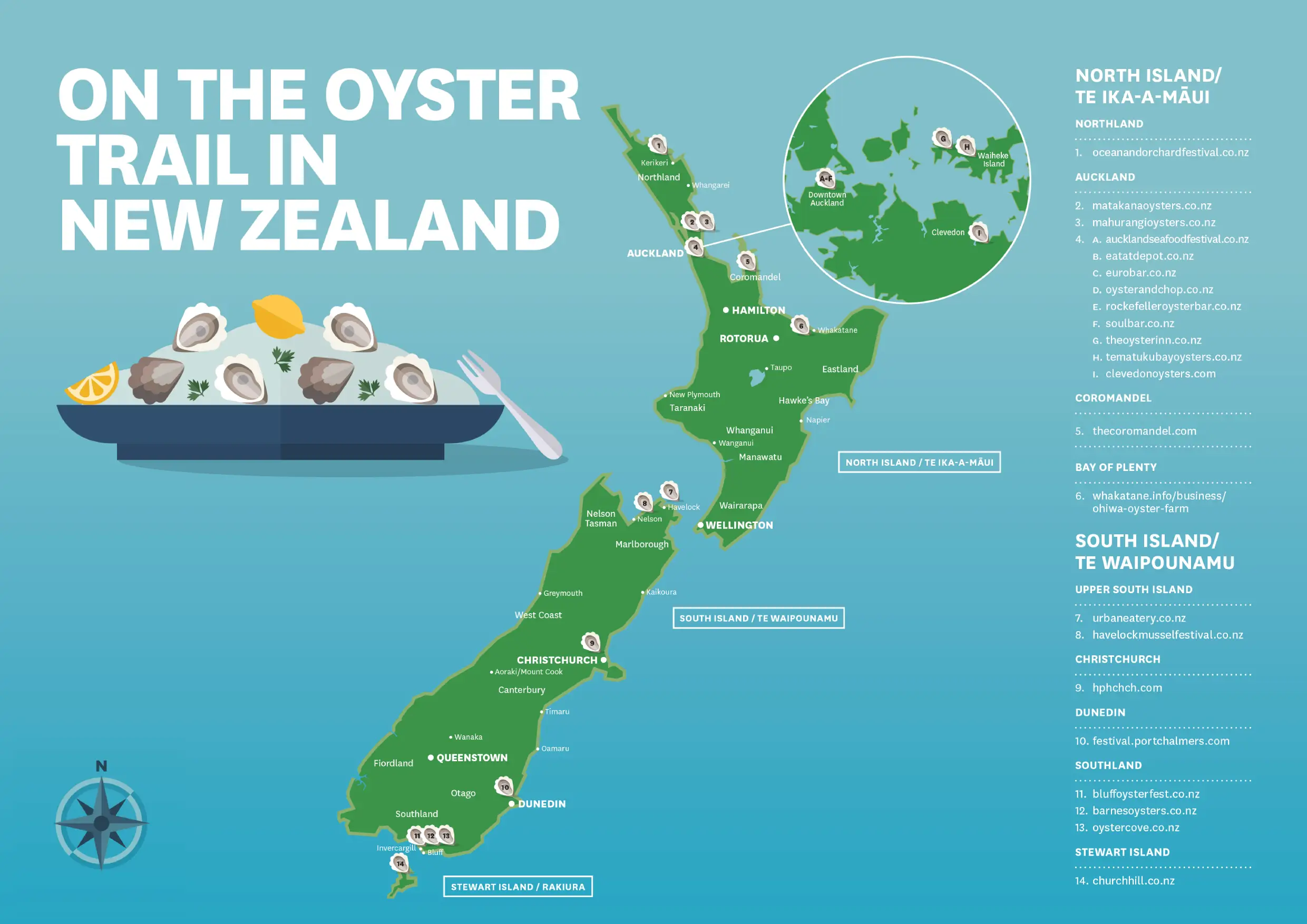
The New Zealand oyster trail runs from the Far North to the bottom of Stewart Island. It has 14 numbered stops, plus nine more tucked inside Auckland, and every one is built around the same salty idea: eat oysters where they’re grown. You’ll find farms, festivals, waterfront bars and one remote island restaurant.
This guide walks you through all 14 stops, region by region, with the map numbers kept in place. It also covers what’s changed lately, especially for Bluff oysters. Plan a self-drive trip around the festivals, and you could taste your way from Kerikeri to Rakiura.
Why New Zealand Oysters Are Worth the Trip
Three types grow here: Bluff, rock and Pacific. Pacific oysters are farmed and available all year, which is why you’ll find them on most menus. Bluff oysters are different. They’re wild, flat and cold-water, pulled from Foveaux Strait in the far south, and they come with a season.
Each farm tastes a little different. Waiheke’s Te Matuku oysters are delicate and sweet, while Mahurangi’s are briny with a flinty finish. Clevedon’s Pacifics come out sweet and plump. So the trail is also a tasting tour, and the order you eat in matters.
When Is Bluff Oyster Season?
Bluff oyster season runs from the start of March to the end of August. Boats leave Bluff well before dawn, and it’s New Zealand’s oldest commercial fishery. That’s the good news.
The tougher news is supply. The harvest ended early in 2023, 2024 and 2025, and the 2026 season was described as difficult. Ngāi Tahu Seafood sat out the season for a second year, and some restaurants chose not to serve Bluff oysters. So check before you plan a trip around them. Pacific oysters are a safe fallback in any month, and the next season opens in March.
Where to Eat Oysters in New Zealand: The 14 Trail Stops
Northland (Stop 1)
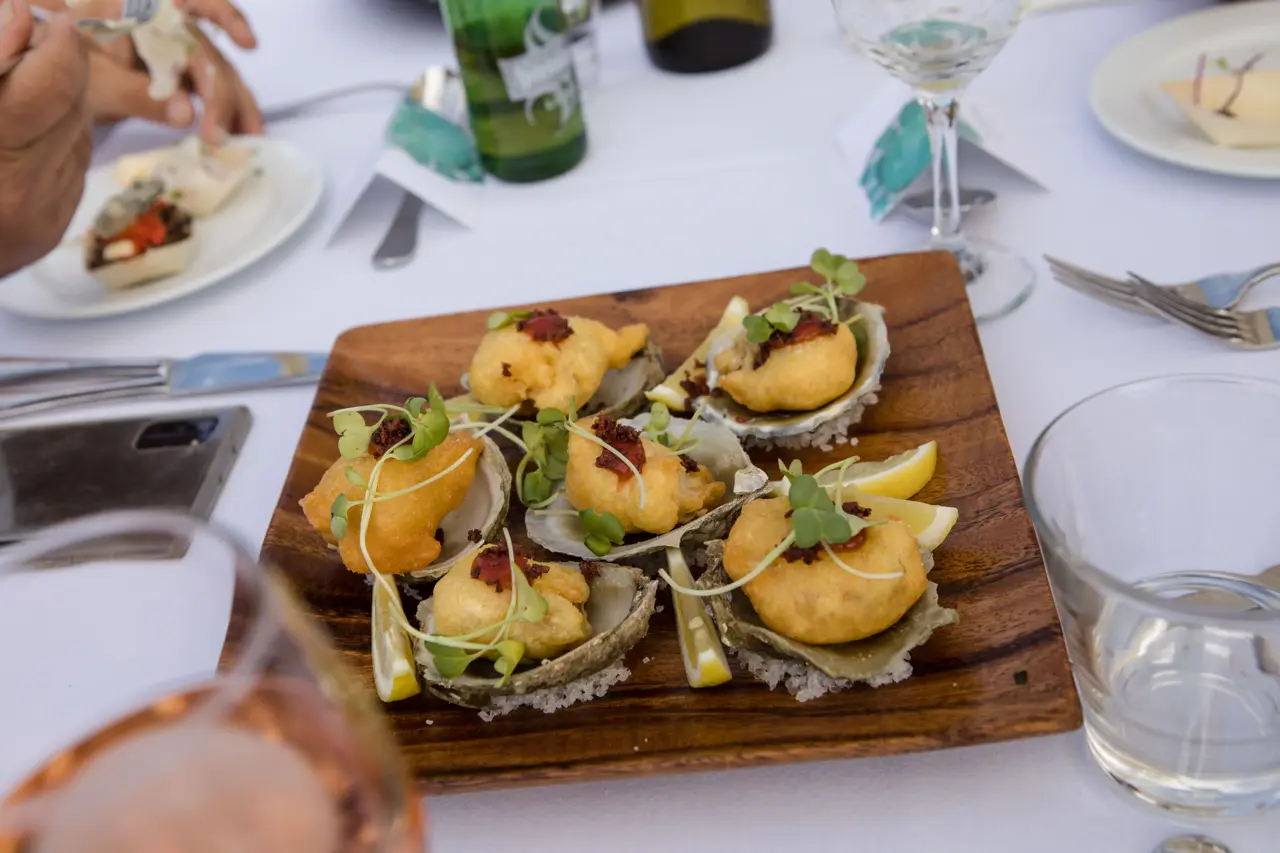
Stop 1 is the Ocean and Orchard Festival at the Kerikeri Domain. It has dozens of Northland food and wine stalls and an oyster-shucking contest. Local organisers say Northland oysters hit their prime in October, so plan around spring. More ideas are on our Northland and Bay of Islands page.
Auckland and the Hauraki Gulf (Stops 2–4)
Auckland packs in the most stops, so budget a few days. It’s the easiest place to find the best oysters in Auckland and then hop on a ferry for more.
- Stop 2, Matakana Oysters: The Matakana coast is one of the country’s top growing regions. A Matakana oyster tastes briny and strong.
- Stop 3, Mahurangi Oysters: Another north-of-Auckland grower, with a salty, clean finish.
- Stop 4, Auckland city and Waiheke: This stop holds nine listings, labelled A to I.
In the city, you’ll find the Auckland Seafood Festival (A), plus Depot (B), Euro (C), Oyster and Chop (D), Rockefeller Oyster Bar (E) and Soul Bar and Bistro (F). Check the festival’s website for current dates, because Auckland’s waterfront seafood events have changed in recent years. In 2026, Moana Auckland opened with a free seafood weekend at the Viaduct. Depot hasn’t served Bluff oysters in recent seasons, and Soul skipped its big Bluff oyster event in 2026, so ask before you book.
Then catch a ferry to Waiheke. Waiheke Island oysters are the island’s pride, and The Oyster Inn (G) in Oneroa shucks Te Matuku oysters to order, delivered daily from a farm about six kilometres away. Te Matuku Bay Oysters (H) sells from its shop in Ostend all year. The farm sits in a marine reserve, and it’s said to be the only oyster farm in the world that does. Finish at Clevedon Oysters (I), about 40 minutes southeast of the city. Our Auckland page covers ferries and day trips.
Coromandel (Stop 5)
Coromandel Oyster Company in Coromandel Town is a rustic shore shack. You can watch the team shuck while you eat, and the oysters grow in the harbour you’re looking at. Visit in May for the Coromandel Seafood Festival, which includes oyster and mussel shucking. Whitianga also hosts an Oceans Festival on its waterfront. See our Coromandel Peninsula page, and add the Glass Bottom Boat Cathedral Cove Cruise on a day off.
Bay of Plenty (Stop 6)
Stop 6 is Tio Ōhiwa, formerly the Ōhiwa Oyster Farm. It’s Māori-owned and has grown oysters since 1968. The shuck and cruise tour runs daily, timed with the high tide, and the farm also hosts a festival at Port Ōhope each May. Browse our Bay of Plenty page for more.
Nelson and Marlborough (Stops 7–8)
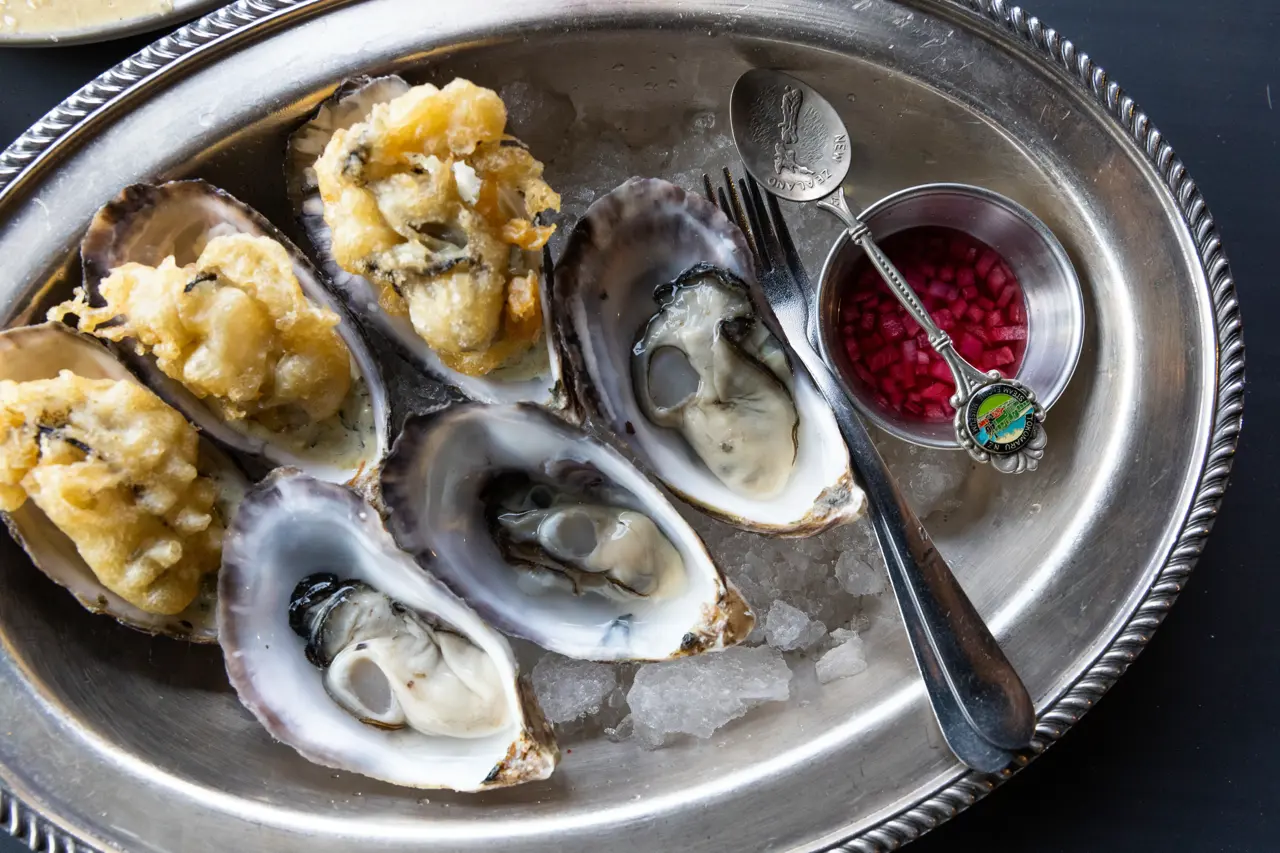
Stop 7 is Urbane Eatery in the Nelson Tasman region, a relaxed spot to start a South Island run. Stop 8 is the Havelock Mussel and Seafood Festival, held on a Saturday in March in the town that calls itself the Greenshell Mussel Capital. Stalls serve freshly shucked oysters alongside the mussels, and there are free buses from Picton. Pair it with our guides to the Marlborough Sounds, and see the Marlborough and Nelson Tasman pages.
Christchurch (Stop 9)
Stop 9 is the trail’s single Christchurch listing, and the only one in Canterbury. It’s an easy overnight between the Marlborough coast and the deep south. Our Christchurch and Canterbury page lists plenty to fill an evening.
Dunedin (Stop 10)
The Port Chalmers Seafood Festival sets up on the working wharf at Port Otago, about 15 minutes from central Dunedin by road. It usually lands in spring. A harbour cruise from Dunedin has run as a festival ferry, which makes arriving by boat half the fun. Explore our Dunedin and Otago page.
Southland (Stops 11–13)
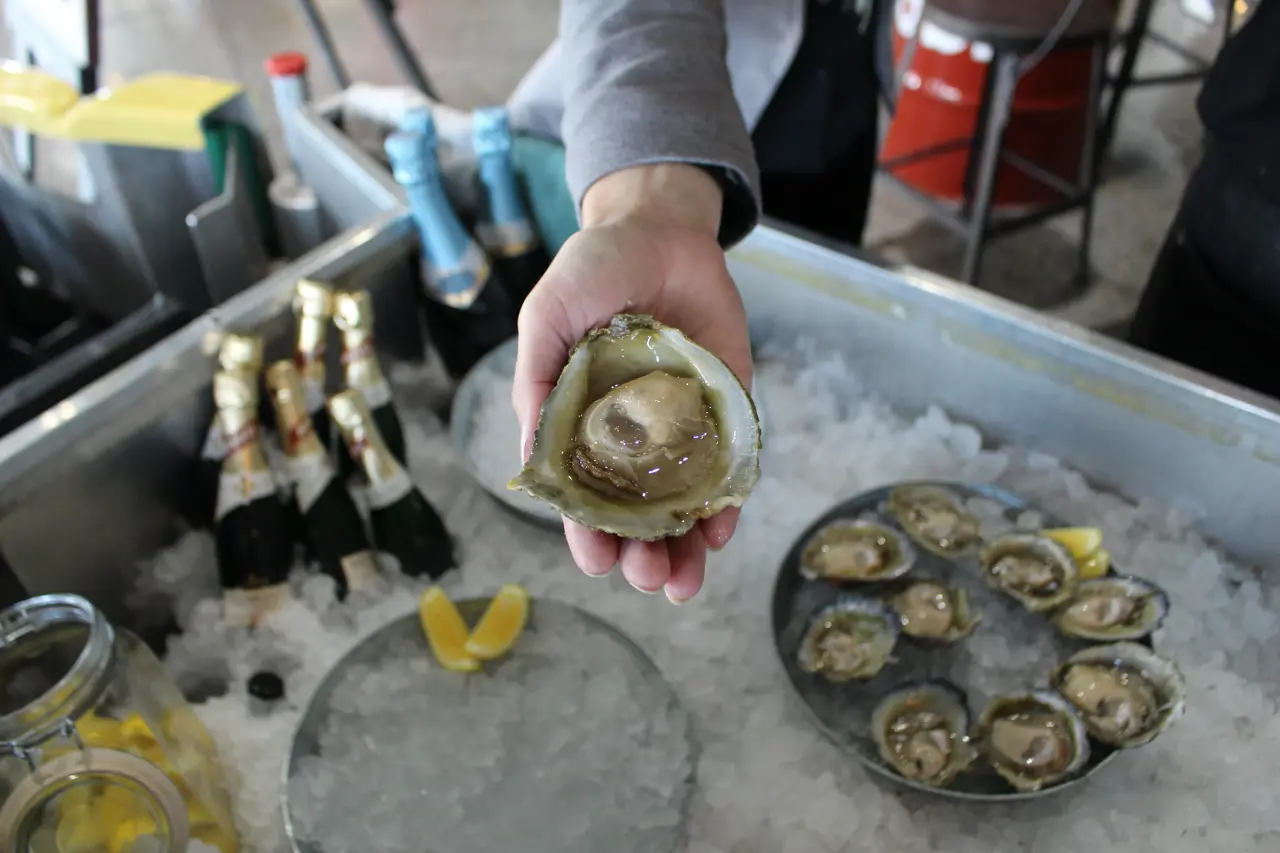
This is the trail’s showpiece, and it’s worth the long drive south.
- Stop 11, Bluff Oyster Festival: The Bluff Oyster and Food Festival is held in late May. At 11am, the Invercargill Highland Pipe Band pipes the oyster onto the site, and someone recites the Ode to the Oyster. Past years have seen up to 20,000 oysters eaten. Tickets often sell out, so buy early, and confirm the next date on the festival website.
- Stop 12, Barnes Oysters: Barnes Wild Bluff Oysters was founded in 1958 and is based in Invercargill.
- Stop 13, Oyster Cove: A restaurant at Stirling Point, the start of State Highway 1. Expect big sea windows, Bluff oysters in season and Pacific oysters outside it.
Organisers have warned about the festival’s future in recent years, so check before you book flights. Our Southland page has more for the region.
Stewart Island/Rakiura (Stop 14)
The last stop is Church Hill Restaurant and Oyster Bar in Oban. Reach it by a one-hour ferry from Bluff, or fly from Invercargill in 15 to 20 minutes. It’s a fitting end to the trail, with Foveaux Strait right outside. See our Stewart Island page for walks and kiwi spotting.
A 12-Day Oyster Trail Itinerary
Short on time? This route hits the biggest stops without too much backtracking.
- Days 1–3: Auckland (Stop 4), with a Waiheke day for Stops G and H, and a side trip to Matakana and Mahurangi (Stops 2 and 3).
- Days 4–5: Coromandel Town (Stop 5).
- Day 6: Ōhiwa Harbour (Stop 6), then fly or drive to Wellington for the ferry.
- Days 7–8: Nelson and Havelock (Stops 7 and 8).
- Day 9: Christchurch (Stop 9), then south to Dunedin and Port Chalmers (Stop 10).
- Days 10–12: Invercargill and Bluff (Stops 11 to 13), then the ferry to Stewart Island (Stop 14).
Festivals fall on fixed weekends, so build your dates around the one you care about most. If that’s Bluff, aim for late May and book accommodation early.
Plan Your Own Oyster Trail Road Trip
Timing shapes everything. Here’s how the festival calendar tends to fall.
- March: The Havelock festival, and the start of Bluff oyster season.
- May: Bluff, plus the Coromandel and Ōhiwa festivals.
- Spring: Port Chalmers and the Northland oyster season.
The North Island half works well in a campervan. Link Auckland, Coromandel and Ōhiwa over five or six days. Then cross on the Interislander ferry and drive down the South Island. Our driving in New Zealand page covers road rules, and the best time to visit New Zealand guide helps you pick your month.
Want more than oysters? Our 7 Day Premium Food and Wine Discovery and wine tours pair well with this trail. Or send us a custom tour request and we’ll check what’s possible for your dates.
Travel the Oyster Trail Responsibly
The oyster trail only works if the shellfish stay healthy. Bluff stocks have taken a hit from disease, and the people closest to the fishery have chosen to fish less. You can help by eating with the seasons and asking where your oysters come from. If a restaurant has no Bluff oysters, take the Pacific ones and enjoy them.
Leave wild shellfish alone unless you know the local rules. Gathering limits and closures vary by area, and some beds are closed for safety. Farm tours and festival stalls are the simplest way to taste the real thing. And if you’re staying in a campervan, our New Zealand itinerary ideas show how to stitch the stops into a longer trip.
New Zealand Oyster Trail FAQs
What are the distinct characteristics of oysters from New Zealand?
Cold, clean water gives New Zealand oysters a fresh, briny taste, and three types grow here. Bluff oysters are wild, flat and cold-water, with a fuller, meatier flavour and a short March to August season. Pacific oysters are farmed, available all year and change from bay to bay: Waiheke’s are delicate and sweet, Mahurangi’s are briny with a flinty finish and Clevedon’s are sweet and plump. Rock oysters are a smaller local species that rarely appear on menus.
Are there specific New Zealand oyster varieties available for purchase in the US?
In practice, only Pacific oysters have a route to the US. They are the variety New Zealand farms at scale, and the industry has exported part of its harvest for decades. Bluff oysters are rarely, if ever, found outside New Zealand, and rock oysters are uncommon even at home. Availability changes, so ask any US seller exactly which species they carry and which farm it came from. If you want to taste all three types, the trail is the dependable way to do it.
How to properly shuck a New Zealand oyster?
Wrap the oyster in a folded towel with the cupped shell down and the hinge facing you. Push the tip of an oyster knife into the hinge and twist until it pops. Slide the blade along the top shell to cut the muscle, lift the lid off, then free the oyster from the bottom shell. Keep it level so you don’t lose the juice, and check for shell fragments before serving. Always protect your hand with a towel or a cut-resistant glove. Bluff oysters are flat with a shallower cup, so take extra care to keep the shell level.
How to identify high-quality New Zealand oysters when purchasing online?
Look for tightly closed shells, a clean sea smell and plump, glossy meat in clear liquid. When buying online, check that the box arrives cold rather than frozen, and that the seller says whether the oysters are live or pre-shucked. Reputable sellers also include a tag showing the harvest date and growing area. Discard any oyster with a cracked shell, a shell that stays open, or a sour smell. Chef Al Brown has noted that opening a dozen can reveal a few great ones, some middling ones and a few runts, so quality varies even from a good source.
What is the typical price range for New Zealand oysters per dozen?
It depends on the season and the supply. A dozen Bluff oysters has recently cost roughly NZ$40 to $50 in New Zealand shops, which is about US$23 to $29 at current exchange rates. Restaurants charge more, and Pacific oysters usually cost less. Prices for Bluff oysters can rise when the season is short, so check before you plan a meal around them.
Which companies offer sustainable New Zealand oyster farming practices?
Two trail stops stand out. Te Matuku Bay Oysters on Waiheke Island farms inside a marine reserve and tests its water weekly. Tio Ōhiwa in the Bay of Plenty is Māori-owned, has grown oysters since 1968 and puts sustainability at the centre of its business. The wild Bluff fishery is managed through a quota system and a fixed March to August season, and some quota holders, including Ngāi Tahu Seafood, have chosen not to fish in recent years to ease pressure on the seabeds.
Where can I buy fresh New Zealand oysters online for delivery in the US?
There is no established route that we could confirm. Long-haul shipping and US import checks make live New Zealand oysters a difficult product to sell by mail order, and the well-known US online oyster shops sell US-grown oysters instead. If you want oysters at home, US growers such as Taylor Shellfish Farms and Island Creek Oysters ship across the country, though some states have restrictions. For New Zealand oysters, the freshest option is still to eat them where they’re grown.
What are the top-rated New Zealand oyster farms exporting to the United States?
We couldn’t find a published ranking of New Zealand oyster farms by US exports. Clevedon Coast Oysters in the Hauraki Gulf lists the US among its export markets, and any shellfish sent to the US must come from certified growing areas that meet US requirements. For quality, the farms on this trail are a good place to start, including Te Matuku Bay, Matakana, Mahurangi and Clevedon. Contact a farm directly to ask whether it currently ships to the US.
Where to buy fresh New Zealand oysters in the United States?
Fresh New Zealand oysters are not a regular item in US fish markets. Specialty fishmongers and restaurant seafood distributors are the likeliest sources, so ask them which species they can order and which farm it comes from. If a restaurant lists New Zealand oysters, ask when they arrived and whether they are live. Be cautious about any seller who calls an oyster a Bluff oyster, since those are wild-caught in Foveaux Strait and rarely leave New Zealand.
Best online retailers specializing in premium New Zealand oysters?
We couldn’t find a US online retailer that specializes in premium New Zealand oysters. The closest thing to buying direct is a farm shop in New Zealand, such as Te Matuku Bay Oysters in Ostend on Waiheke Island, which sells all year. For premium oysters delivered at home in the US, established US growers such as Taylor Shellfish Farms and Island Creek Oysters are a reliable choice. For the real New Zealand experience, plan a visit to the trail.
Festival dates, opening hours and Bluff oyster supply change from year to year. Confirm details with each stop before you go.