
Giant Weta: Meet New Zealand’s Heaviest Insect
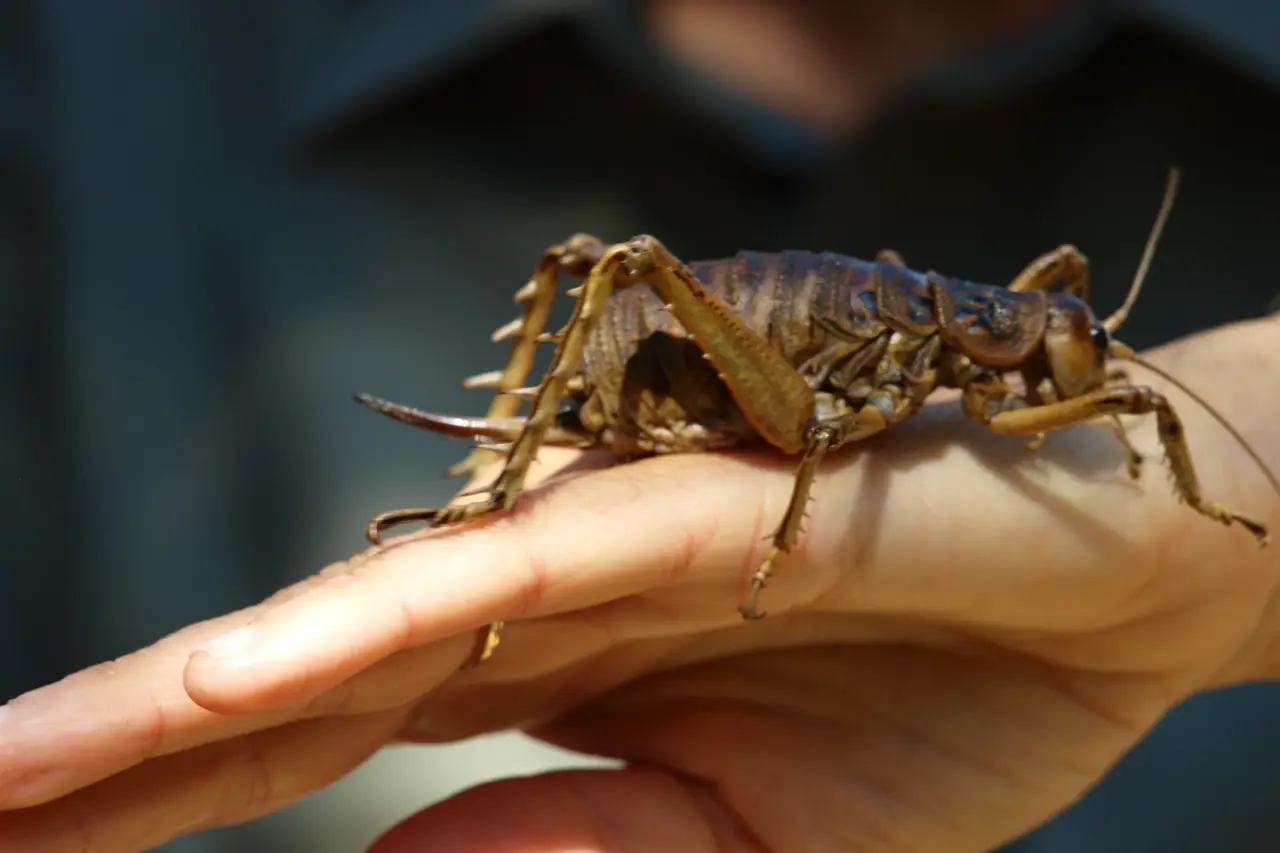
Picture an insect that outweighs a house sparrow. Now picture it climbing a tree at night, with antennae waving ahead of it. That is the giant weta, and it lives only in New Zealand. It has been around since long before people arrived, it holds the weight record for any insect, and it came very close to disappearing for good. Today it is staging a quiet comeback, so you can see one yourself with a little planning.
In this article we look at how big a giant weta really gets, why it grew so large, and what nearly wiped it out. We also show you where to meet one on your trip. (In te reo Māori the word is written wētā, with macrons. We’ve used the plain spelling here. Like many Māori words, weta has no plural, so one weta or ten weta.)
What Is a Giant Weta?
A weta is a large, wingless relative of the cricket. New Zealand has more than 70 species, and 11 of them count as giant weta. The biggest of the 11 is the Little Barrier Island giant weta, which Māori call wetapunga. People often translate that name as “god of ugly things”. We think that is a little unfair.
Weta are also very old. The family has been around for roughly 190 million years, so this family watched the dinosaurs come and go. They are mostly nocturnal, too. By day they hide in tree holes and tangled vegetation. At night they come out to feed, mostly on leaves and fruit.
Despite the looks, the animal is placid. It won’t chase you, and it isn’t venomous. Even so, those spiny back legs are made for kicking, so look but don’t pick one up.
How Heavy Is the Giant Weta, Really?
The record belongs to a female wetapunga found on Little Barrier Island in 2011. She was full of eggs and weighed 71 grams. That is more than a house sparrow, and it is still the heaviest verified weight for any insect.
Most giant weta are far lighter. A typical adult weighs somewhere between 9 and 35 grams, which is less than half the record. The body of a big one measures about 7 to 8 centimetres. Stretch out the legs and antennae, though, and the whole animal looks much larger.
There is a fair argument about the title. Goliath beetles and elephant beetles commonly top 50 grams as adults, and goliath beetle grubs can pass 100 grams. So the crown comes with some fine print. Among adult insects with a weight on record, the giant weta still holds the heavyweight title, at least for now.
Why Did Weta Grow So Big?
Scientists call it island gigantism. New Zealand has been isolated for a very long time, and it had no native land mammals apart from bats. With no mice, no stoats and nothing furry hunting after dark, large and slow insects could do well. One could lumber around the forest floor and the canopy without much to fear.
Size came at a price, however. These insects can’t fly, and they can’t run fast. They relied on the dark and on good hiding places. That worked for millions of years. Then new arrivals turned up with very different habits.
What Nearly Wiped Out the Giant Weta?
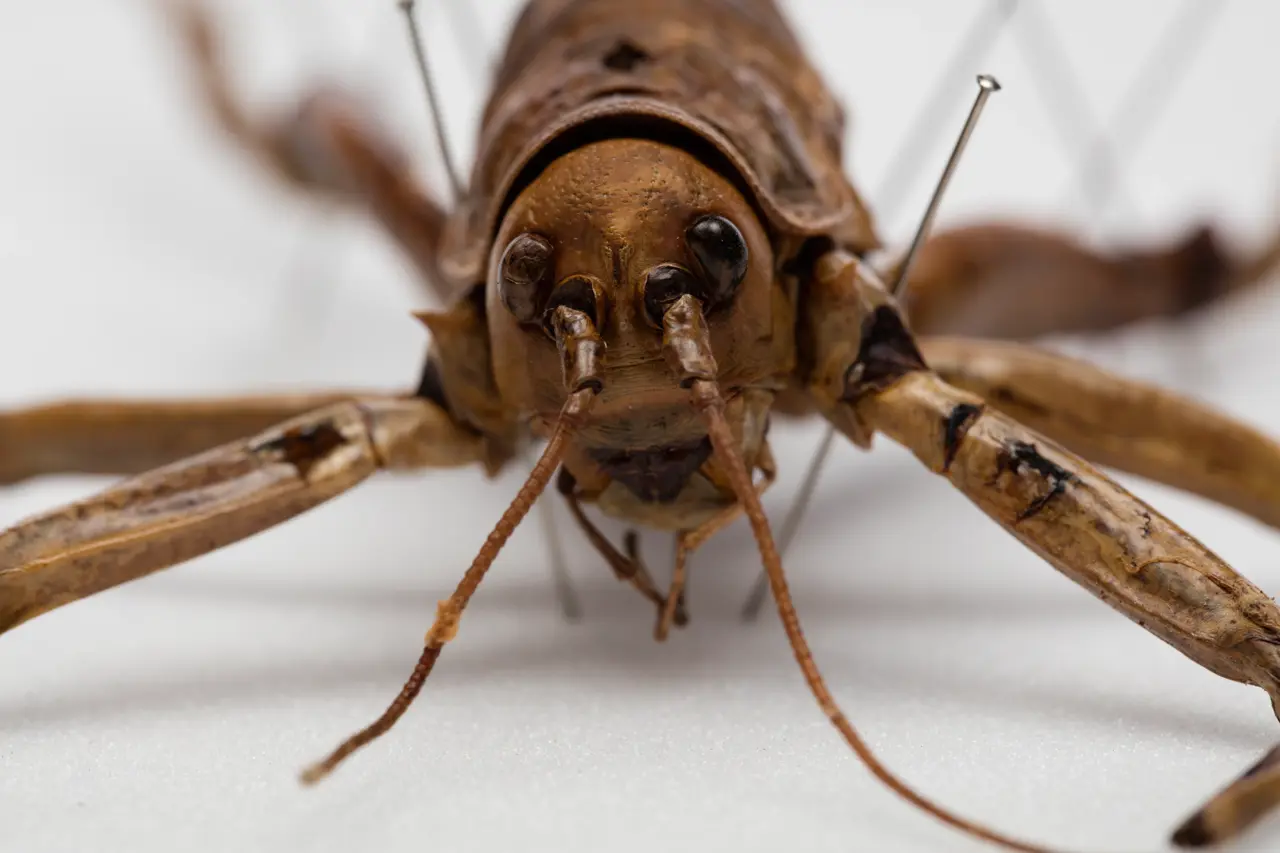
Rats, mostly. They came ashore from boats, first with Polynesian settlers and later with Europeans. To a rat, a slow, plump insect with no defence against mammals is an easy meal. The Department of Conservation says predation, rather than habitat loss, is the main reason the wetapunga declined.
Wetapunga once lived across Northland, Auckland and Great Barrier Island. In the end the biggest species survived on a single island, Little Barrier, also known as Hauturu-o-Toi. Numbers fell even there from the 1950s. Other giant weta species held on in odd corners. The Mahoenui giant weta hangs on in a small part of the King Country, for example, and alpine species such as the scree weta live above the bushline.
How Zoos and Islands Brought Them Back
The rescue started with a handful of weta. Conservation staff collected a few from Little Barrier and built a breeding colony at Butterfly Creek in Auckland. That colony produced the first giant weta released onto Motuora and Tiritiri Matangi in 2010 and 2011. Butterfly Creek staff then trained Auckland Zoo in 2012, and the zoo has since bred and released thousands of wetapunga onto predator-free islands.
The numbers are encouraging. About 25 adults went to Tiritiri Matangi in December 2011. Another 150 followed in May 2014, and the animals were soon seen mating. Further releases have reached Motuihe, The Noises and, through Project Island Song, Northland, which had been without them for at least 180 years.
In October 2026 the Department of Conservation reported that monitoring has confirmed at least four generations on Motuora and Tiritiri Matangi. Ngāti Manuhiri, the kaitiaki of wetapunga, supported the programme from the start. The giant weta is a taonga species for them, so the success belongs to many people.
Where to See a Giant Weta in New Zealand
Honestly, spotting a giant weta in the wild is hard. They are nocturnal, they live on predator-free islands, and they are good at hiding. But you do have options, and a few of them are easy to fit into a trip.
- Zealandia, Wellington: About 200 Cook Strait giant weta were released here between 2007 and 2010. The night tour is your best chance of seeing one, so book early. Browse our Wellington and Wairarapa activities to plan around it.
- Auckland Zoo and Butterfly Creek: Both let you see wetapunga up close, which is a safe bet if you want a clear look. Our Auckland activities and city tours and zoo pages are a good place to start.
- Tiritiri Matangi Island: Wild wetapunga live here now. They come out at night, so treat a sighting as a bonus. The birdlife is the real show, and our Tiritiri Matangi Island guided tour leaves from Auckland’s Viaduct Harbour.
- The Southern Alps: Some giant weta live high in the mountains, such as the Mt Cook giant weta. Hikers rarely see them, but the scenery makes up for it. Start with our Mt Cook and Mackenzie and walking and hiking pages.
Little Barrier Island itself is a strictly protected reserve, so it isn’t a regular stop for visitors. For more ideas, see our wildlife and beaches and nature experiences.
Meeting One Without Harming It
These animals are tough but also fragile, and a few simple habits keep them safe.
- Don’t handle it. Handling stresses the animal, and those spiny legs can scratch.
- Stay on the track. Island sanctuaries protect plants, burrows and scientific study sites.
- Use a dim torch. A red filter is gentler on nocturnal animals than a white beam.
- Check your gear. Before any island visit, look through your bags and shoes for stowaway seeds and insects.
- Follow your guide. Rangers and guides know where the giant weta rest and how to treat them.
Giant Weta Questions, Answered
Is a giant weta dangerous?
Not really. It is placid and isn’t venomous. It may kick or scratch with its spiny legs if it feels threatened, so keep your hands to yourself.
How big is a giant weta?
The heaviest on record weighed 71 grams. Most adults weigh between 9 and 35 grams, and the body of a large one is roughly 7 to 8 centimetres long.
Is the giant weta the biggest insect in the world?
It is the heaviest adult insect with a verified weight, but not necessarily the longest. Some beetles are close rivals on weight, which keeps the debate alive.
Where does a giant weta live today?
Mostly on predator-free islands such as Little Barrier, Tiritiri Matangi and Motuora. Some species also live in sanctuaries like Zealandia and in the high country of the Southern Alps.
Plan Your Wildlife Trip With Us
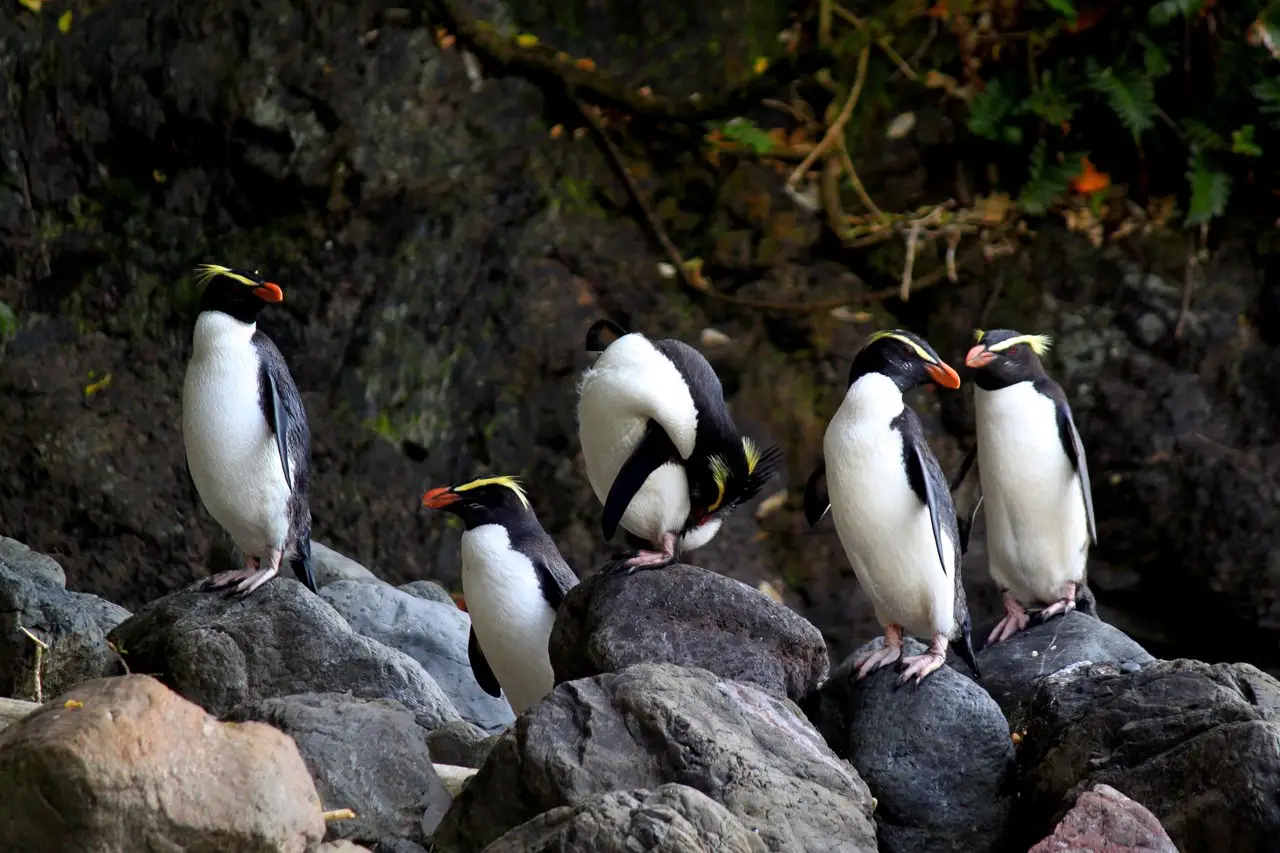
A giant weta is a great reason to travel, but New Zealand has plenty more to see. Our 20 Day New Zealand Self Drive Tour: Nature & Wildlife Experience covers penguins, fiords and forest. If you would rather build your own route, ask us about a custom tour. Our guides to the best time to visit New Zealand and weather and climate will help you pick your dates. Then pack a torch, book a night tour and see if one is waiting for you.