
Abel Tasman Beaches: A Golden Coastline Guide
New Zealand’s smallest and sunniest national park packs an outsized number of standout beaches into a short stretch of coastline. Abel Tasman beaches run in a near-continuous string from Kaiteriteri to Totaranui. Each one offers golden or white sand, turquoise water, and native bush right down to the shoreline. Because most of these beaches aren’t reachable by road, getting between them is part of the experience itself.
This guide covers the park’s standout beaches and how to actually reach them. It also covers how to plan a trip around this stretch of coast.
Table of Contents
- Abel Tasman National Park: Overview & Quick Facts
- Kaiteriteri Beach: The Gateway
- The Abel Tasman Coast Track’s Signature Beaches
- Awaroa Beach: The Beach New Zealand Bought Back
- Getting Around: Water Taxis & Kayaking
- Planning Your Trip
Abel Tasman National Park: Overview & Quick Facts
Quick Facts
- Location: northern tip of the South Island, roughly an hour from Nelson
- Park size: New Zealand’s smallest national park, and among its sunniest
- Gateway towns: Marahau, Kaiteriteri, and Motueka
- Main track: the Abel Tasman Coast Track, one of New Zealand’s nine Great Walks
- Access: most beaches reachable only by foot, kayak, or water taxi
Abel Tasman National Park New Zealand: What Makes It Different
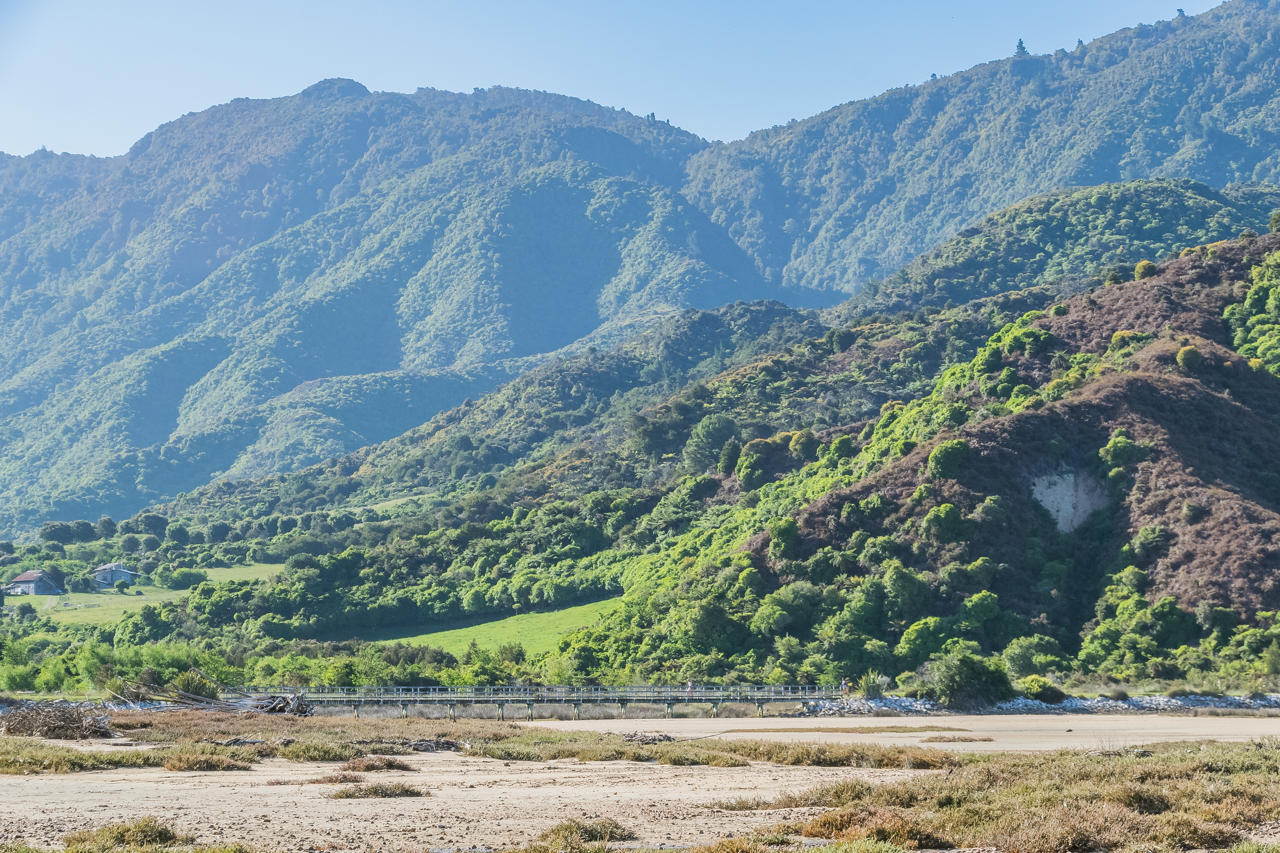
Abel Tasman National Park New Zealand earns its reputation through sheer concentration of good beaches rather than size alone. The park stretches along roughly 60 kilometres of coastline. Nearly every bay along the way offers a genuinely swimmable beach backed by native forest.
A few details set this park apart from other coastal destinations in the country:
- Split Apple Rock, a granite boulder split cleanly in two, sits just offshore near Kaiteriteri and has become one of the park’s most photographed landmarks
- Fur seal colonies live around Tonga Island, within a dedicated marine reserve
- The park’s dry, sunny microclimate means beach conditions stay reliable for much of the year, unlike many other parts of the South Island
Because the park sits close to Nelson and Golden Bay, it’s easy to combine with either region on a longer South Island route.
Kaiteriteri Beach: The Gateway
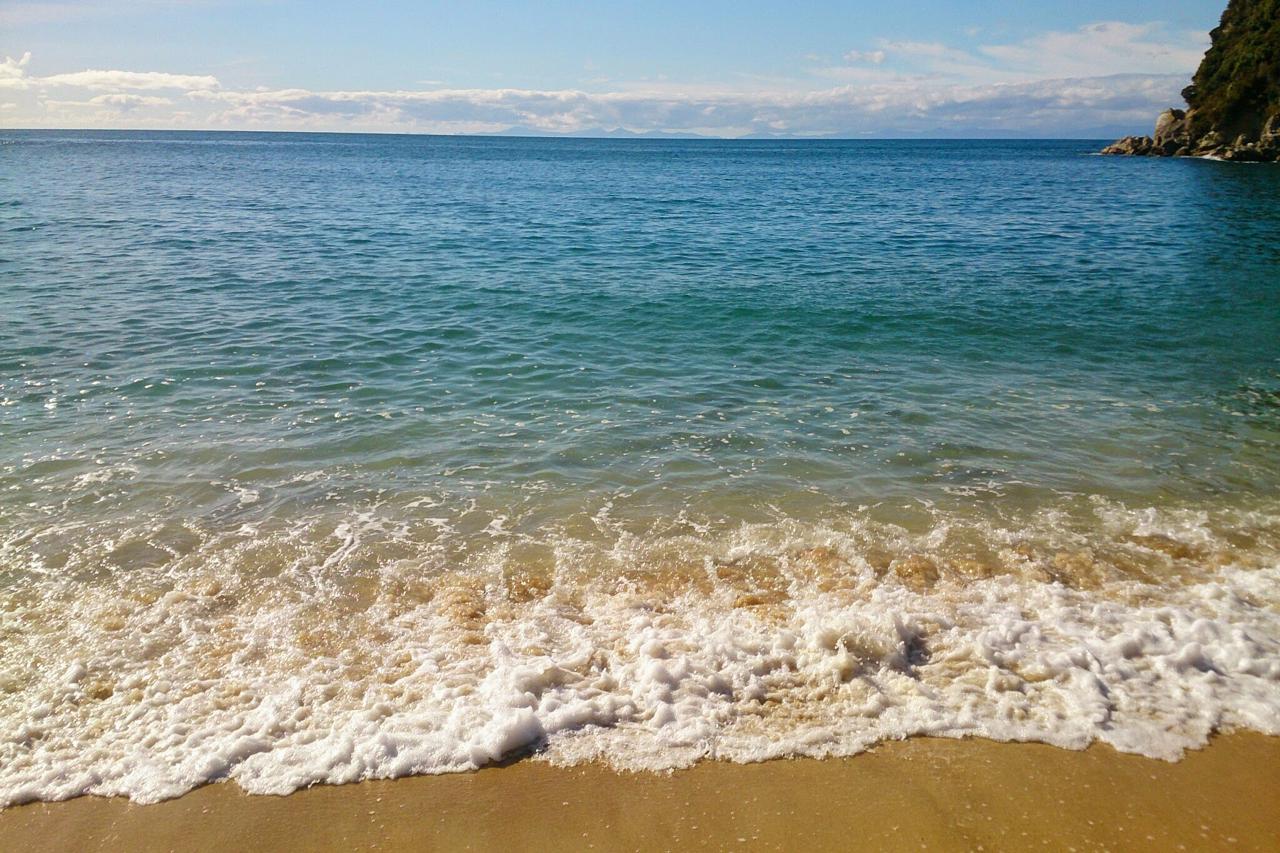
Kaiteriteri Beach is the most accessible and most visited of all the park’s beaches. It’s where nearly every water taxi and cruise departs from. Unlike most Abel Tasman beaches, Kaiteriteri sits right on the road, roughly 45 minutes from Nelson.
A few things make Kaiteriteri worth a stop even before heading further into the park:
- The main beach offers calm, sheltered swimming suited to families
- A short 10-minute track leads to the quieter Little Kaiteriteri Beach nearby
- Cafés, accommodation, and rental shops make it a practical base for a multi-day Abel Tasman trip
- Waka tours depart directly from the beach, offering a cultural experience alongside the more common water taxi options
Because so much of the park’s transport network starts here, most visitors treat Kaiteriteri as day one of a longer Abel Tasman itinerary rather than a standalone stop.
The Abel Tasman Coast Track’s Signature Beaches
The Abel Tasman Coast Track connects the park’s most famous beaches over roughly 60 kilometres. Hikers rarely go more than an hour or two without reaching another stretch of sand. A few beaches along the track stand out for different reasons:
- Anchorage: a sheltered horseshoe bay with a busy campsite, popular with kayakers and day walkers alike, and one of the most frequent water taxi stops
- Torrent Bay: a long, white-sand beach considered one of the park’s best swimming and sunbathing spots, connected to Anchorage by a tidal crossing
- Bark Bay: named for the bark once harvested from trees nearby, this beach combines a tree-lined shoreline with a tidal estuary on its other side
- Onetahuti Bay: one of the longest beaches in the park, reached after crossing the Tonga Saddle
- Totaranui Beach: a long, golden beach at the track’s northern end, with road access from Golden Bay via Takaka
Because most of these beaches are between one and four hours’ walk apart, many visitors combine hiking sections of the track with water taxi transfers rather than walking the full route in one trip.
Awaroa Beach: The Beach New Zealand Bought Back
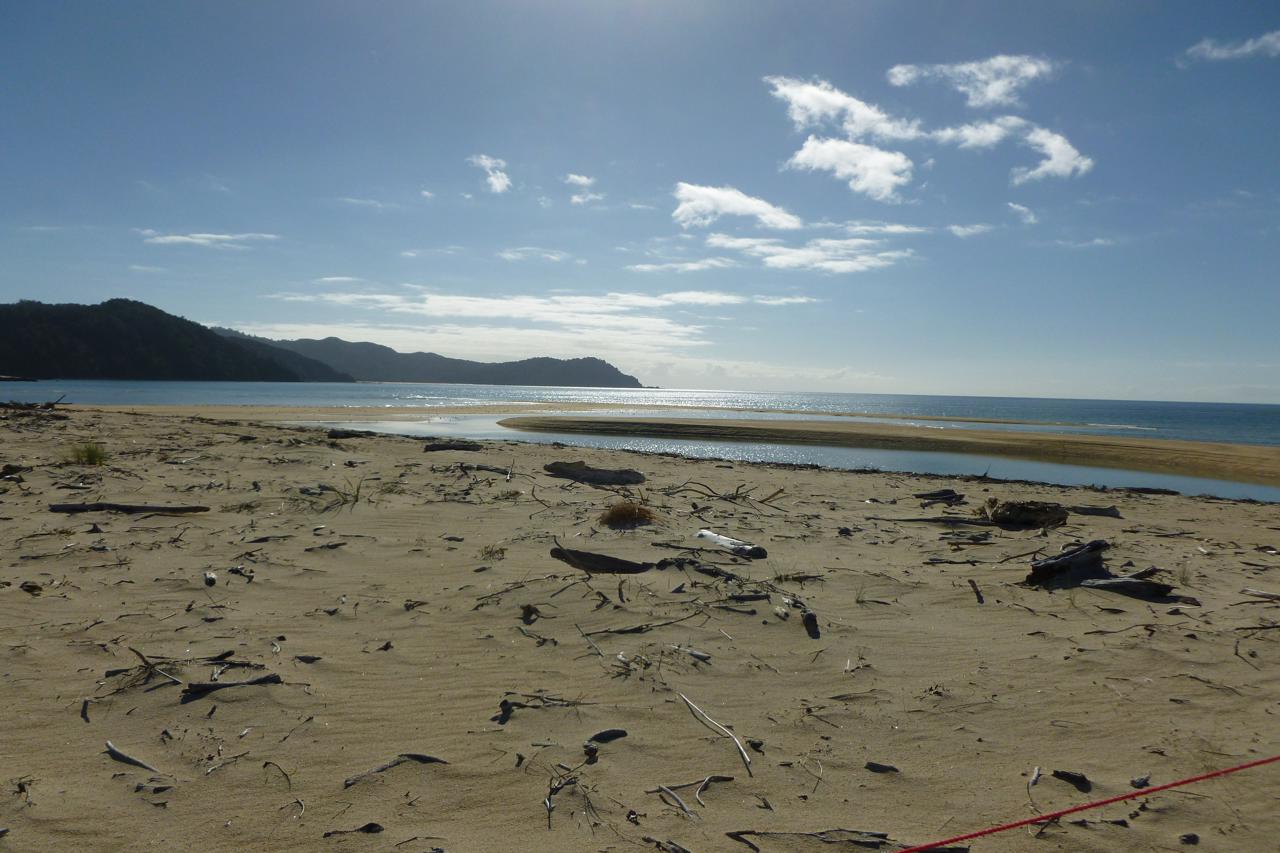
Awaroa Beach carries a story unlike any other in the park. In 2016, the beach went up for private sale. Roughly 40,000 New Zealanders crowdfunded $2.3 million NZD to buy it back for public use. The beach officially became part of Abel Tasman National Park in 2017, earning it the nickname “the People’s Beach.”
Beyond that history, Awaroa offers a genuinely appealing stretch of coast in its own right:
- A wide tidal estuary provides shallow, warm water suited to children and casual swimmers
- The beach connects to Awaroa Lodge, the only restaurant along the entire Coast Track
- Crossing the Awaroa Estuary requires careful tide timing, generally within about 90 minutes either side of low tide
Because Awaroa sits roughly in the middle of the park, most visitors reach it either by a multi-hour hike or by water taxi from Kaiteriteri or Marahau.
Getting Around: Water Taxis & Kayaking
Abel Tasman Water Taxi: The Park’s Main Transport Network
An Abel Tasman water taxi is how most visitors actually get around the park, since so few of its beaches connect to any road. Services run year-round from Marahau and Kaiteriteri. Scheduled stops include Apple Tree Bay, Anchorage, Bark Bay, Tonga Quarry, Onetahuti, Awaroa, and Totaranui.
A few practical points are worth knowing before booking:
- Water taxis don’t operate north of Totaranui, so reaching the park’s northernmost bays requires walking
- Booking in advance is essential, particularly during the busy summer months
- Many operators combine a cruise with a shorter guided walk, letting visitors see several beaches without committing to a multi-day hike
Our Abel Tasman Scenic Cruise departs from Kaiteriteri and passes Split Apple Rock, the Tonga Island seal colony, and several of the park’s best beaches in a single 3 to 4-hour trip. For a more active option, our Abel Tasman Cruise and Walk combines the boat trip with a guided walk past Bark Bay and on to Medlands Beach.
Abel Tasman Kayaking: Seeing the Coast From the Water
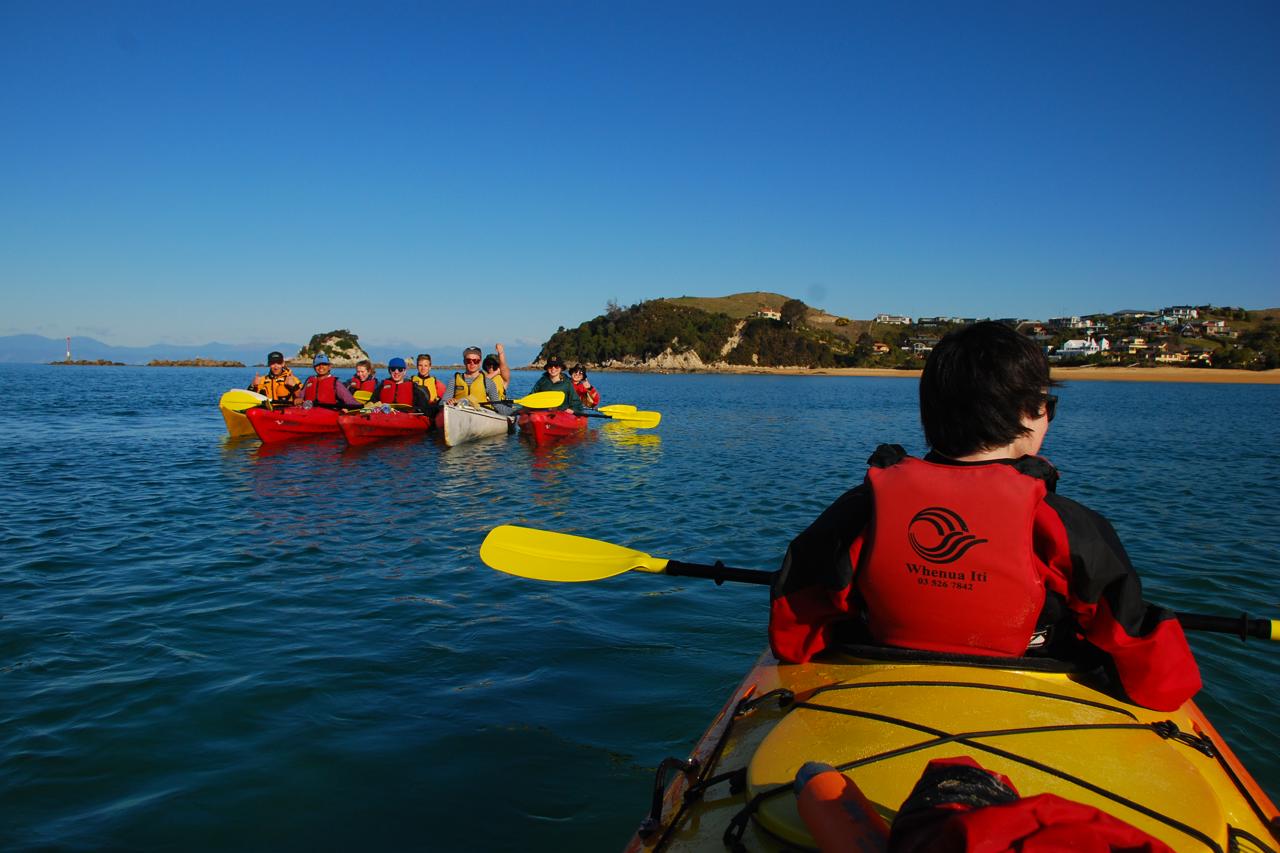
Abel Tasman kayaking offers a genuinely different perspective on the park’s coastline, letting paddlers explore sea caves, glowworm grottoes, and quieter coves that hikers and water taxi passengers pass by. Multi-day kayak trips typically combine paddling between beaches with overnight camping directly on the sand.
Kayaking routes can be tailored to fit almost any timeframe, from a half-day paddle to a multi-day expedition. Because of this, it’s one of the more flexible ways to experience the park.
Planning Your Trip
Comparing the Park’s Main Beaches
| Beach | Character | Best For |
| Kaiteriteri | Accessible, road-connected | Families, a base for the wider trip |
| Anchorage | Sheltered, busy campsite | Kayakers, day walkers, water taxi transfers |
| Torrent Bay | Long, white sand | Swimming and sunbathing |
| Bark Bay | Tree-lined, tidal estuary | Quiet camping, a scenic stopover |
| Awaroa | Wide tidal estuary | Families, warm shallow water, the park’s only restaurant |
| Totaranui | Long, golden, road access | Camping, a northern base for the track |
Getting There
Because Abel Tasman National Park sits close to both Nelson and Golden Bay, it fits naturally into a wider South Island itinerary. Our Abel Tasman National Park guide covers the wider park in more detail, including gateway towns and other track options. If you’re also visiting Golden Bay, our Wharariki Beach guide covers the wild coastline just over Takaka Hill.
A South Island tour package can weave Abel Tasman into a longer South Island route. Alternatively, our customizable New Zealand vacation packages can shape a trip entirely around your own interests. You can also add Abel Tasman National Park directly to your custom vacation package wishlist.
If you’re weighing up other New Zealand beaches alongside this park, our best beaches in New Zealand guide and recent top New Zealand beaches roundup both feature Kaiteriteri and Awaroa among their standout picks.
When to Visit
Conditions across the park shift with the seasons, though its dry microclimate keeps it more reliable than much of the South Island:
- Summer (December-February): the busiest season, with the warmest water and the fullest water taxi schedules
- Autumn and spring: quieter beaches and track sections, still generally good weather given the park’s sunny reputation
- Winter (June-August): cooler, with reduced water taxi schedules, though the Coast Track remains walkable year-round
Regardless of season, checking tide times matters throughout the park, since several key crossings, including Awaroa Estuary, are only safe within a set window either side of low tide.
New Zealand’s Most Complete Coastal Park
Most visitors arrive at Abel Tasman expecting one good beach and leave having lost count of how many they saw. Kaiteriteri’s easy access and Awaroa’s unlikely history both play a part. So does the string of beaches connecting them along the Coast Track. Together, they make this one of the most rewarding coastlines in the country.
You might be drawn here for the Abel Tasman Coast Track, a day trip by Abel Tasman water taxi, or a multi-day Abel Tasman kayaking adventure. Either way, this stretch of golden coastline delivers more variety than almost anywhere else in New Zealand.
Browse our Abel Tasman National Park guide or get in touch to start planning a trip built around Abel Tasman’s beaches.