
Hokitika Beach: The Heart of New Zealand’s West Coast
Most visitors arrive in Hokitika West Coast expecting a quick stop between Greymouth and the glaciers. Most end up staying longer than planned. The town sits where the Hokitika River meets the Tasman Sea. Its beach is framed by driftwood, black sand, and a wall of Southern Alps in the distance. It has a way of slowing people down. It’s also the natural launch point for two of the South Island’s biggest draws, Hokitika Gorge and the glacier country further south.
This guide walks through the beach itself and the town’s own quirky character. It also covers how Hokitika West Coast fits into a wider trip.
Table of Contents
- Hokitika Beach: Overview & Quick Facts
- The Hokitika Beach Sign & Sunset Point
- Things to Do in Hokitika Beyond the Sand
- Hokitika Gorge: The Turquoise Detour
- Glacier Country: Franz Josef & Fox Glacier
- Planning Your West Coast Trip
Hokitika Beach: Overview & Quick Facts
Quick Facts
- Location: West Coast, South Island, roughly 40 minutes south of Greymouth
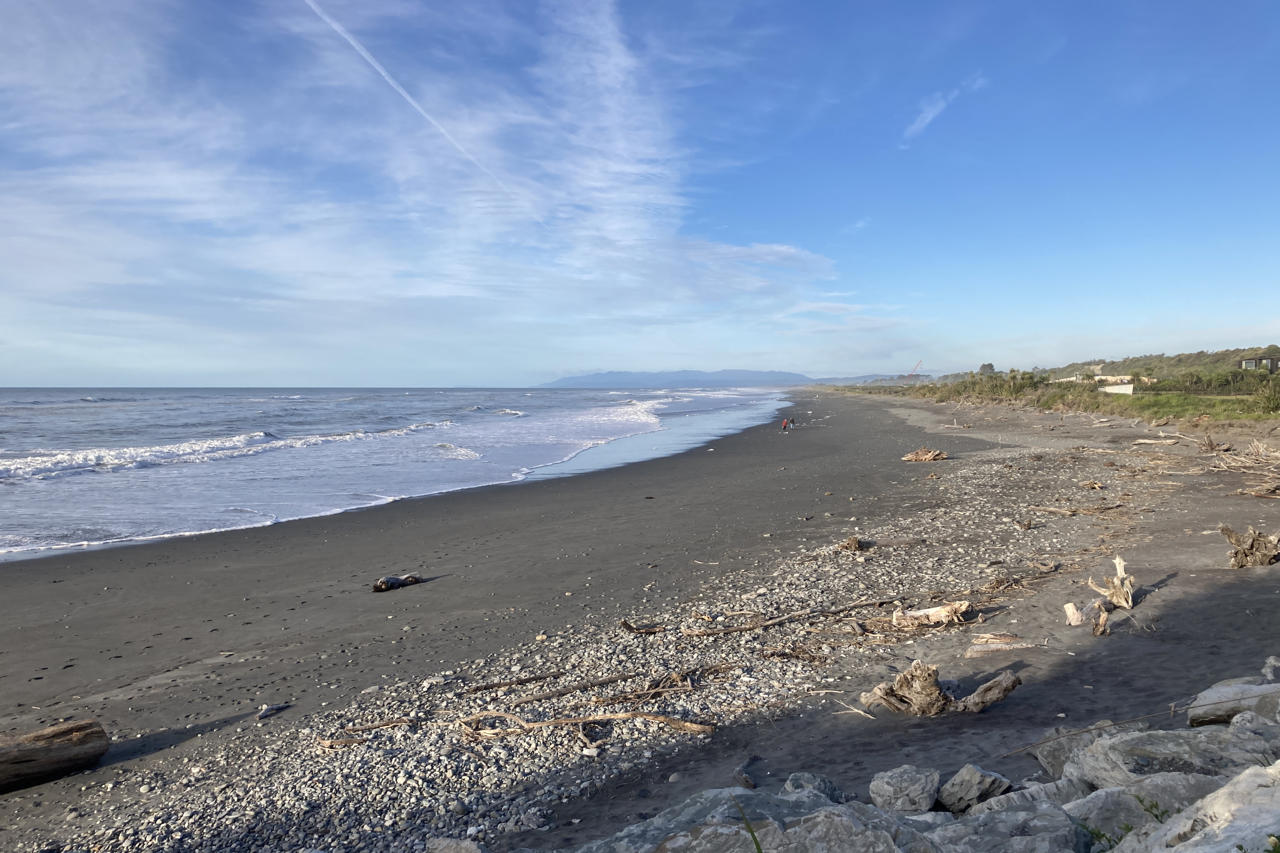
- Beach type: Black sand and pebble, not suited to swimming due to strong currents
- Signature landmark: The driftwood “HOKITIKA” sign at Sunset Point
- Known for: Pounamu (greenstone) carving, driftwood art, and some of the country’s best sunsets
- Gateway role: The main Hokitika West Coast stop between Greymouth and Franz Josef Glacier
Hokitika Beach: A Town Built Around Its Coastline
Hokitika Beach stretches along the town’s western edge, backed by cafés, galleries, and the historic main street just a short walk away. The sand here is dark and pebbled rather than golden. Strong Tasman Sea currents make it unsuitable for swimming. Even so, it remains one of the most photographed stretches of coast in the country.
A few details capture what makes this beach different from the golden-sand beaches found elsewhere in New Zealand:
- Driftwood collects naturally along the shoreline, shaped by the same rough surf that rules out swimming
- Locals occasionally arrange the driftwood into temporary messages and art, adding a changing, creative element to each visit
- Pounamu, or greenstone, sometimes washes up along the sand, giving beachcombers a genuine reason to look down as well as out to sea
- The beach sits right behind the town centre, making it one of the more walkable beach-and-town combinations on the West Coast
The beach connects so directly to the town itself. Most visitors treat a Hokitika stop as equal parts beach walk and small-town wander. Few choose one over the other.
The Hokitika Beach Sign & Sunset Point
The Driftwood Sign: Hokitika’s Most Photographed Spot
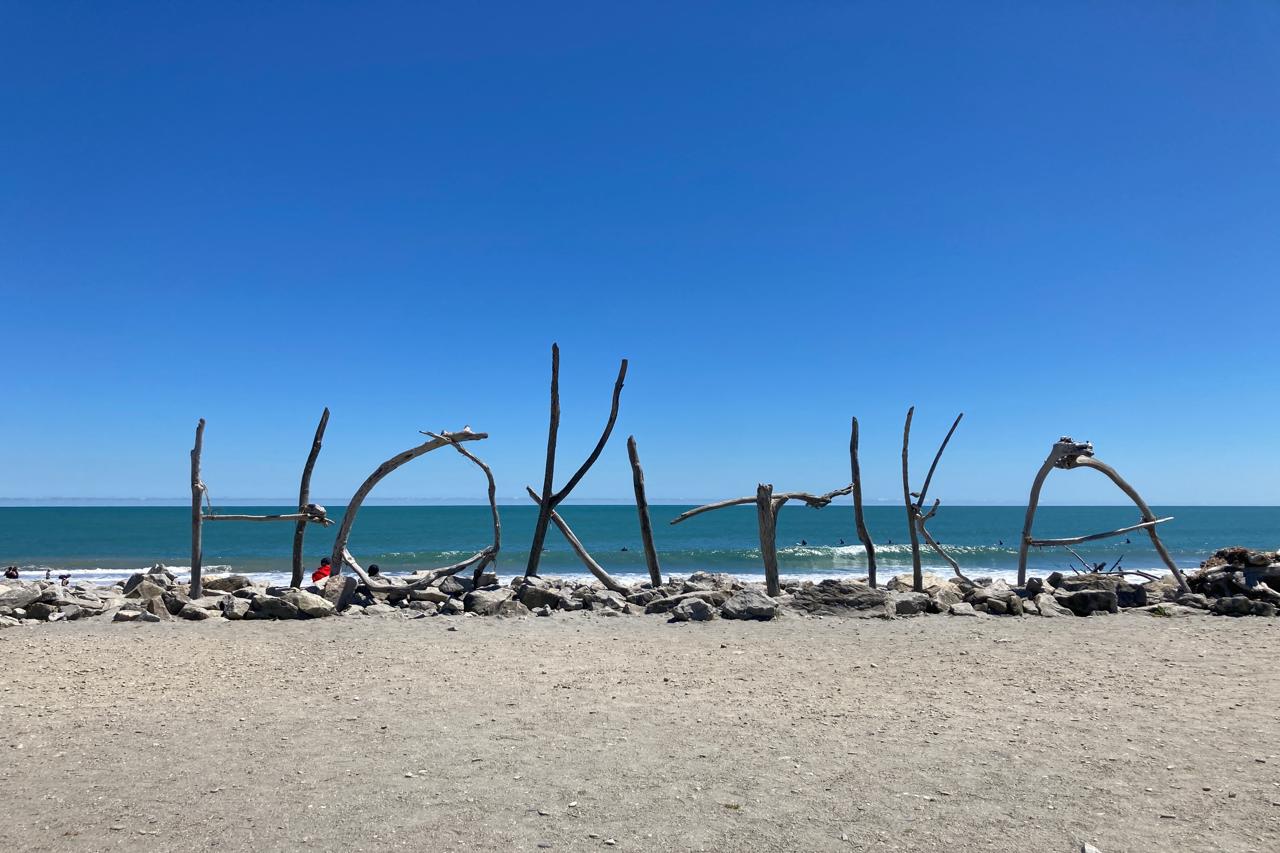
The Hokitika beach sign is the single most recognisable feature of the entire coastline. Built from driftwood branches and held in place by stones, the sign spells out “HOKITIKA” in large, rustic letters. Hokitika beach faces the sea directly. It began as a community art project. It has since become the town’s unofficial emblem.
A few practical details help visitors get the best experience at the sign:
- The sign sits at 72 Beach Street, an easy walk from the main shopping strip
- Photography is unrestricted, and the sign remains one of the most Instagrammed spots on the West Coast
- Popular times draw a small crowd, so patience helps if you’re after a photo without other visitors in frame
- Nearby extras include a decorative boat with picnic benches and a food truck, useful for a casual meal with a view
Sunset Point: Best Time to Visit
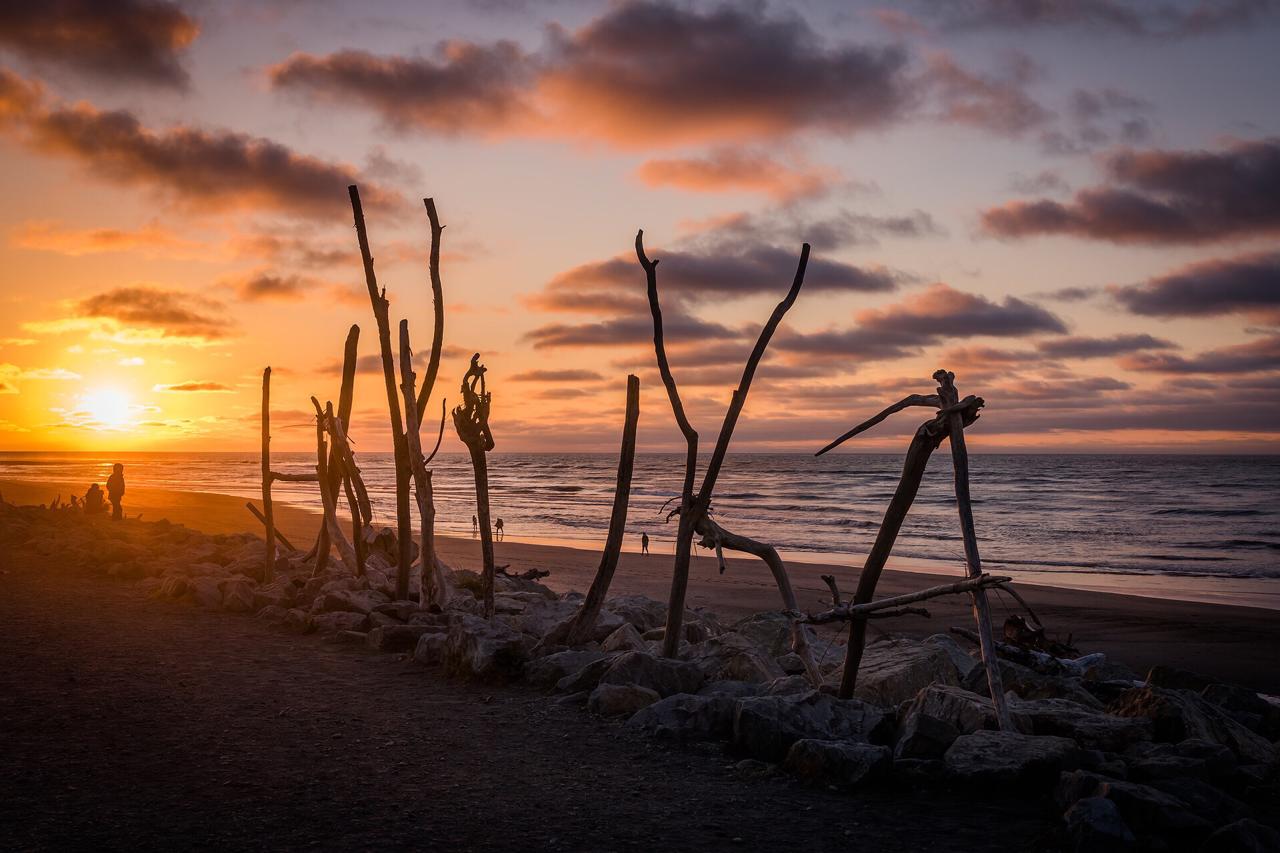
Hokitika Beach faces almost directly west. Because of this, Sunset Point has earned its name honestly. Locals and visitors alike gather here most clear evenings. Driftwood silhouettes, dark sand, and an open ocean horizon combine into one of the more dramatic sunset spots in the country.
For the best experience, arrive 30 to 45 minutes before sunset. This gives enough time to explore the driftwood sculptures and settle in before the sky changes colour. A few scattered clouds often produce a better show than a completely clear sky, catching extra colour as the sun drops.
Things to Do in Hokitika Beyond the Sand
Things to do in Hokitika extend well past the beach itself. The town has built a genuine identity around craft, art, and its West Coast character:
- Pounamu and jade carving: Hokitika is New Zealand’s unofficial jade capital, with numerous workshops and galleries where visitors can watch carvers at work and buy locally sourced greenstone
- Glow Worm Dell: A small reserve just minutes from the town centre, where bioluminescent glow worms cover rock walls after dark, free to visit and open year-round
- Driftwood and Sand Sculpture Festival: Held every January, this event turns the beach into an open-air gallery of temporary sculptures built from what the sea has washed up
- West Coast Wilderness Trail: A cycling and walking path connecting Hokitika to Greymouth and beyond, passing through wetlands, bush, and coastal edges
- The Luminaries connection: Hokitika and nearby Lake Kaniere provided the moody, mist-wrapped setting for the BBC and TVNZ adaptation of Eleanor Catton’s Booker Prize-winning novel
So much of the town’s character comes from craft and creativity rather than big attractions. Because of this, Hokitika rewards a slower pace than most other stops along the Hokitika West Coast route.
Hokitika Gorge: The Turquoise Detour
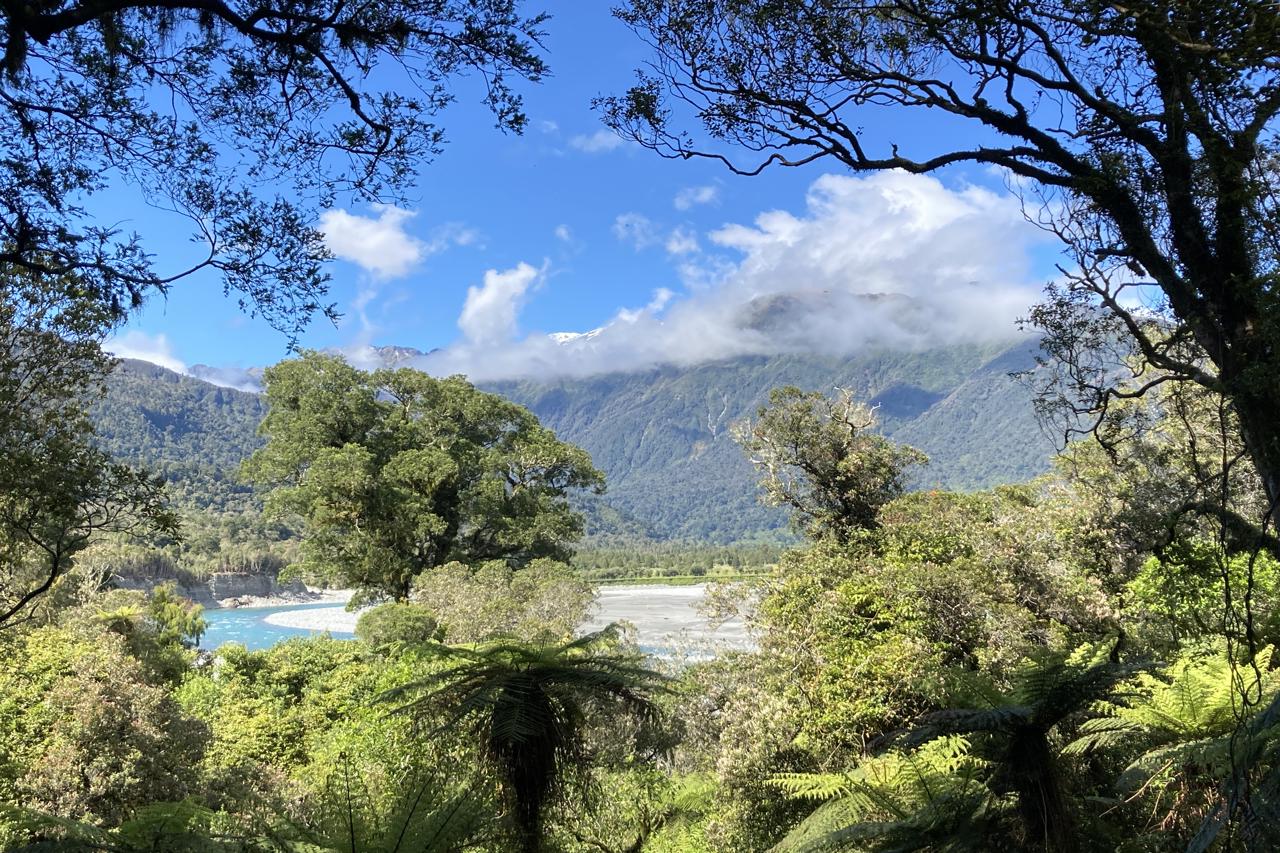
A short drive inland, Hokitika Gorge delivers a colour that surprises most first-time visitors. A vivid, almost unreal turquoise, it’s fed by glacial meltwater running down from the Southern Alps. A short walk from the car park leads to a swing bridge suspended directly over the gorge itself.
We’ve covered it in full detail in our dedicated Hokitika Gorge West Coast guide. It includes the best times to visit for the clearest water, plus its own surprising connection to the West Coast’s screen history. Most visitors treat the gorge as a half-day round trip from Hokitika town, easily combined with a beach walk on the same day.
Glacier Country: Franz Josef & Fox Glacier
Hokitika sits at the northern edge of what most travelers call glacier country. For many visitors, it functions as the natural staging point before continuing south. Franz Josef Glacier and Fox Glacier both sit within Westland Tai Poutini National Park. Both are roughly two to three hours further down State Highway 6.
A few details help frame the connection between Hokitika and the glaciers ahead:
- Both glaciers are among the few in the world whose tongues reach down close to rainforest and sea level, a genuinely rare combination
- Franz Josef and Fox townships each offer helicopter access onto the ice, alongside valley walks to view the terminal faces from below
- Fox Glacier is the larger of the two, while Franz Josef sits slightly closer to Hokitika and tends to draw more day visitors
Our Westland Tai Poutini National Park guide covers both glaciers in full, including walk lengths, helicopter options, and the wildlife-watching opportunities around Okarito Lagoon further south.
Planning Your West Coast Trip
Comparing Hokitika’s Nearby Attractions
| Attraction | Distance from Hokitika | Best For |
| Hokitika Beach & Sign | In town | Sunset, driftwood art, photography |
| Hokitika Gorge | ~35 minutes inland | Turquoise water, a short scenic walk |
| Franz Josef Glacier | ~2 hours south | Glacier walks, helicopter flights |
| Fox Glacier | ~2.5 hours south | Quieter glacier access, Lake Matheson |
| Greymouth | ~40 minutes north | TranzAlpine train, gold mining history |
| Punakaiki | ~1.5 hours north | Pancake Rocks and blowholes |
Greymouth New Zealand & the Wider Route
Greymouth New Zealand sits just north of Hokitika. For many visitors, it’s where a West Coast trip begins rather than ends. The town is the terminus of the TranzAlpine, widely considered one of the world’s most scenic train journeys. It connects Christchurch to the coast through the Southern Alps.
From Greymouth, most Hokitika West Coast routes continue north to Punakaiki’s Pancake Rocks, or south through Hokitika toward the glaciers. Our TranzAlpine Train experience covers the rail journey itself. Our Paparoa National Park guide and Punakaiki Pancake Rocks guide cover the coastline just north of Greymouth.
Building an Itinerary
Hokitika sits roughly in the middle of the West Coast’s main attractions. It works well as either a first-night stop heading south, or a final stop before crossing back over the Southern Alps. A South Island tour package can weave Hokitika, the glaciers, and Punakaiki into a single West Coast loop. Alternatively, our customizable New Zealand vacation packages can shape a trip entirely around your own interests. You can also add Hokitika directly to your custom vacation package wishlist.
If you’re weighing up other New Zealand beaches alongside Hokitika, our best beaches in New Zealand guide rounds up the wider coastline.
When to Visit
Conditions along the Hokitika West Coast shift with the seasons, though the region’s weather stays genuinely changeable year-round:
- Summer (December-February): the busiest season, with the longest daylight hours for sunset chasing and glacier day trips
- Autumn and spring: quieter towns and roads, with the annual Driftwood and Sand Sculpture Festival falling in the summer shoulder
- Winter (June-August): cooler and wetter, though clear winter days often produce some of the sharpest mountain views from the beach
West Coast weather can change quickly. Regardless of season, it’s worth building some flexibility into any glacier or gorge plans made from Hokitika.
Most visitors leave Hokitika having spent more time than they planned. Maybe it’s an extra hour at Sunset Point, or an unplanned detour to the gorge. The beach itself, wild and unswimmable as it is, sets the tone for the rest of a trip along the Hokitika West Coast.
Browse our Hokitika Gorge West Coast guide or get in touch to start planning a trip built around Hokitika and the wider West Coast.