

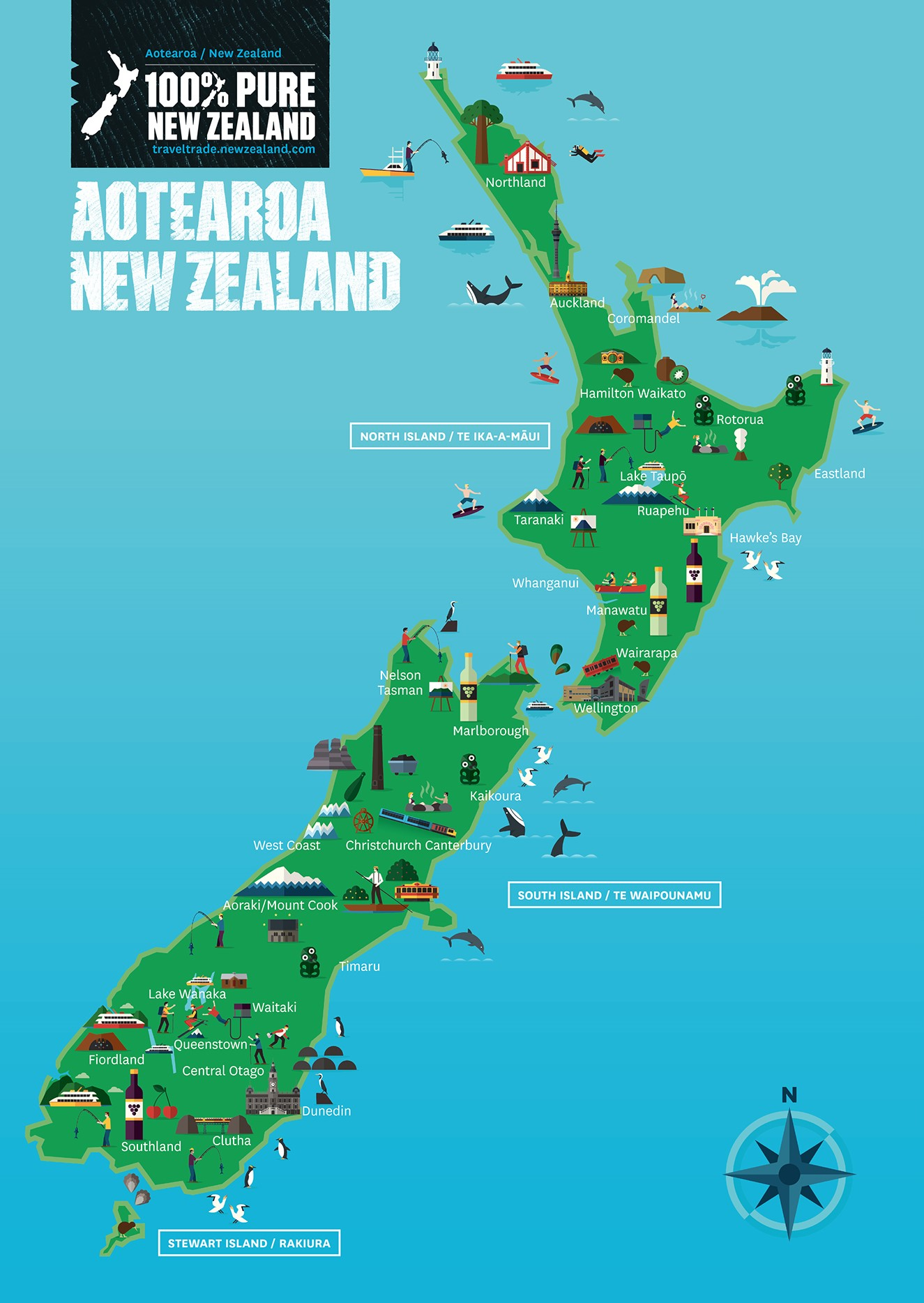
New Zealand is a land of amazing contrasts. Snowy mountains meet beautiful beaches, and geothermal wonders bubble under old forests. Adventure is waiting around every corner. For first-time visitors, choosing which attractions to prioritize can feel overwhelming. This guide highlights ten essential experiences that capture the essence of Aotearoa’s extraordinary landscapes and rich cultural heritage.
1. Milford Sound, Fiordland National Park
Rudyard Kipling famously called Milford Sound the “eighth wonder of the world,” and one glimpse of this majestic fiord explains why. Tall granite cliffs rise straight up from dark waters, reaching heights of 1,200 meters. Cascading waterfalls thunder down the rock faces into the sound below. Some waterfalls are permanent, while others appear after it rains.
Milford Sound is in Fiordland National Park on the southwest coast of the South Island. It offers visitors many ways to enjoy its beauty. Scenic cruises pass famous landmarks like Mitre Peak and Stirling Falls. Kayaking offers a close view at water level. The trip to Milford Sound along Milford Road is also amazing—it winds through Homer Tunnel and past shining lakes.
Wildlife lovers will enjoy seeing New Zealand fur seals resting on rocks. You might also spot bottlenose dolphins playing in the waves and the rare Fiordland crested penguin. On clear days, the reflections are so perfect that the fiord appears to mirror the sky itself.
2. Tongariro Alpine Crossing
The Tongariro Alpine Crossing is one of the best day hikes in the world. This 19.4-kilometer trek goes through a stunning volcanic landscape that feels otherworldly. The hike is challenging and takes you over ancient lava flows, active volcanic craters, and bright emerald lakes.
The crossing usually takes seven to nine hours. Hikers are rewarded with beautiful views along the way. The Red Crater is the highest point at 1,886 meters, offering sweeping views of the Central Plateau. Below, the famous Emerald Lakes shine with a vivid turquoise color from minerals in the area.
This landscape is sacred to the Māori people, who see the mountains—Tongariro, Ngauruhoe, and Ruapehu—as ancestors. The area’s cultural and natural value has earned it dual UNESCO World Heritage status. First-time visitors should be prepared for changing weather and book shuttle transportation ahead of time, as the track is one-way.
3. Rotorua’s Geothermal Wonderland
Rotorua is located on one of the world’s most active geothermal fields, creating a landscape where the earth’s power is visible everywhere. The city’s distinctive sulfur smell, known as “eau de Rotorua” by locals, tells you that you’ve arrived somewhere truly unique.
At Te Puia, visitors can see the Pōhutu Geyser erupting up to 30 meters high, explore bubbling mud pools, and learn about Māori culture at the New Zealand Māori Arts and Crafts Institute. Wai-O-Tapu Thermal Wonderland features the colorful Champagne Pool, surrounded by bright orange minerals and heated to 74°C.
Rotorua also has many natural hot springs for relaxing sore muscles. The Polynesian Spa offers thermal bathing beside the lake, while Kerosene Creek provides a more natural, adventurous soak in a warm stream. As a hub of Māori culture, Rotorua also offers evening performances and traditional hāngī feasts, giving visitors deep insights into indigenous traditions.
4. Queenstown and Lake Wakatipu
Queenstown sits on the shores of Lake Wakatipu, surrounded by the Remarkables mountain range. Known as New Zealand’s adventure capital, this alpine resort town offers an ideal mix of thrilling activities and fine dining, all set against a breathtaking backdrop.
Thrill-seekers can bungee jump from the historic Kawarau Bridge—the birthplace of commercial bungee jumping—skydive over dramatic landscapes, or jet boat through narrow canyons. For those who prefer calmer pursuits, the vintage steamship TSS Earnslaw offers relaxing cruises, while the Skyline Gondola provides panoramic views of the town and surrounding peaks.
Queenstown is also a perfect base for exploring nearby attractions. Day trips to Glenorchy showcase the scenery from The Lord of the Rings films, while Arrowtown, a historic gold mining village, charms with its heritage streets and vivid autumn colors.
5. Abel Tasman National Park
At the northern tip of the South Island lies Abel Tasman National Park, a coastal paradise of golden beaches, clear waters, and lush native forest. It’s New Zealand’s smallest national park, but one of the most beautiful and accessible.
The Abel Tasman Coast Track, one of New Zealand’s Great Walks, can be explored in sections or over several days. Walkers pass through beech and podocarp forests before reaching stunning beaches where turquoise waters meet golden sands. Water taxis connect various points along the track, allowing flexible itineraries.
Kayaking is another popular way to experience the park, revealing hidden coves, sea caves, and Split Apple Rock—a unique granite formation that looks like a boulder cleanly split in two. Fur seals bask on rocky outcrops, and little blue penguins nest along the coast. With its mild climate, Abel Tasman is enjoyable year-round, though summer offers the best conditions for swimming and kayaking.
6. Auckland and the Sky Tower
As New Zealand’s largest city, Auckland offers a dynamic contrast to the country’s wild landscapes. Built on a volcanic field between two harbors, the “City of Sails” blends cosmopolitan life with easy access to beaches, islands, and vineyards.
The Sky Tower, at 328 meters, is the tallest freestanding structure in the Southern Hemisphere. Its observation decks offer 360-degree views stretching over 80 kilometers on clear days. Adventurous visitors can brave the SkyWalk around the outer rim or leap off on the thrilling SkyJump.
Beyond the tower, the Viaduct Harbour precinct buzzes with waterfront restaurants and nightlife. Nearby Waiheke Island—just a 40-minute ferry ride away—offers award-winning vineyards, art galleries, and coastal walks. The Auckland War Memorial Museum houses one of the world’s most important Māori and Pacific artifact collections, providing deep insight into New Zealand’s heritage.
7. Fox and Franz Josef Glaciers
Few places on Earth let you walk on ancient ice so close to lush rainforest. The Fox and Franz Josef glaciers descend from the Southern Alps to just 300 meters above sea level, creating a rare mix of icy and green landscapes.
Though both glaciers have receded due to climate change, they remain spectacular. Helicopter tours provide sweeping aerial views and often include snow landings so visitors can step onto the ice. Guided heli-hikes take small groups across blue crevasses and ice caves with the help of experienced guides.
Nearby, Lake Matheson reflects the image of Aoraki/Mount Cook in its mirror-like waters on calm mornings. The surrounding rainforest walks showcase the West Coast’s lush vegetation, including ancient rimu and kahikatea trees. The small villages nearby offer cozy accommodations and cafés, making this region perfect for extended exploration.
8. Bay of Islands
Northland’s Bay of Islands is a subtropical paradise of 144 islands scattered across turquoise waters. It’s a destination rich in both natural beauty and cultural history, offering secluded beaches, exceptional fishing, and opportunities for dolphin encounters.
The town of Paihia serves as the main hub, with boat tours departing daily. Dolphin-watching cruises frequently encounter common and bottlenose dolphins—and occasionally orcas or whales. The “Hole in the Rock” at Piercy Island is a thrilling stop when conditions allow boats to pass through its natural archway.
For history enthusiasts, the Waitangi Treaty Grounds mark the birthplace of modern New Zealand. This is where Māori chiefs and representatives of the British Crown signed the Treaty of Waitangi in 1840. The site includes a stunning carved meeting house, the world’s largest ceremonial war canoe, and an excellent museum offering balanced perspectives on this foundational moment.
9. Aoraki/Mount Cook National Park
Home to New Zealand’s highest peak, Aoraki/Mount Cook (3,724 meters), this national park delivers breathtaking alpine scenery. It features 23 peaks over 3,000 meters and the country’s longest glacier, the Tasman Glacier.
Even those without climbing experience can enjoy the park’s beauty. The Hooker Valley Track is a three-hour return walk leading to a glacial lake filled with icebergs, with Aoraki towering above. For a tougher challenge, the Sealy Tarns Track climbs steeply to an alpine tarn with sweeping views.
Aoraki holds deep significance in Māori tradition as an ancestor—the eldest son of Rakinui (the Sky Father). The mountain’s dual name reflects New Zealand’s bicultural heritage. The Hermitage Hotel offers accommodation with incredible views, and the area’s designation as an International Dark Sky Reserve makes it perfect for stargazing under the Milky Way.
10. Wellington: Culture, Cuisine, and Te Papa
New Zealand’s compact capital combines political importance with creative energy, cultural depth, and a thriving food scene. Wellington’s harbor setting and hillside neighborhoods create postcard-perfect views, earning it the nickname “the coolest little capital.”
Te Papa Tongarewa, the national museum of New Zealand, is a must-visit. This world-class institution offers free entry and presents the nation’s natural history, cultural heritage, and art through engaging, interactive exhibits. The Māori galleries are especially impressive, featuring elaborately carved meeting houses and the Rongomaraeroa marae, where performances are held.
Beyond Te Papa, Wellington invites exploration. The Cuba Quarter is filled with boutiques, vintage shops, and cafés, while the waterfront promenade provides scenic harbor walks. The cable car ride to the Botanic Garden offers panoramic views, and film fans can tour Weta Workshop, home to The Lord of the Rings effects. Wellington’s coffee culture is legendary—great coffee is never far away.
Planning Your First-Time New Zealand Trip
These ten attractions reveal the incredible diversity of New Zealand—from geothermal wonders and snow-capped peaks to lively cities and pristine beaches. First-time visitors should plan at least two to three weeks to explore both the North and South Islands comfortably.
New Zealand’s excellent roads and scenic drives make travel easy, whether you self-drive or join a guided tour. Each season offers something special: summer (December–February) brings warm weather and long days, while winter (June–August) transforms the Southern Alps into a ski paradise.
No matter which destinations you choose, New Zealand promises experiences that stay with you forever. The country’s stunning landscapes have inspired countless photos, films, and works of art. Above all, you’ll be welcomed by warm Kiwi hospitality from the moment you arrive. As New Zealanders say, Haere mai—welcome to Aotearoa.