
Milford Sound, Fiordland: Mission: Impossible – Fallout Filming Locations
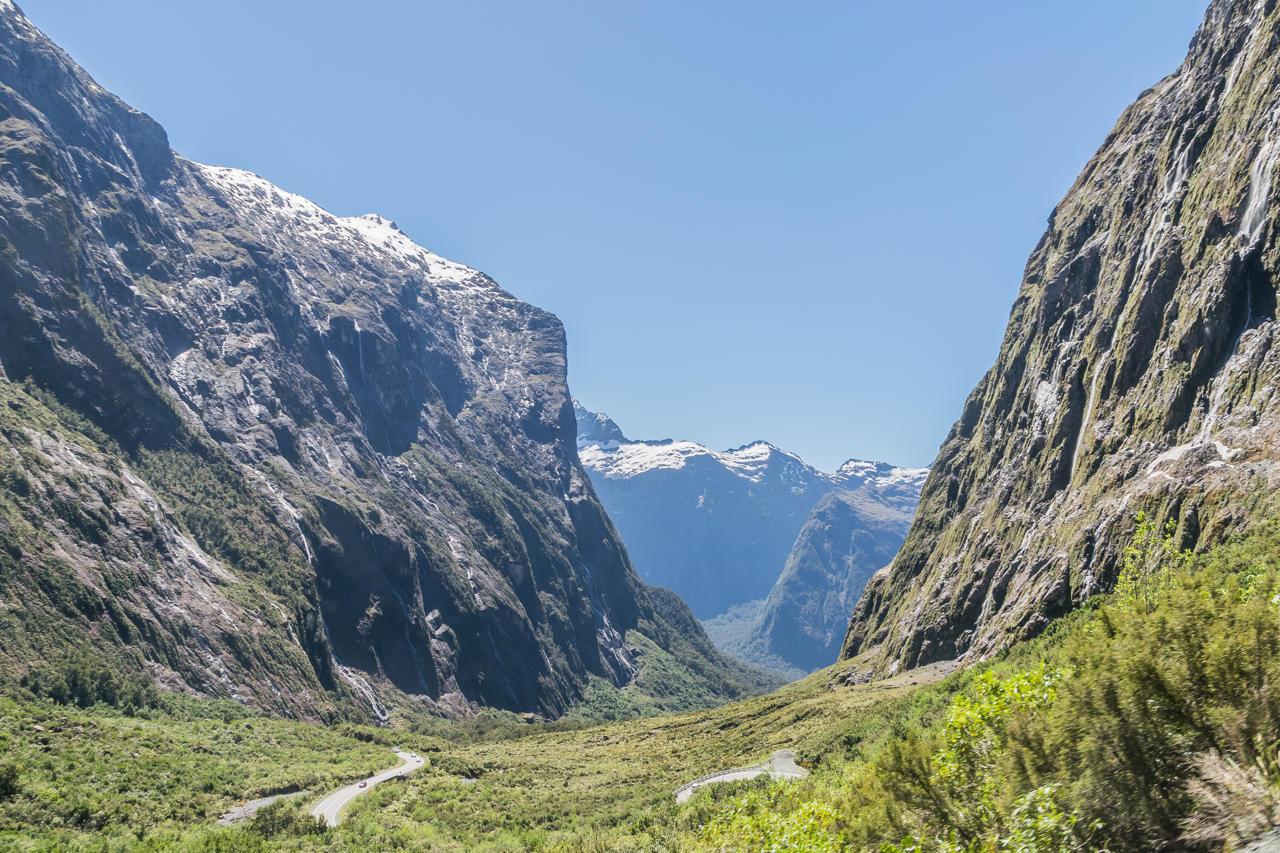
Few landscapes on earth look like they were built for the movies. Milford Sound is one of them. Towering granite cliffs drop straight into black water. Waterfalls appear out of nowhere. Clouds sit low over the fiord for most of the year. This corner of Fiordland National Park is one of the most striking Mission Impossible Fallout filming locations, and a large part of why directors keep coming back. So where was Mission Impossible Fallout filmed? A large part of the answer is right here, in the south west of New Zealand’s South Island. This is where Tom Cruise and the Mission: Impossible crew shot one of the film’s most memorable sequences.
This guide looks at why Milford Sound earned its spot among the Mission Impossible Fallout filming locations. It covers what happened behind the scenes during production. It also covers how you can visit the same fiord that opens the film. No stunt helicopter required.
Where Was Mission Impossible Fallout Filmed?
Mission: Impossible – Fallout is a genuinely global production. The story moves through Paris, London, Berlin, Kashmir, and the United Arab Emirates. Real shoots took place in France, England, Norway, and Abu Dhabi. But New Zealand carries an outsized share of the film’s most visually striking moments. Queenstown, Glenorchy, the Rees Valley, and Mount Aspiring National Park all feature too. Milford Sound became the backdrop for the film’s opening scene. Later, it hosted the climax of its aerial sequence.
The production spent an extended period in New Zealand. Part of that was the scale of the aerial work. Part of it was an ankle injury Tom Cruise suffered mid-shoot, which halted filming for about 8 weeks. Once production resumed, the team returned to the “triangle” of Milford Sound, Queenstown, and Lake Wanaka. That is where they finished the helicopter work that closes out the film. For fans asking where was Mission Impossible Fallout filmed, this triangle is the honest answer. It covers nearly all of the New Zealand footage.
Milford Sound’s Role in the Film
Milford Sound appears right at the start of Mission: Impossible – Fallout. It sets the scene for a dream sequence where Ethan Hunt imagines his wedding to Julia Meade. The fiord’s dramatic cliffs and still water give the moment an almost otherworldly calm before the plot kicks into gear. It is a brief appearance, but it sets the tone for the rest of the film. It is instantly recognisable to anyone who has stood at the water’s edge and looked up at Mitre Peak.
Want a feel for that view before you go? Our guide to discovering Milford Sound walks through what a first-time visit looks like. It covers when to arrive and how the weather shapes the experience.
Milford Sound was not a new discovery for Hollywood by the time the Mission: Impossible team arrived. The same stretch of coastline had already appeared in Alien: Covenant and X-Men Origins: Wolverine. Its cliffs have served as a filming location even longer, having featured in the original 1988 fantasy film Willow. Location scouts keep returning because there is nowhere else quite like it. It is a fiord carved by glaciers, ringed by rainforest, with waterfalls that can appear overnight after heavy rain.
The Mission Impossible Fallout Helicopter Scene
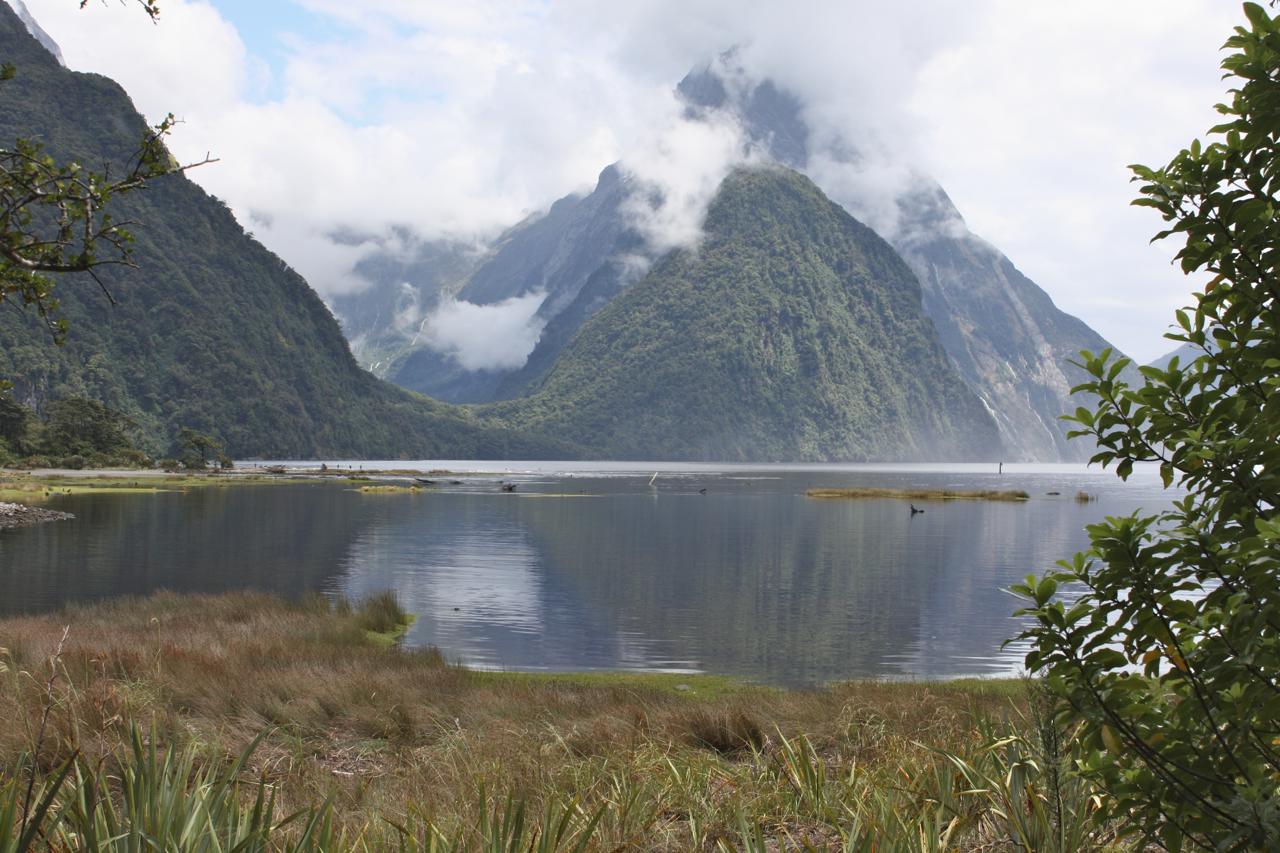
The sequence most people remember from the film is the Mission Impossible Fallout helicopter scene. It is a chase that plays out across the Southern Alps before ending at Milford Sound. In the film, Ethan Hunt is being pursued by August Walker, played by Henry Cavill. The chase forces both characters through narrow mountain canyons before the confrontation reaches the fiord itself.
According to the New Zealand Film Commission, the chase culminates at Milford Sound. Walker opens fire on Hunt, who has to execute a manoeuvre known as a wingover to bank away. Cruise’s helicopter then drops low over a lake and spirals down into a waterfall. It is one of the most technically demanding shots in the entire film. Director Christopher McQuarrie’s team has described spirals like this as extremely difficult to pull off safely. That is true even for experienced stunt pilots.
Tom Cruise Flew the Helicopter Himself
What makes the Mission Impossible Fallout helicopter scene especially remarkable is that Tom Cruise flew the helicopter himself. He spent roughly two years earning his helicopter licence specifically for these shots. He trained intensively so he could fly the aircraft through the canyons while also acting the scene. Local pilots who fly through Fiordland’s canyons for a living have noted how unusual this is. Mastering that kind of low-altitude flying normally takes far longer.
The gunfight portion of the sequence was filmed over Lake Quill. This is a high alpine lake basin. It feeds into Sutherland Falls, one of New Zealand’s tallest waterfalls at nearly 2,000 feet. Production moved cast, crew, and equipment by helicopter each day. As many as thirteen helicopters were in the air at once during peak shooting days. Local operators, including Queenstown-based aerial specialists, supported the New Zealand leg of the shoot. Extra helicopters were imported specifically from the United States.
Did watching that sequence make you want to see Fiordland from above? An aerial flight over Milford Sound gets you remarkably close to the same view the film crew had. Minus the gunfire.
Coordinating the Aerial Shoot
Coordinating that many aircraft over rugged terrain took serious planning. Aerial coordinator Marc Wolff has spoken about the risk assessment involved. Moving multiple helicopters through narrow canyons on the same day takes careful planning. Local pilots briefed the visiting crew on how the wind behaves around Fiordland’s cliffs and lakes. Henry Cavill flew alongside Cruise for many of the wider shots. He described viewing New Zealand from an open helicopter door as one of the most stunning experiences of the shoot. That mix of experienced local pilots, imported aircraft, and months of preparation explains why the sequence still holds up. It remains one of the most talked-about stunts in the franchise.
Filming in a National Park
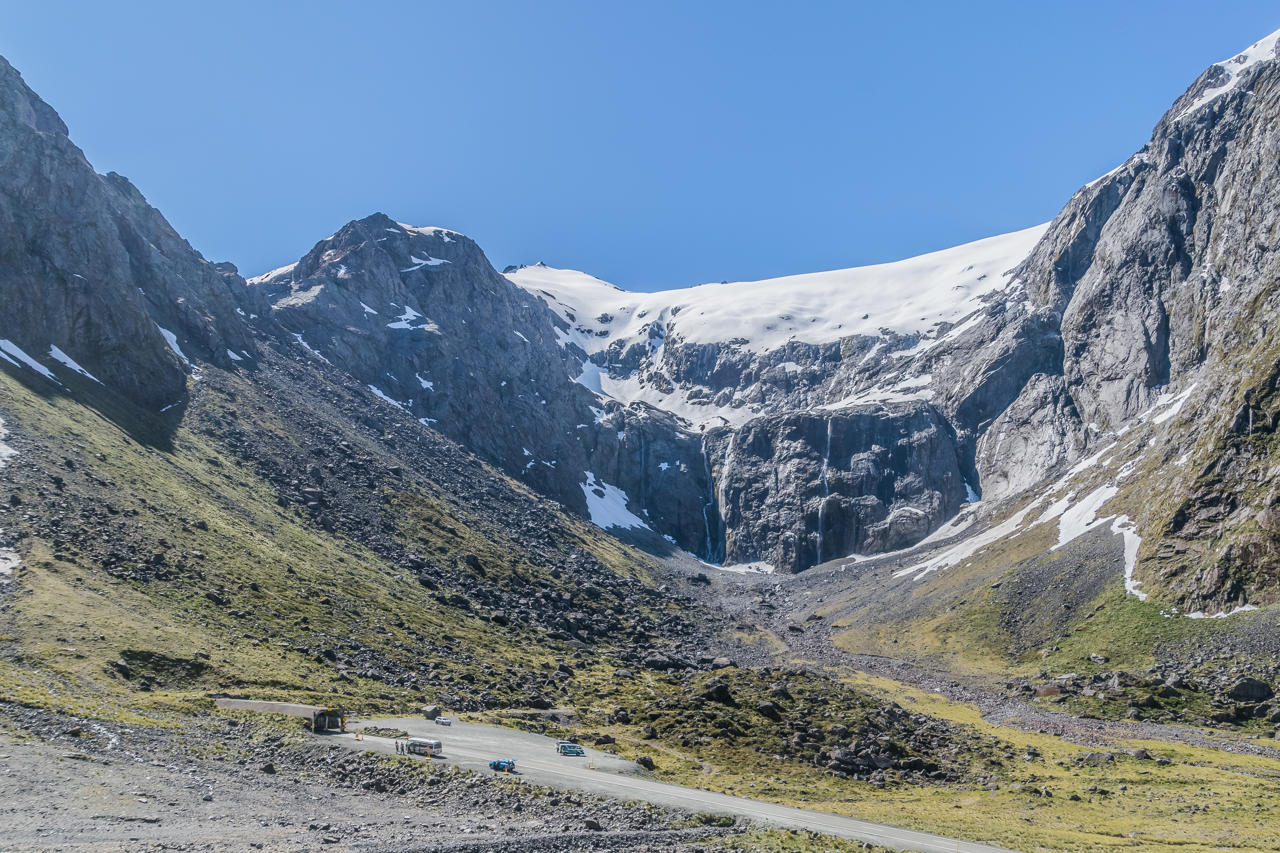
Shooting inside Fiordland National Park comes with real constraints for any of the region’s Mission Impossible fallout filming locations. The production worked closely with New Zealand’s Department of Conservation. Together they kept the impact on the landscape as low as possible. Conservation staff involved in approving the shoot point to earlier productions as useful lessons. A spaceship explosion filmed at Milford Sound for Alien: Covenant in 2016 taught both sides a lot about managing large-scale filming in a protected area.
That relationship helps explain why Milford Sound keeps showing up in major productions. The location delivers scenery no set could replicate. The surrounding wilderness stays protected for the next production, and for the tourists who visit long after the cameras leave.
Seeing Milford Sound for Yourself
You do not need a helicopter licence to experience this landscape. It inspired one of the biggest action sequences in modern film, and it remains one of New Zealand’s most visited Mission Impossible filming locations. Milford Sound is one of the most accessible fiords in the world. A single road connects it to Te Anau and Queenstown, even though the drive itself passes through genuinely remote wilderness.
A few ways to experience it for yourself:
- From the air and water: the Milford Sound Heli-Cruise-Heli tour pairs two scenic helicopter flights with a cruise along the fiord. It takes you over the Southern Alps, then sets you down on the water among the waterfalls and wildlife.
- On the ground: our Fiordland things to do guide covers the cruises, hikes, and lookout points. Take in Mitre Peak and the surrounding cliffs at your own pace.
- As part of a longer trip: our 5 Day Queenstown Tour package includes a coach journey along Milford Road. It follows the same route the film crew used to move equipment, before boarding a cruise at Milford Sound itself.
Our guide to the best places to visit in New Zealand places the fiord alongside the country’s other standout regions. Our South Island tours page breaks down self-drive, coach, and guided options for reaching it.
Planning a Visit Around Milford Sound
A few practical points make a real difference:
- Go early: About 90 percent of visitors come on day trips. Demand peaks sharply around midday, when the large tourist cruises depart. Arriving early, or booking an overnight cruise, tends to mean fewer crowds and calmer water for photography.
- Enjoy the drive: The road in from Te Anau is regularly rated among the world’s most scenic. It passes through the Homer Tunnel and past several glacial lakes before the fiord comes into view.
- Watch the weather: Milford Sound receives rain on roughly half the days of the year. That keeps the waterfalls dramatic, but conditions can change quickly. This matters most for anyone hoping to fly in by helicopter or light aircraft, the way the Fallout production did.
Final Thoughts
Milford Sound did not need Mission: Impossible – Fallout to prove it was striking. But the film gave millions of people around the world a reason to look twice. Between the quiet opening dream sequence and the high-stakes Mission Impossible-Fallout helicopter scene, Fiordland’s cliffs, waterfalls, and alpine lakes carried real weight on screen. Standing at the water’s edge, or flying above it, it is easy to see why. Tom Cruise called his time filming here amazing. It is easy to see why location scouts keep sending Hollywood productions back to the same fiord.
Whether you are chasing film locations or simply chasing scenery, Milford Sound rewards the trip either way.