
West Coast Wilderness Trail: Complete Cycling Guide & Map
West Coast Wilderness Trail: Complete Cycling Guide
The West Coast Wilderness Trail is one of New Zealand’s most rewarding cycle journeys. This 136-kilometre Great Ride runs between Greymouth and Ross on the South Island’s wild west coast. Riders cross sand dunes, native rainforest, glacial lakes, and historic gold mining country. One of New Zealand’s official Ngā Haerenga Great Rides, the trail blends spectacular scenery with genuine cultural depth. It suits most fitness levels, whether ridden as a single epic day or a relaxed multi-day adventure.
West Coast Wilderness Trail Overview: Greymouth to Ross
The trail is graded mostly Grade 2, meaning easy to intermediate. A handful of sections on shared roads rise to Grade 3. Most riders complete the West Coast Wilderness Trail in three to four days. Fit cyclists with limited time can manage a condensed two-day version. The trail can be ridden in either direction. Many operators recommend starting in Ross to benefit from the prevailing southerly wind on the journey north.
The route divides naturally into four distinct sections. From Greymouth, the trail follows the wild Tasman Sea coastline for around 17 kilometres. It then turns inland toward the historic gold mining town of Kumara. From Kumara, riders climb gradually toward Kawhaka Pass at 319 metres, the highest point on the trail. The descent through virgin rainforest leads toward Lake Kaniere. The third section follows the historic Kaniere Water Race, built in 1875 to supply the Kaniere goldfields. It winds through lush native bush into Hokitika. The final stretch runs from Hokitika to Ross via the West Coast Treetop Walk. It mixes new cycleway with old tramline through coastal wetlands, finishing at the historic gold town of Ross.
What Makes This Trail Special
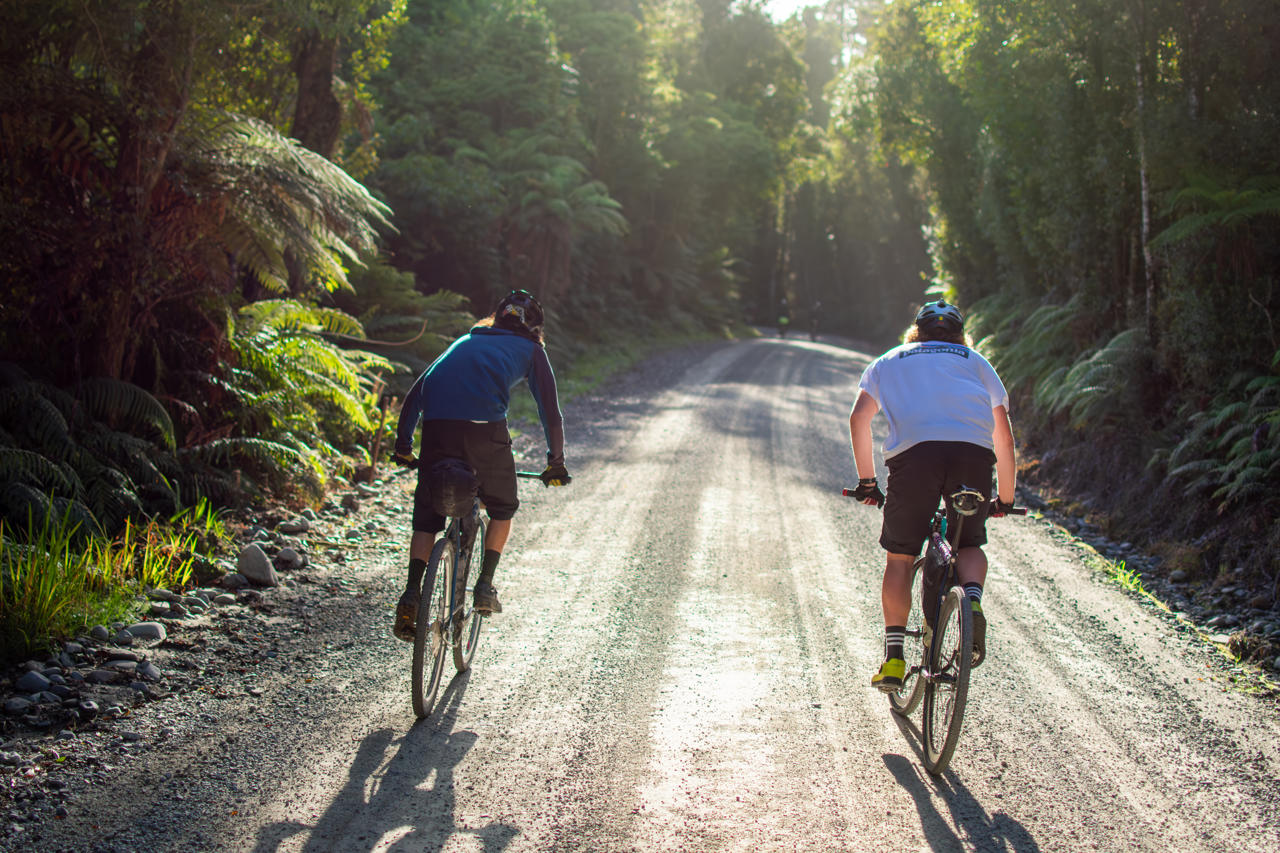
Unlike many cycle trails that focus purely on scenery, the West Coast Wilderness Trail tells a story. Riders pass through landscapes shaped by the gold rush era of the 1870s. Relics, water races, and tramlines remain visible along much of the route. Kumara and Ross both retain genuine gold rush character. Ross still claims New Zealand’s largest gold nugget, found there in 1909.
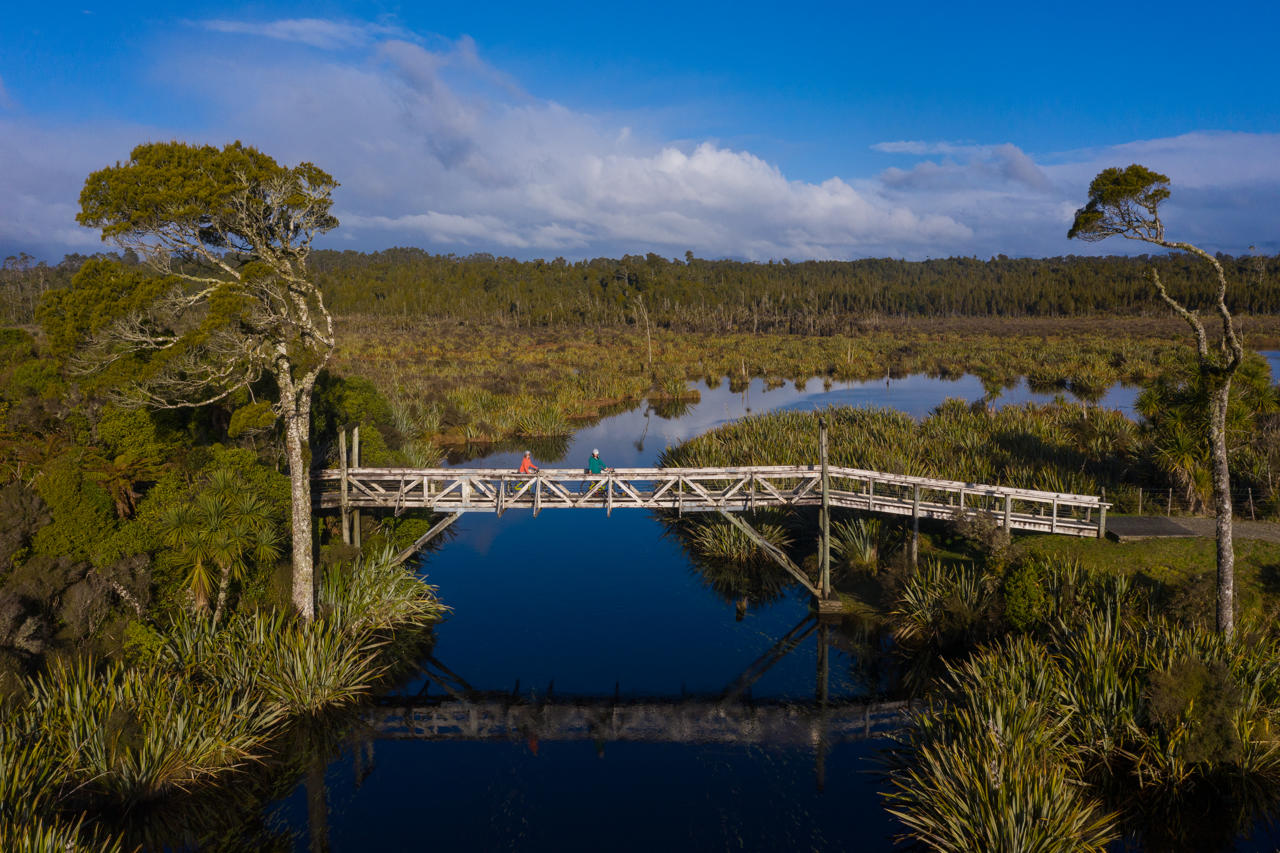
The natural scenery is equally compelling. Lake Kaniere is one of the most picturesque stops on the trail. Dense native bush rings the water, with swimming and picnic spots for riders who want a break. The Mahinapua wetlands near Hokitika are home to native birdlife, including the occasionally spotted kōtuku, or white heron. Throughout the trail, riders cycle with the Southern Alps on one side and the often-dramatic Tasman Sea on the other. Few cycling routes anywhere offer this particular combination of mountain and ocean scenery within a single ride.
Best Day Rides Along the West Coast Wilderness Trail
If you only have time for one section, ride from Hokitika to the West Coast Treetop Walk and back. This roughly 32-kilometre return trip is consistently rated among the best on the trail. It passes through the scenic Mahinapua wetlands on smooth, well-formed track. Most riders find it accessible regardless of experience level. The Treetop Walk itself offers a chance to stretch your legs among some of New Zealand’s tallest trees, with a café for refreshments before the ride back.
For a longer day ride, try the Kawhaka Intake to Hokitika section. It takes in dense rainforest, the Kaniere Water Race, and views of Lake Kaniere. Many riders consider it the most varied single day on the entire trail. Those based in Hokitika can also extend their visit with the Hokitika Gorge, a short drive from town and famous for its striking turquoise water.
Practical Planning: Bikes, Shuttles, and Accommodation
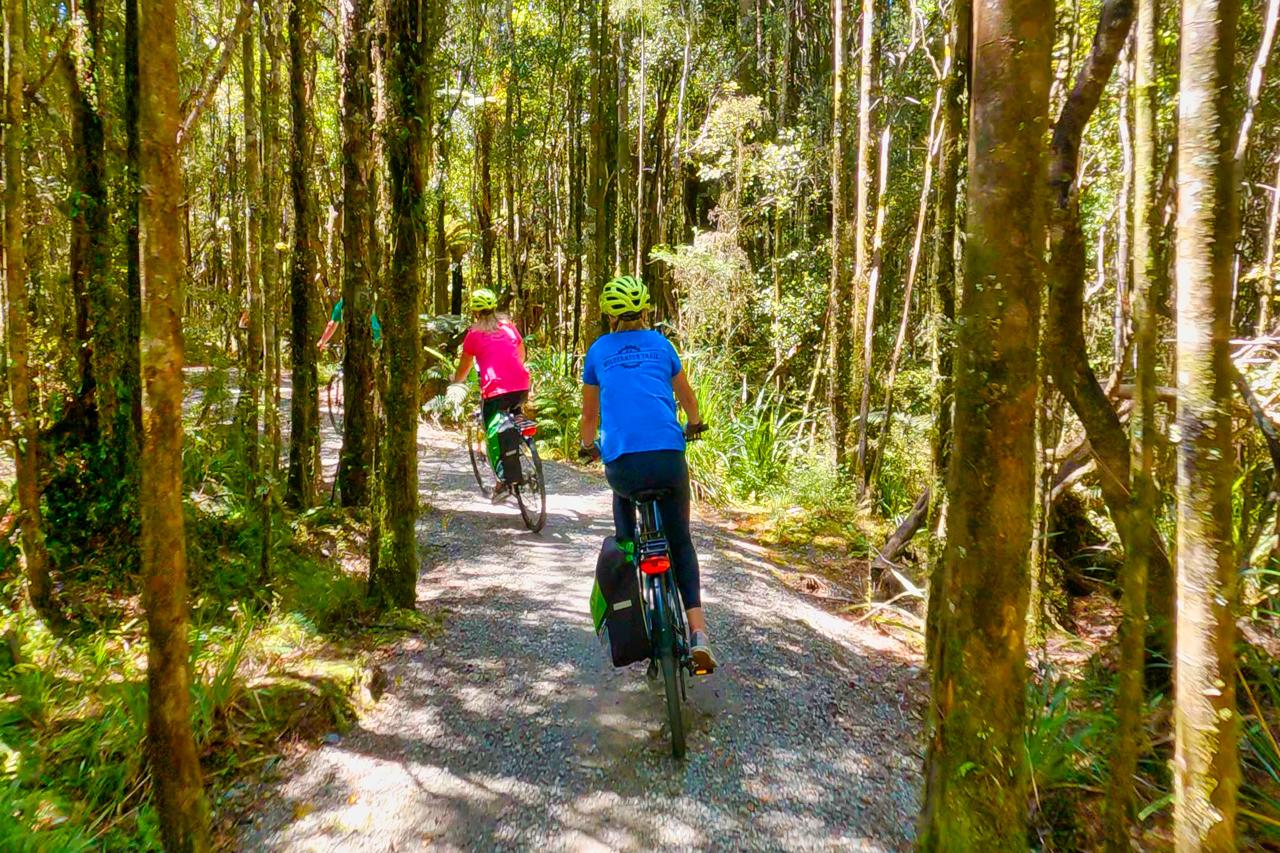
A mountain bike or hybrid bike with reasonably wide tyres is recommended. Several sections of the trail run over lumpy gravel, which thin-tyred road bikes cannot handle comfortably. Bike hire is widely available in both Greymouth and Hokitika. Most operators happily arrange one-way hire for point-to-point riders.
Several shuttle companies service the full length of the West Coast Wilderness Trail, moving both riders and luggage between towns and trailheads. This makes it easy to ride sections without backtracking or carrying overnight gear. Mobile phone coverage is patchy in places along the trail. Arrange shuttle pickups in advance rather than relying on calling ahead from the trail itself.
Accommodation along the West Coast Wilderness Trail is well distributed. Greymouth and Hokitika offer the widest range of options, from budget motels to boutique lodges. Kumara and Ross both have smaller but characterful places to stay, often in restored heritage buildings. Book ahead during the busy summer season from December through March.
Getting to the West Coast Wilderness Trail
Greymouth sits approximately four hours by car from Christchurch via the spectacular Arthur’s Pass. The TranzAlpine train follows the same scenic route and is widely considered one of the great train journeys of the world. It makes a memorable way to begin a West Coast Wilderness Trail adventure. Hokitika also has its own small airport with connections to other parts of New Zealand.
Visitors who prefer guided support can explore our West Coast tours and activities page, which covers the wider region. Our New Zealand bike tours page outlines structured cycling itineraries across the country, including West Coast routes.
Combining the Trail with Glacier Country
Many riders extend their West Coast adventure south toward Franz Josef and Fox Glacier. The drive from Hokitika takes around two to three hours. Our Glacier Country tours page covers this stretch of coastline in detail. Our dedicated Franz Josef Glacier tour guide explains the options for exploring one of the world’s most accessible glaciers. Pairing the trail with a few days in Glacier Country makes for one of the South Island’s most complete adventures.
Best Time to Ride the West Coast Wilderness Trail
The trail is rideable year-round, but conditions vary by season. Summer, from December through March, brings the longest daylight hours and the most reliable weather. It is also the busiest period, so book shuttles and accommodation well ahead. Autumn and spring offer quieter trails and comfortable riding temperatures. Rainfall is slightly less likely than in winter, though the West Coast is famous for unpredictable weather year-round. A good rain jacket is essential equipment on this coast, whatever the season you choose to ride.
West Coast Wilderness Trail: New Zealand’s Story on Two Wheels
The trail offers something genuinely different among New Zealand’s Great Rides. Accessible riding meets rich gold rush history and landscapes that shift from rainforest to coastline within a single day. It stands out as a choice for cyclists of nearly every level. Whether you ride the full four days or sample a single unforgettable section, this trail captures the wild character of the West Coast better than almost any other way to experience the region.
Few experiences capture the South Island’s contrast of rugged coast and ancient forest quite like the West Coast Wilderness Trail. Ready to plan your South Island cycling adventure? Explore our full range of South Island tours and start building your New Zealand itinerary today.
FAQs
Q: How long does it take to cycle the West Coast Wilderness Trail?
Most riders complete the full 136-kilometre West Coast Wilderness Trail in three to four days, riding three to five hours each day. Fit cyclists with limited time can complete the entire trail in two long days, though this leaves little time to stop and explore the lakes, gorges, and historic towns along the way. Many visitors choose to ride just one or two standout sections instead.
Q: Is the West Coast Wilderness Trail suitable for beginners?
The West Coast Wilderness Trail is mostly Grade 2 (easy to intermediate), with occasional Grade 3 sections on shared roads. Riders should be reasonably fit and comfortable on a mountain bike or a hybrid bike, since parts of the trail run over gravel. Beginners often choose shorter day sections, such as Hokitika to the Treetop Walk, rather than attempting the full multi-day route.
Q: Where does the West Coast Wilderness Trail start and finish?
The West Coast Wilderness Trail runs between Greymouth in the north and Ross in the south, passing through Kumara and Hokitika along the way. The trail can be ridden in either direction, and riders frequently start in Ross to take advantage of the prevailing southerly wind. Bike hire and shuttle services are available at both ends, making one-way trips straightforward to arrange.