
Milford Track New Zealand | Complete Great Walk Guide
Walking the Milford Track New Zealand – The Complete Guide
Some places earn their nicknames. The Milford Track New Zealand has been called the finest walk in the world for well over a century, and it’s a claim that holds up remarkably well under scrutiny. Four days. 53.5 kilometres. Glacier-carved valleys, alpine passes, rainforest, and one of New Zealand’s highest waterfalls, all leading to Milford Sound itself at the end. It’s one of New Zealand’s ten Great Walks, and arguably the most famous of all of them.
It’s also one of the hardest things to book in New Zealand outdoor recreation. That’s not a deterrent. It’s part of the story.
What Is the Milford Track?
The Milford Track New Zealand is a 53.5-kilometre, one-way walk through Fiordland National Park, from Glade Wharf at the head of Lake Te Anau to Sandfly Point near Milford Sound. It takes four days and three nights, with overnight stays at three Department of Conservation huts along the way. There’s no camping, no shortcuts, and no walking it in the other direction. Everyone moves through the same sequence, at roughly the same pace, together.
That structure is part of what makes the experience so distinctive. Forty people share each hut for three consecutive nights, with no phone signal and nothing to do in the evenings except talk. Strangers on day one tend to be something closer to friends by day four.
The Route, Day by Day
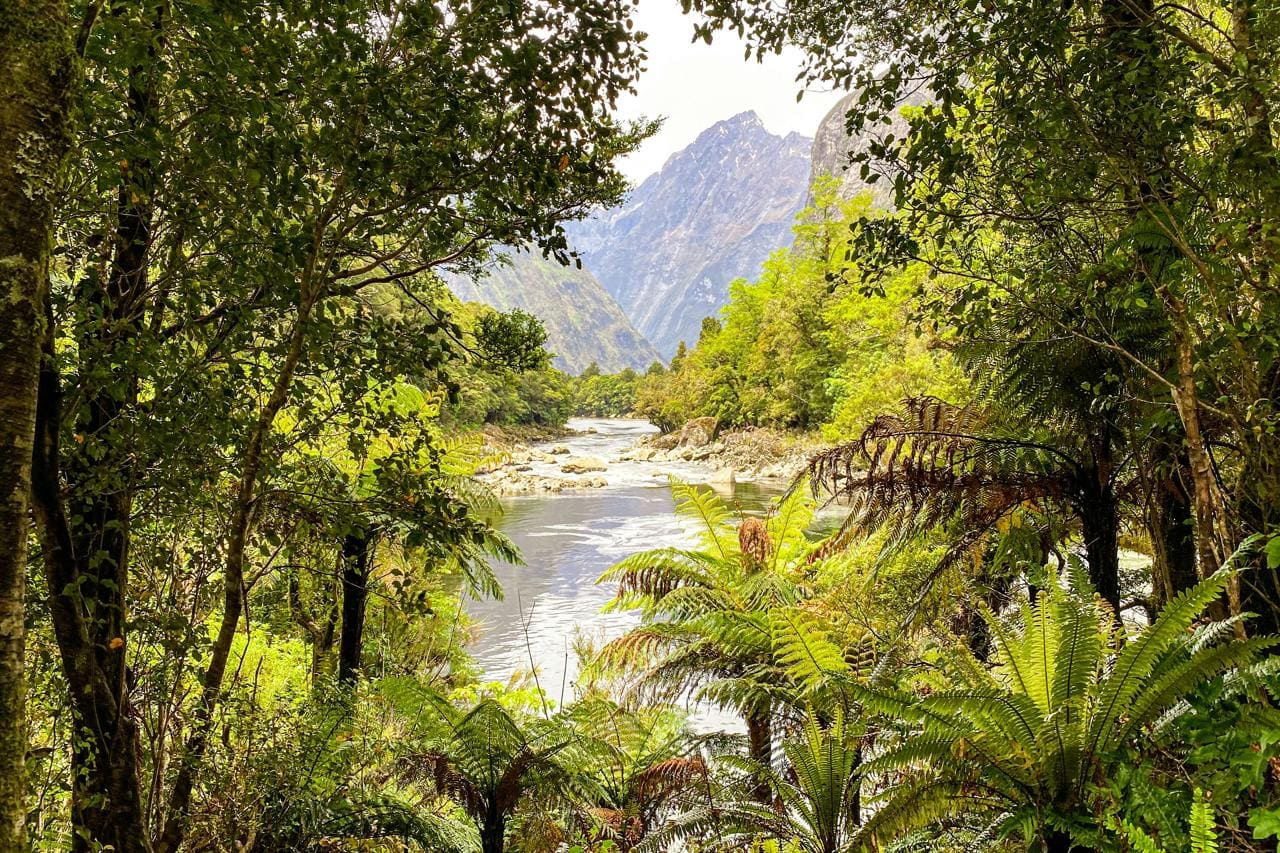
Day one: Glade Wharf to Clinton Hut. A short boat trip across Lake Te Anau brings you to the start of the track. The first day’s walk is gentle, around five kilometres through beech forest along the Clinton River. It’s designed as an easy introduction, and most walkers reach Clinton Hut within a couple of hours.
Day two: Clinton Hut to Mintaro Hut. A longer day, around 16.5 kilometres, climbing gradually up the Clinton Valley. The valley narrows as you go, with steep walls rising on either side and waterfalls dropping from high above. Mintaro Hut sits at around 600 metres, with views back down the valley you’ve just climbed.
Day three: Mintaro Hut to Dumpling Hut. This is the big one. The track climbs to Mackinnon Pass at 1,154 metres, the highest point of the track and, weather permitting, the most spectacular. From the pass, Sutherland Falls is visible in the distance, dropping 580 metres down a sheer rock face. The descent from the pass is long and can be hard on the knees. Around 14 kilometres in total, but the climbing and descending make it feel longer.
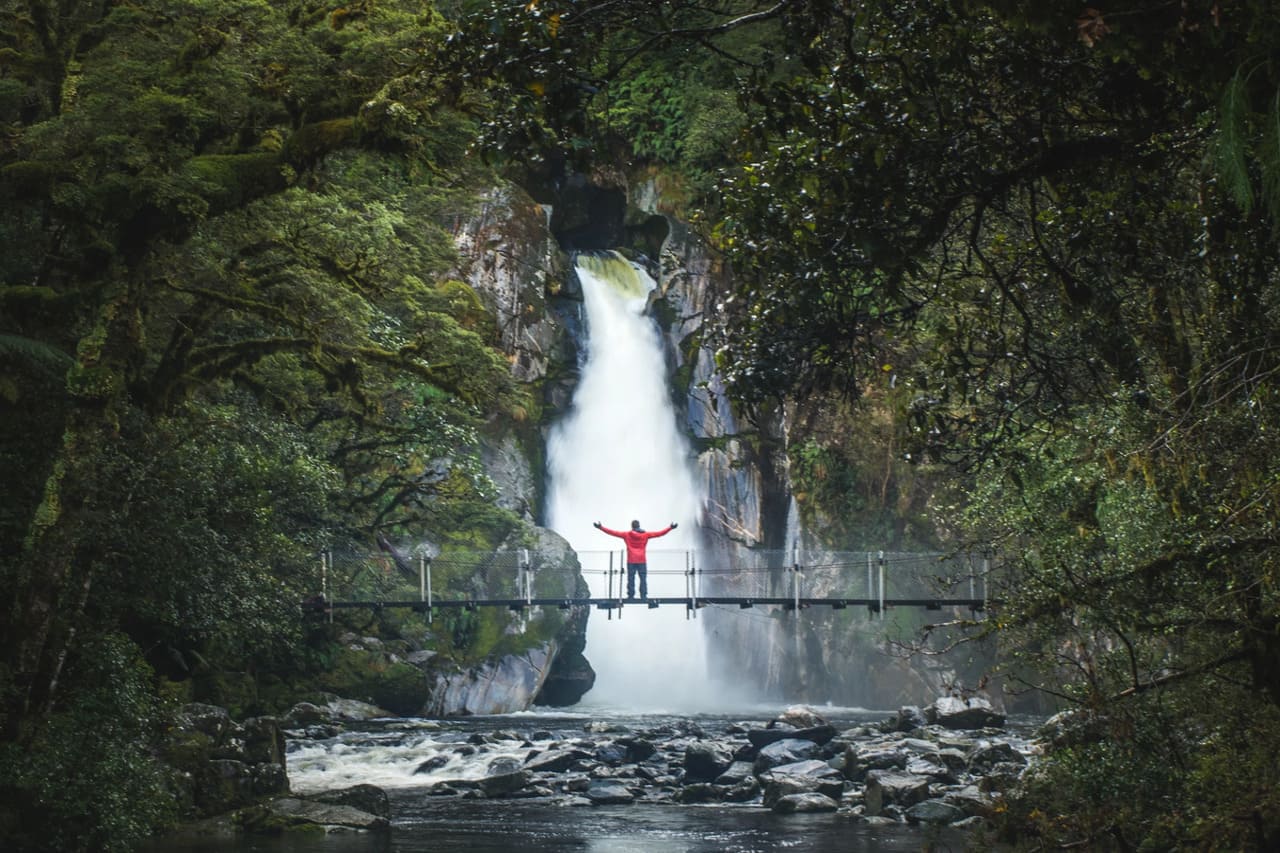
Day four: Dumpling Hut to Sandfly Point. The final day follows the Arthur River through forest, passing Mackay Falls and Giant Gate Falls along the way. Around 18 kilometres, mostly flat or gently downhill. It ends at Sandfly Point, where a boat transfer takes you across to Milford Sound itself. Walking out of the forest and onto the water, with the fiord opening up in front of you, is one of those moments that the whole walk has been building toward.
Booking the Milford Track
This is the part that catches people out. The Milford Track New Zealand operates on a strict booking system during the Great Walks season, which runs from late October to April. Hut tickets for the following season typically go on sale in May, and demand is intense. Tens of thousands of people compete for a limited number of spots the moment bookings open.
The independent option means booking your own hut tickets through the Department of Conservation, arranging your own food and gear, and organising boat transfers at both ends of the track. It’s the more affordable route, but it requires planning well over a year in advance for popular dates, particularly December and January.
The guided option includes private lodges, all meals, transport, and often equipment. It costs significantly more, but removes the booking lottery entirely and includes a level of comfort the independent huts don’t offer. For travellers who want the Milford Track experience without the stress of a booking race, guided walks are worth serious consideration.
Outside the Great Walks season, from May to October, the track is open but unsupported. Huts aren’t staffed, conditions are genuinely alpine, and DOC strongly recommends against attempting it without mountaineering experience, navigation skills, and proper equipment. This isn’t a season for casual hikers.
If You Can’t Get a Booking
Missing out on Milford Track hut tickets is common, not exceptional. There are good alternatives.
Day walks from either end let you experience sections of the track without the full commitment. From Glade Wharf, a walk to Clinton Hut and back takes around three to four hours. From Sandfly Point, the walk to Giant Gate Falls and back is similar. Both require a boat transfer, which the same operators running multi-day transport also provide for day visitors.
The Routeburn Track and Kepler Track are Fiordland’s other two Great Walks, and both offer similarly spectacular alpine scenery with a less brutal booking process. Many visitors who miss out on Milford end up walking one of these instead, and few come away disappointed.
For those who simply want to experience Milford Sound itself, without the four-day commitment, our Milford Sound Coach, Cruise and Fly Tour covers the Milford Road, a cruise on the fiord, and a scenic flight back to Queenstown in a single day. It’s a genuinely different experience from walking in, but it shows you the destination the Milford Track has been heading toward all along.
Getting There and Practical Information
Access points. Glade Wharf, the start of the track, is reached by boat from Te Anau Downs, itself a short drive from Te Anau. Sandfly Point, the end, connects by boat to Milford Sound. Most walkers base themselves in Te Anau or Queenstown before and after the walk.
Fitness required. The Milford Track New Zealand is graded as an intermediate Great Walk, but day three’s climb to Mackinnon Pass and the long descent that follow are genuinely demanding. A reasonable level of fitness and some multi-day hiking experience make a real difference to how much you enjoy it.
Weather. Fiordland is one of the wettest places in New Zealand, and rain is a near-certainty at some point during four days on the track. It’s also part of the magic. The waterfalls that make the Milford Track famous are at their best when it’s raining, and the forest takes on an entirely different character in the mist. Pack for it properly and it stops being a problem.
What to pack. Good waterproofs, layers for temperature swings between the valley floor and Mackinnon Pass, and broken-in boots. Independent walkers need to carry food for four days plus a stove, sleeping bag, and the usual backcountry essentials.
Fitting the Milford Track Into a Wider Trip
The Milford Track New Zealand sits within Fiordland National Park, one of the country’s most rewarding regions and a natural anchor for a South Island itinerary. Our full Fiordland National Park guide covers the wider region, including the other Great Walks, scenic flights, and the best times of year to visit.
For those building a South Island self-drive around Fiordland, our South Island Self-Drive Tours include itineraries that route through Te Anau and Milford Sound, with time built in for either the track itself or one of the shorter Milford Sound experiences. Our guide to Discovering Milford Sound is the right starting point for first-time visitors deciding between a cruise, a kayak trip, or a flight.
For a fully tailored Fiordland experience, including help navigating the Great Walks booking system, our Luxury Private Tours can create an itinerary tailored to whichever Milford experience suits your group, whether that’s the full track, a guided walk, or a day trip from Queenstown.
For more South Island hiking inspiration, visit our New Zealand Travel Blog or explore our guide to the Best Hikes in New Zealand.
Frequently Asked Questions
How hard is the Milford Track New Zealand?
It’s graded intermediate, suitable for hikers with reasonable fitness and some multi-day experience. Day three, which climbs to Mackinnon Pass at 1,154 metres and descends to Dumpling Hut, is the most demanding section. The other three days are more moderate, with gentle gradients through forest and valley.
How do you book the Milford Track?
Independent hut tickets are booked through the Department of Conservation, typically released in May for the following season. Demand is extremely high, and popular dates in December and January sell out within minutes. Guided walks through licensed operators include accommodation in private lodges and avoid the booking rush entirely, at a significantly higher cost.
When is the Milford Track open?
The Great Walks season runs from late October to April, when huts are staffed and the track has full facilities. Outside this window, the track is open but unsupported, with alpine conditions that require mountaineering experience. DOC recommends against attempting it in winter without the right skills and equipment.
What if I can’t get a Milford Track booking?
You’re not alone. Day walks from either end of the track let you experience a section without an overnight booking. The Routeburn Track and Kepler Track, Fiordland’s other Great Walks, offer comparable scenery with an easier booking process. Our Milford Sound Coach, Cruise and Fly Tour is a strong alternative for experiencing the destination itself.
How wet does it get on the Milford Track?
Very. Fiordland is among the wettest regions in New Zealand, and rain during the four days is common. It’s also part of what makes the waterfalls and rainforest so spectacular. Proper waterproof gear turns the rain from a problem into part of the experience.