
Pancake Rocks & Blowholes: Punakaiki Walk Guide & Tide Tips
Pancake Rocks & Blowholes: Complete Guide to Punakaiki’s Geological Spectacle
Thirty million years ago, the site of Punakaiki lay at the bottom of the sea. Dead marine organisms drifted to the seabed and compacted into alternating layers of hard and soft limestone under immense pressure. Then they waited. Tectonic forces eventually pushed those layers upward. Rain, wind, and the Tasman Sea spent millions of years sculpting what emerged. The result stands today at Dolomite Point, the Pancake Rocks of Punakaiki. They are New Zealand’s most-photographed geological formations. The 1.1-kilometre loop walk around them draws close to half a million visitors a year. Nearly everyone arrives expecting something interesting. Nearly everyone leaves having seen something extraordinary.
Thirty Million Years in the Making
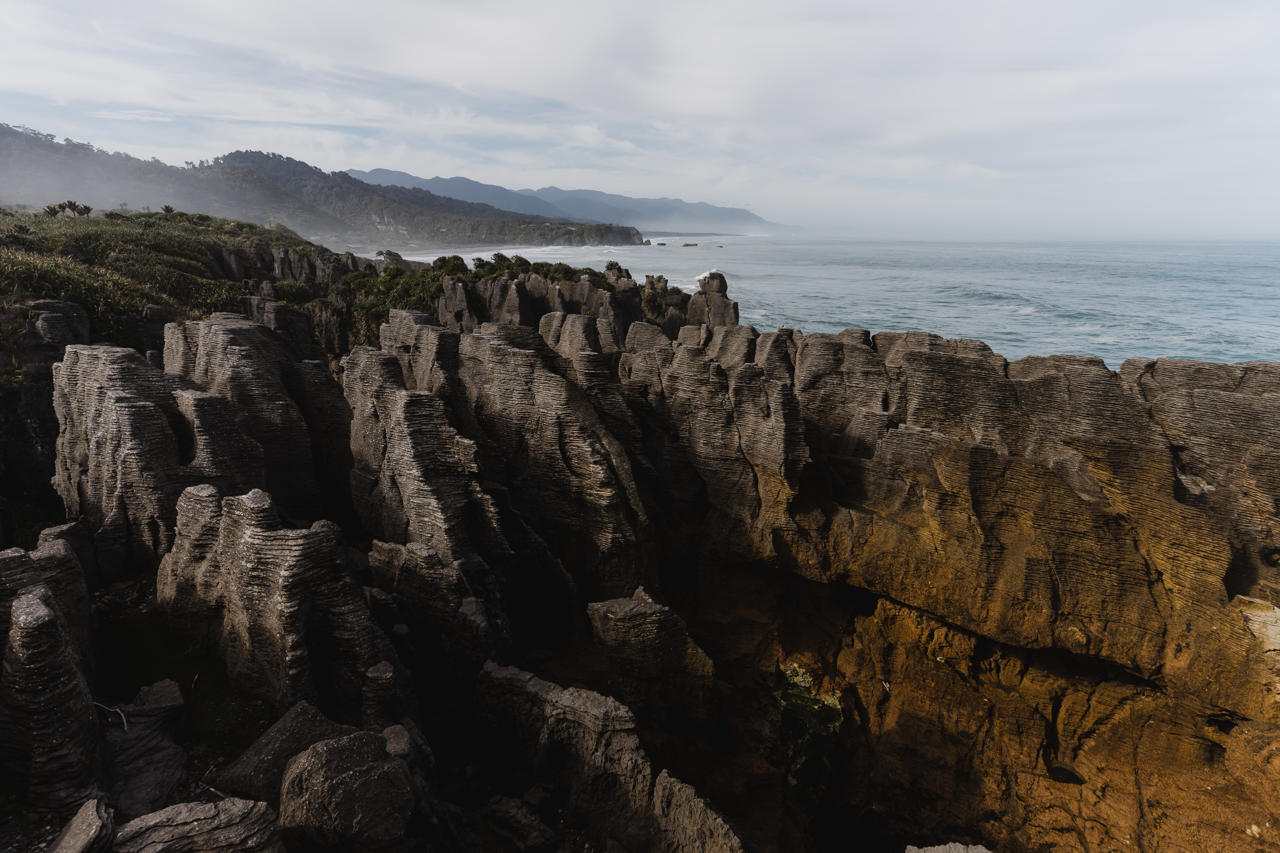
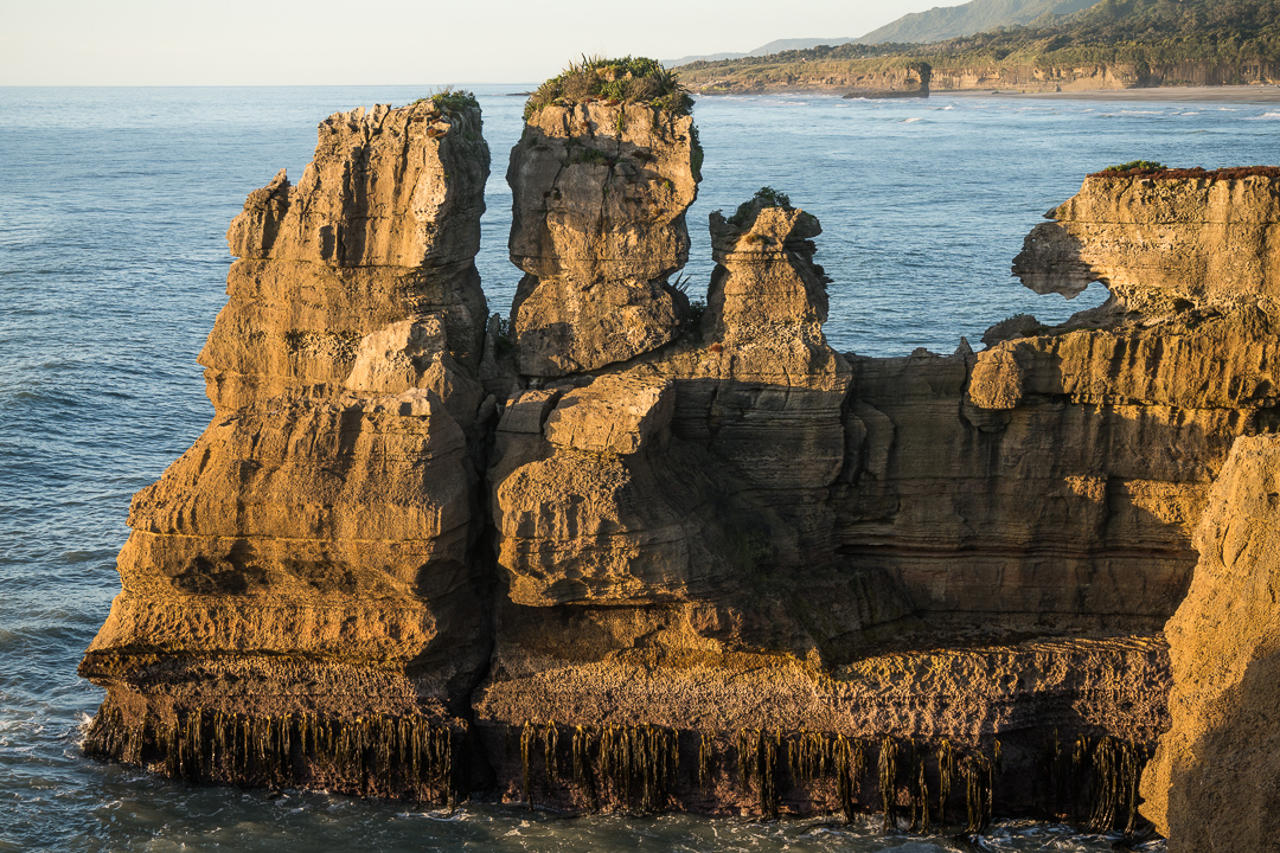
The layered appearance of the Pancake Rocks is a direct result of geology. Hard and soft limestone layers alternate through the rock. The sea eroded the softer layers faster than the harder ones. Over millions of years, this process left the hard layers protruding, stacked like discs, like columns of compressed time. Some stacks reach several metres in height. Up close, each layer reveals a different texture and colour, a visual record of the seabed conditions that produced it.
The formation sits on Dolomite Point within Paparoa National Park, 44 kilometres north of Greymouth and 57 kilometres south of Westport. Punakaiki Marine Reserve surrounds the point, covering over 3,500 hectares of ocean and established to protect the diverse marine ecosystem created by the same geological forces.
No two visits to the Pancake Rocks & Blowholes look quite the same. Light, tide, and weather all shift the appearance of the formations. Overcast days reveal the layering more clearly than bright sunshine. Rough weather, counterintuitively, often produces the most memorable experience of all.
How the Blowholes Actually Work
The blowhole network at Dolomite Point forms through a specific process. The sea carves underground caverns into the limestone base of the point over centuries. When waves push into those caverns, they trap air inside and rapidly compress it. The compressed air and water escape through vertical shafts that reach the surface, the blowholes erupting upward in sudden, powerful bursts of spray and sound.
The main blowhole at Dolomite Point is known in Māori as Putai. The largest surge pool nearby, a cauldron-shaped hollow where waves surge and build before the blow, is called Devil’s Cauldron. A second blowhole, Sudden Sound, sits further along the track. A lifebelt near it serves as a reminder that this area demands serious respect. Stay on the formed track at all times.
The Pancake Rocks Walk: What to Expect on the Loop
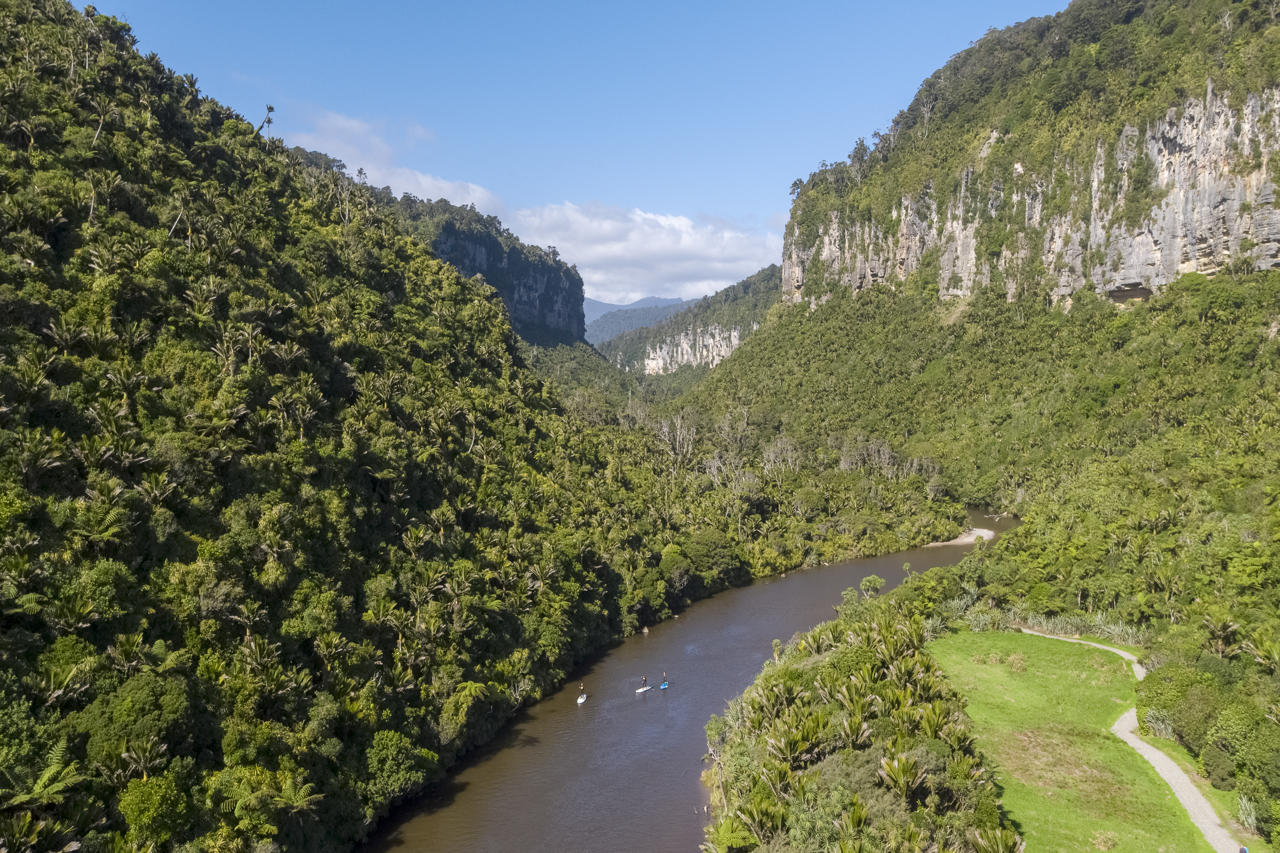
The Pancake Rocks loop track begins at Dolomite Point, directly opposite the DOC visitor centre on SH6. A boardwalk system carries walkers past the main formations, through coastal native forest with nīkau palms and flax, and out to a sequence of clifftop viewpoints above the sea. Information panels explain the geology, the marine reserve, and the native coastal plant species.
Check the tide tables at the DOC visitor centre before setting off. The track is 1.1 kilometres long, with most walkers completing the full loop in 20 to 45 minutes. DOC rates it as easy. The boardwalk makes the majority of the route suitable for wheelchairs and strollers with assistance, though one optional stepped section leads to an additional viewpoint that requires mobility. The walk entrance is free. Bring a camera with a good zoom lens for the Pancake Rocks formations. Many of the rock formations reveal their most interesting details from viewing platforms, not from close range.
The Tide Guide: Planning for the Best Blowholes
Tide timing can make the difference between a good visit to the Pancake Rocks and an unforgettable one. The blowholes perform best at high tide combined with a south-westerly ocean swell. At these moments, the eruptions reach their full height and produce the thick walls of spray that fill most photographs of the site. At low tide, the blowholes still function but produce smaller, less frequent eruptions. The surge pool activity at Devil’s Cauldron drops noticeably.
The DOC visitor centre publishes current tide tables. The Westport tide schedule serves as the nearest reliable reference. Arriving 30 to 60 minutes before high tide gives the longest window of peak blowhole activity. The blowholes remain impressive for one to two hours either side of the high water mark, especially with a south-westerly swell.
Even at low tide, the Pancake Rocks justify the stop. Even without a high tide, rough weather still generates dramatic wave action against the outer formations.
Wildlife at Dolomite Point
The marine reserve surrounding Dolomite Point supports significant wildlife. New Zealand fur seals haul out on the rocks below the southern viewpoints, often visible from the track. Little blue penguins nest in rock crevices and are most active at dusk and dawn. Seabirds work the offshore waters throughout the day.
The surrounding hills support the breeding colony of the Westland black petrel, a large seabird that nests nowhere else on earth. The entire world population of around 10,000 birds breeds in burrows on the forested slopes above Punakaiki. Hector’s dolphin, the world’s smallest dolphin species, appears regularly in the waters off the point.
Getting There and Parking
The Pancake Rocks car park sits beside the DOC visitor centre on SH6 in Punakaiki. DOC introduced paid parking here as a pilot from 15 December 2025. The current rate runs at $5 per hour or $20 per day. Arrivals that stay under 20 minutes park for free. Payment machines on site accept debit and credit cards onlyno cash. Confirm the current status at the DOC website before arriving. The pilot runs until June 2026 with no confirmed extension at the time of writing.
The DOC visitor centre provides toilets, information, and tide tables. A small café operates in the Punakaiki village nearby.
After the Pancake Rocks: Making the Most of Punakaiki
The Pancake Rocks pair naturally with several other Punakaiki experiences. Our Truman Track guide covers the short walk 3 kilometres north subtropical forest, a hidden beach, and a waterfall dropping onto the sand. It offers a completely different atmosphere to Dolomite Point. Both walks together take under two hours.
For a longer evening in Punakaiki, the Punakaiki Beach Sunset Cocktail Experience offers a natural finale to a day on the coast. For a broader overview of the park, our Paparoa National Park visitor guide covers the Pororari River Track, the Paparoa Great Walk, and wildlife viewing in detail.
Continuing down the West Coast, our West Coast tours and activities page outlines the best experiences between Westport and the glaciers. Our South Island tours page covers multi-day itineraries that include Punakaiki.
Pancake Rocks: Thirty Million Years. Twenty Minutes. Completely Unforgettable.
The Pancake Rocks & Blowholes walk earns its reputation as the West Coast’s most visited attraction not through scale or difficulty, but through genuine geological spectacle. The Pancake Rocks took thirty million years to produce. The blowholes require only a high tide and a south-west swell to deliver a display of raw ocean power that stops visitors mid-sentence. The walk takes twenty minutes. The impression lasts considerably longer.
Ready to plan your West Coast adventure? Explore our full range of South Island tours and start building your New Zealand itinerary today.
FAQs
Q: What is the best time to visit the Pancake Rocks & Blowholes?
High tide with a south-westerly ocean swell produces the most dramatic blowhole eruptions at the Pancake Rocks. Arriving 30 to 60 minutes before high tide gives the longest window of peak activity. The DOC visitor centre at Punakaiki publishes daily tide tables. Even at low tide, the Pancake Rocks formations and coastal views justify the stop, the blowholes simply perform at a reduced scale.
Q: How long does the Pancake Rocks walk take?
The Pancake Rocks & Blowholes loop track covers 1.1 kilometres. At a steady walking pace, most visitors complete it in 20 to 45 minutes. Timing a visit around high tide to watch the blowholes at their most active naturally extends the experience. Combining the loop with the nearby Truman Track adds about 30-45 minutes to the total visit time.
Q: Is there a fee to visit the Pancake Rocks?
The Pancake Rocks & Blowholes walk itself is free. However, DOC introduced paid parking at the Dolomite Point car park as a pilot from 15 December 2025. The rate runs at $5 per hour or $20 per day, with the first 20 minutes free. Payment by card only, no cash accepted. Check the current parking status at the DOC website before your visit, as the pilot arrangement may change.