
Where the Wild South Meets the Sea
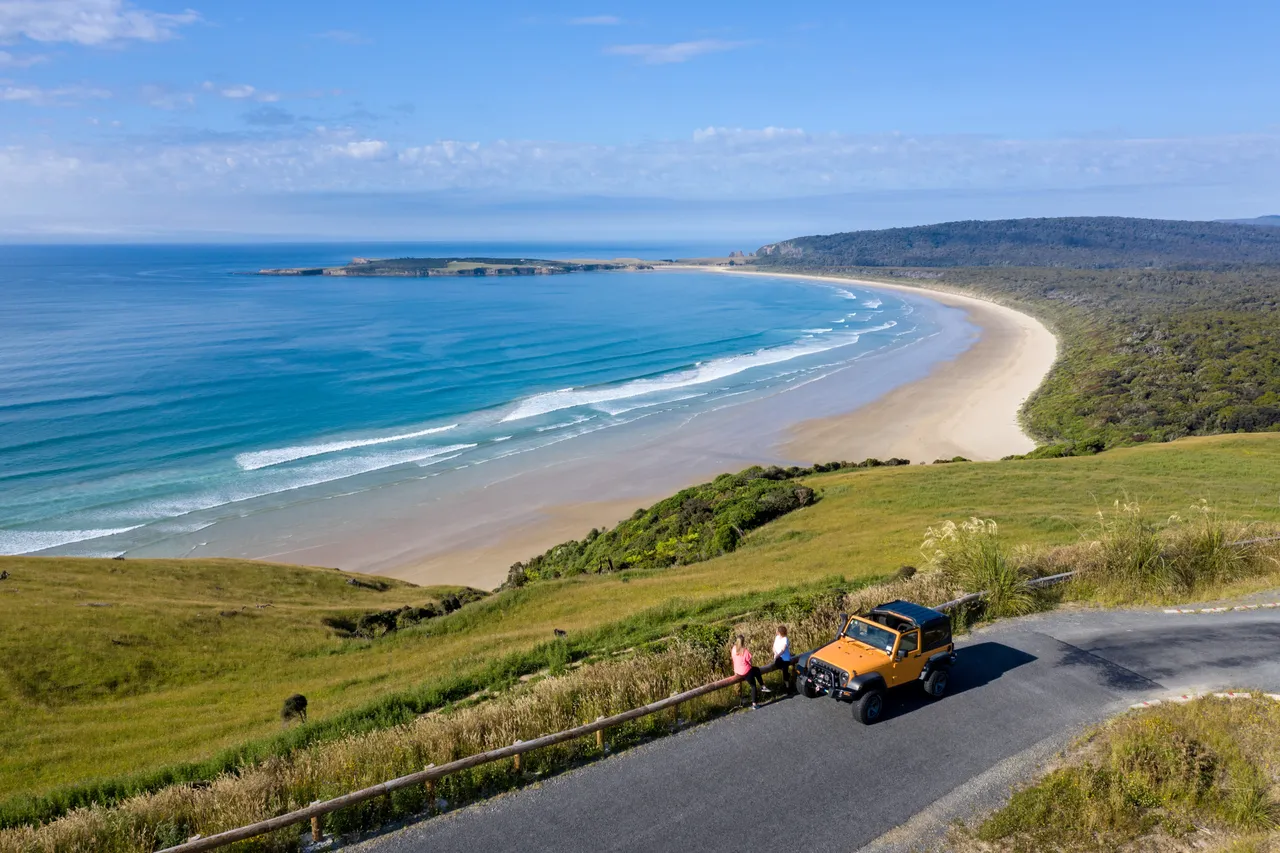
Picture a road winding through rainforests, past windswept beaches with penguins, and to the edge of the world. The Southern Scenic Route is a 610-kilometer drive through some of the most remote and wild landscapes, where the Southern Ocean shapes a stunning coastline.
The Journey Begins: Queenstown to Invercargill
Start your journey in Queenstown. The route to Te Anau runs past Lake Wakatipu and the Remarkables, reflecting in calm mornings. Stop at the Kingston Flyer station; even if the steam train isn’t running, the restored carriages are worth a look.
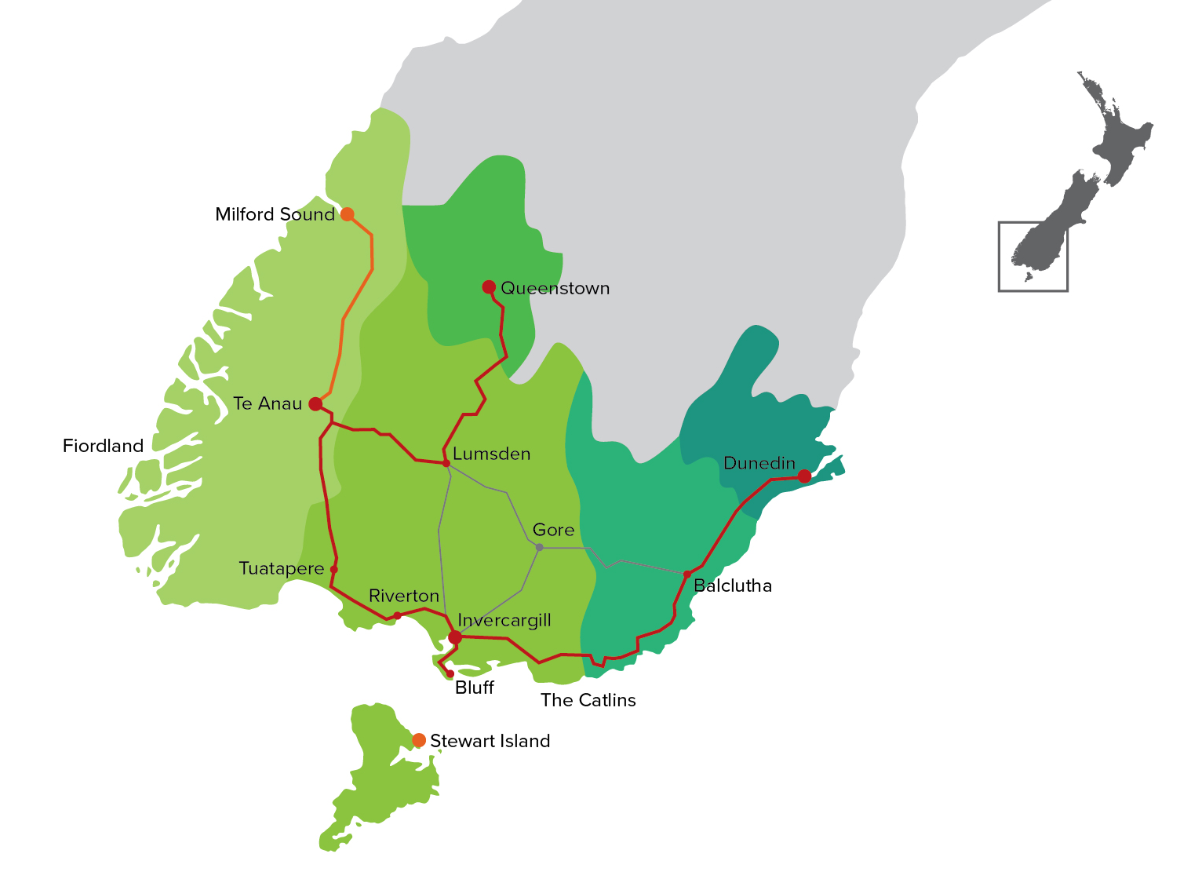
Te Anau serves as your gateway to Fiordland, and while Milford Sound might tempt you with a detour, save that for another trip. Instead, fuel up (both your car and yourself) because the next stretch to Invercargill via Manapouri introduces you to the route’s characteristic emptiness—rolling farmland punctuated by the occasional sheep station, with mountains brooding on the horizon.
Invercargill to Bluff: The Bottom of the World
Invercargill might surprise you. This southernmost city has undergone a renaissance, featuring excellent cafes and the fascinating Transport World museum, which houses everything from vintage cars to aircraft.
But the real draw lies 30 minutes south in Bluff, where Highway 1 literally ends at Stirling Point. The famous signpost showing distances to global cities makes the obligatory photo stop, but don’t miss Bluff Hill’s panoramic views—on clear days, you can see Stewart Island floating like a green jewel across Foveaux Strait.
- Oyster Season (March–August): Try the world’s most succulent Bluff oysters.
- Seafood Highlight: Not an oyster fan? The local blue cod at Oyster Cove restaurant might convert you.
The Catlins: Where Magic Lives
The Catlins Coast, stretching from Fortrose to Balclutha, is the Southern Scenic Route’s crown jewel. This is where you’ll want to slow down and possibly add an extra day to your itinerary.
The region operates on “Catlins time”—a local joke about how everything takes longer because you’ll stop every few kilometers, mesmerized by another spectacular vista or hidden waterfall.
Essential Catlins Stops
- Waipapa Point – Historic lighthouse, sea lions on the beach, and tidal pools at low tide.
- Slope Point – The South Island’s southernmost point, with permanently wind-bent trees shaped by relentless Antarctic winds.
- Curio Bay – 180-million-year-old petrified forest visible at low tide; Hector’s dolphins and yellow-eyed penguins often appear in the evenings.
- Cathedral Caves – Accessible only at low tide, with soaring caverns and incredible acoustics.
- Purakaunui Falls – New Zealand’s most photogenic waterfall, a three-tiered cascade surrounded by native bush.
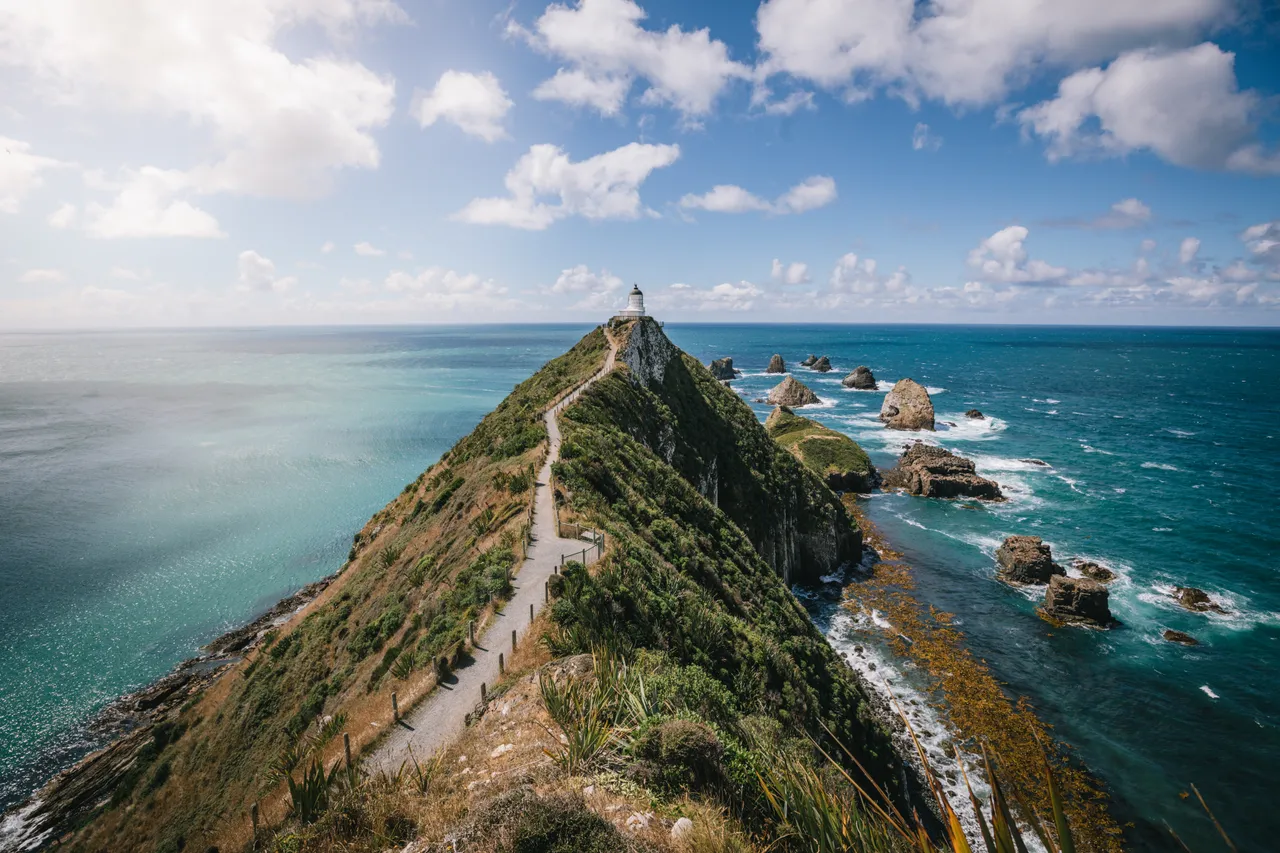
- Nugget Point – Iconic lighthouse walk with panoramic coastal views, fur seals, sea lions, and seabirds.
Balclutha to Dunedin: The Heritage Coast
As you leave the Catlins wilderness, the landscape transitions to the more settled Clutha district.
- Balclutha straddles the mighty Clutha River, New Zealand’s highest-volume river, and offers good cafes and the last fuel stop before Dunedin.
- The coastal route through Kaka Point and fishing villages provides a gentler conclusion to your journey.
- Don’t miss Tunnel Beach near Dunedin: a short but steep walk leads to a hand-carved tunnel to a private beach, framed by dramatic sandstone cliffs and arches—particularly stunning at sunset.
Practical Tips for the Self-Drive Explorer
- Vehicle Choice: A 4WD isn’t necessary, but ground clearance helps on gravel sections. One-way rentals from Queenstown to Dunedin are available.
- Timing Your Trip: Minimum 3 days, ideally 4–5. Summer (Dec–Feb) offers long days, autumn (Mar–May) brings colors and fewer tourists, and winter offers magic but requires caution.
- Fuel Planning: Refill whenever you see a station. Main stops: Invercargill, Bluff, Owaka, and Balclutha.
- Accommodation: Limited in the Catlins—book ahead. Curio Bay and Owaka offer camping, motels, and boutique lodges.
- Weather Warnings: The south coast changes rapidly—pack layers, waterproofs, and be flexible.
- Wildlife Viewing: Bring binoculars. Maintain distance (10m from penguins, 20m from sea lions). Never block a sea lion’s path to the ocean.
- Hidden Gems: Ask locals for tips. Many beaches have unmarked caves, waterfalls, or historical sites.
The Southern Difference
What makes the Southern Scenic Route special isn’t just the landscapes—it’s the sense of remoteness. This is New Zealand’s forgotten coast: fewer tourists, no big tour buses, and often entire beaches to yourself.
It’s the freedom to:
- Stop at random beaches.
- Spend an extra hour with sea lions.
- Follow that gravel road that may lead to nothing—or to your trip’s highlight.
More Than a Drive
The Southern Scenic Route is more than a journey—it’s a passage through time, nature, and heritage. From ancient petrified forests and whaling relics to thriving wildlife, it’s a drive where the journey becomes the destination.
Arriving in Dunedin, with its Scottish heritage and vibrant student life, you’ll already be planning your return. Because once you’ve driven this road, the call of the wild south stays with you.
The Southern Scenic Route is the road less traveled—and for those who take it, an unforgettable one.