Hiking the Mount Taranaki Summit Track – What You Need to Know
Some mountains look approachable. Mount Taranaki is one of them. An almost perfectly symmetrical volcanic cone rising 2,518 metres above the Taranaki plains, it dominates the western North Island skyline in a way that makes you feel like you could simply walk up it. You can. But not easily, and not without preparation. The Mount Taranaki Summit Track is one of the most demanding day hikes in New Zealand. The views from the top are extraordinary. The conditions can change without warning. The mountain demands respect – and rewards it.
This is not a walk for beginners. Go in knowing that, and you’ll have one of the best days in the country.
The Track at a Glance
Distance: 12.8 km return Duration: 8-10 hours return Difficulty: Challenging – experienced hikers only Starting point: North Egmont Visitor Centre (most common) or Stratford Plateau Elevation gain: approximately 1,750 metres Best season: January to April Track surface: Concrete steps, tussock, loose scoria, rock scramble
The summit track is an out-and-back route. No loops, no shortcuts. Every metre of elevation you gain on the way up, you give back on the way down. On a mountain with no easy gradients and significant loose scree sections, that matters more than the numbers suggest.
The Trail Sections
From North Egmont to Tahurangi Lodge
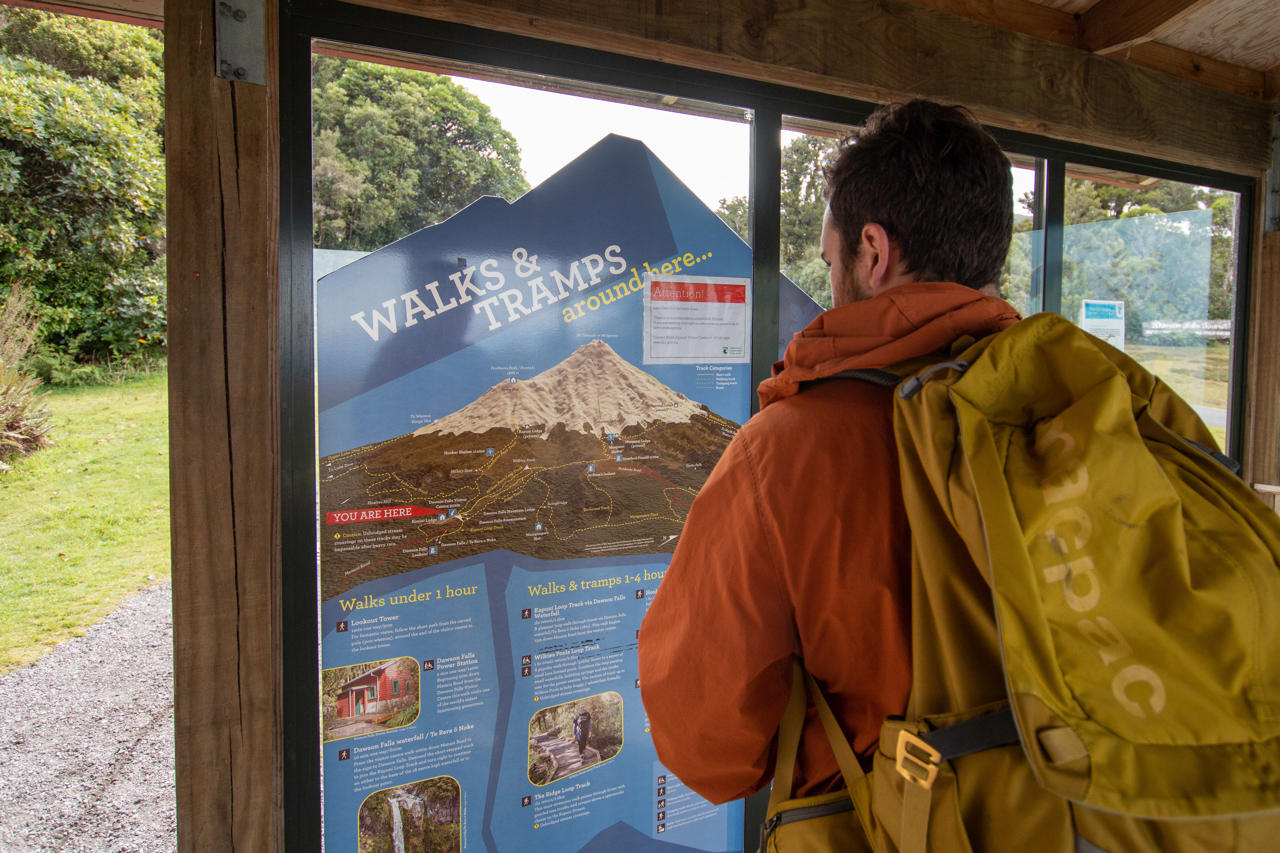
The track begins at the North Egmont Visitor Centre, the most popular starting point. From there it climbs steeply through native bush on a mix of concrete steps and formed track. The steps are relentless at the start. Welcome to Mount Taranaki.
After roughly 45 minutes, the bush gives way to scrub, and you reach the base of the Puffer – a steep cemented section that kicks the gradient up another notch. Above it, the tussock slopes open up, and Tahurangi Lodge appears at around the 1,500-metre mark. Two hours from the car park on a reasonable pace. The lodge is a private mountaineering hut with a small public day shelter and a toilet 100 metres below. Both worth using before continuing.
Tahurangi Lodge to Hongi Valley
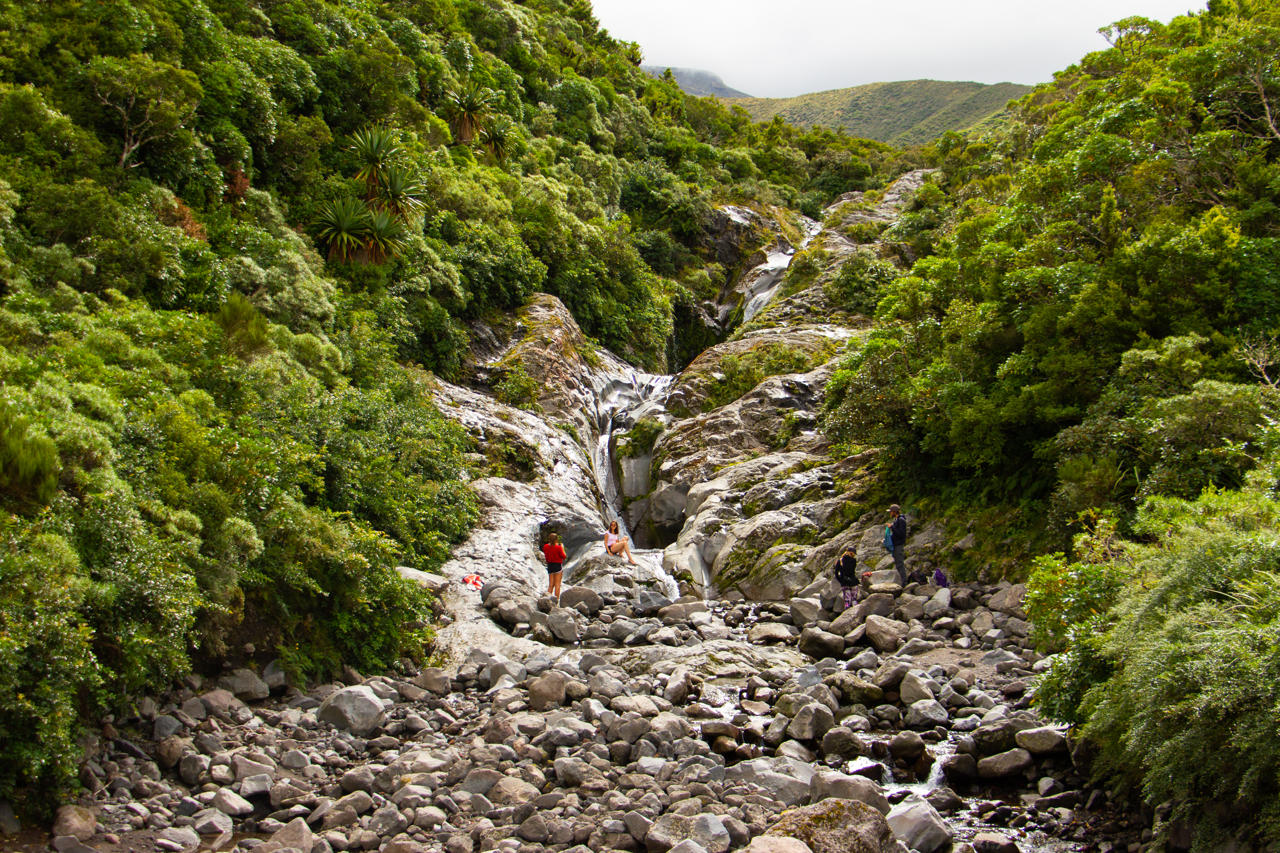
Above the lodge, the track’s character changes. The concrete ends and the real mountain begins. The route crosses exposed tussock and scrub onto rocky ground, traversing around a gorge before entering Hongi Valley. This section involves rock scrambling and increasingly loose terrain underfoot.
The Lizard is the technical crux of the lower mountain. A prominent rocky ridge that requires careful foot and hand placement. Not technical climbing – but not walking either. Take your time. Test footholds. The consequences of a slip here are serious.
Hongi Valley to the Crater
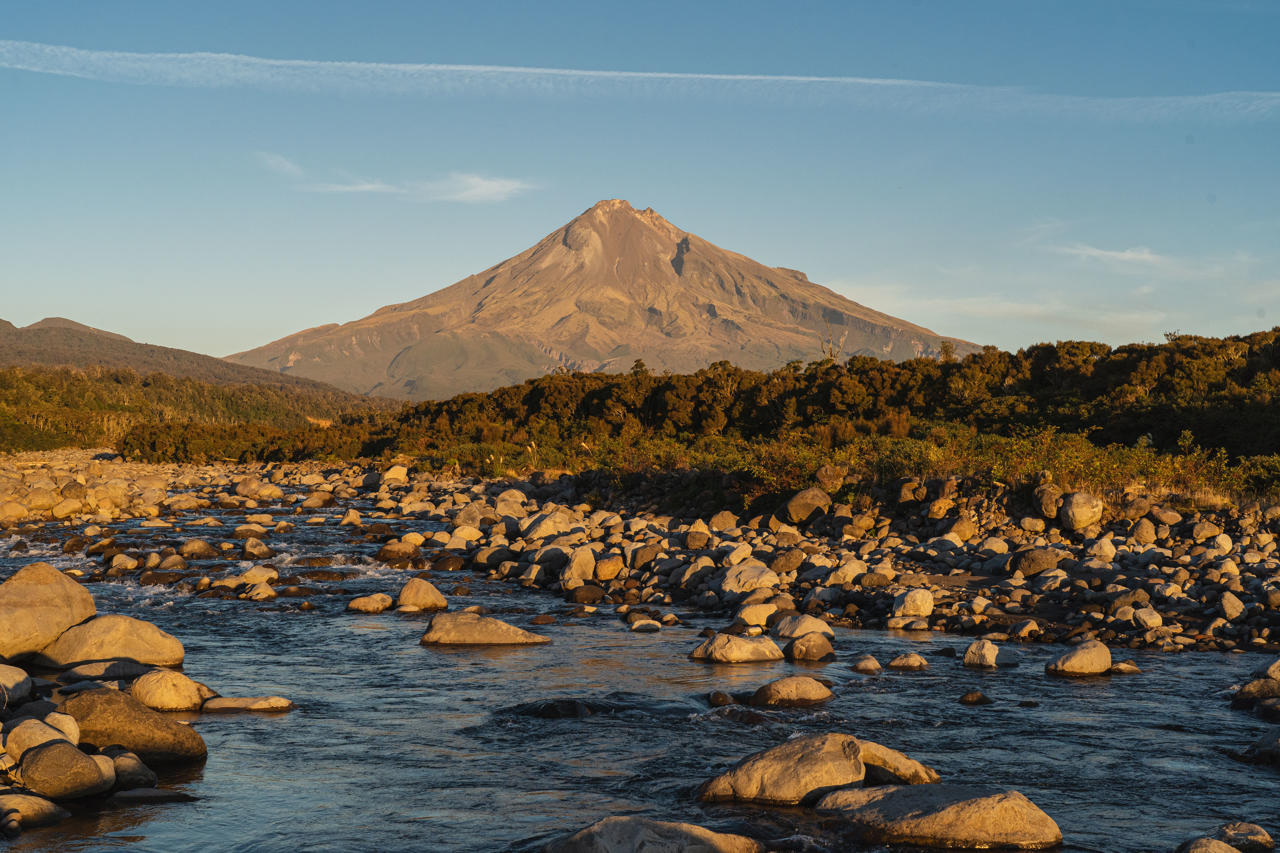
Above Hongi Valley the vegetation thins to hardy alpine plants and eventually disappears altogether. The scoria slopes steepen. Loose volcanic rock shifts underfoot with every step. Progress slows. This section tests fitness and mental resolve in equal measure.
The narrow rocky ledge just below the crater is the final technical challenge before the top. Exposed, requiring care, and not somewhere to be in high wind or poor visibility. The crater sits at around 2,450 metres and holds ice and snow year-round. Even in January, expect to cross frozen ground here.
The Summit
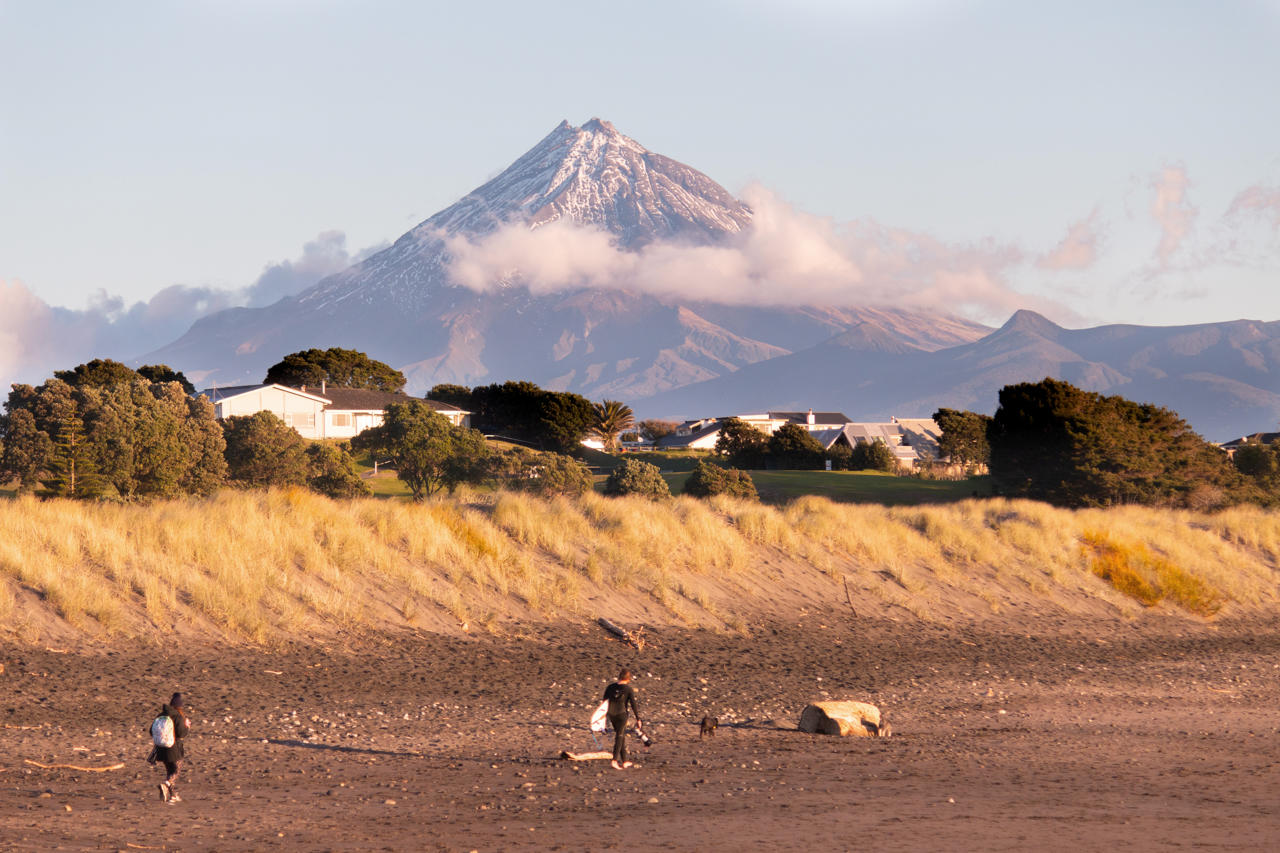
A short, steep climb from the crater leads to the summit rocks at 2,518 metres. On a clear day, the views cover the entire Taranaki region, the Tasman Sea to the west, and, on exceptional days, the volcanoes of the central North Island to the east.
One important note. The summit of Taranaki Maunga holds deep cultural significance for Taranaki Māori. The mountain is a tupuna – an ancestor. Please do not stand on the very highest point. Sit below it, take in the view, and honour the place you’re in.
When to Go
January to April is the window for the Mount Taranaki Summit Track. Outside those months, the mountain above 1,500 metres is covered in snow and ice. Winter ascents require crampons, an ice axe, and mountaineering experience. This is not a grey area – attempting the summit without the right equipment and skills in winter is genuinely dangerous.
Even within the January to April window, the mountain makes no promises. Taranaki’s weather is notoriously volatile. Clear conditions at the car park do not mean clear conditions at the summit. Storms roll in off the Tasman Sea with very little warning, and the temperature drops fast at altitude. Check the MetService forecast for Egmont National Park the morning you plan to go. If there is any doubt, turn around. The mountain will be there another day.
Safety
The Mount Taranaki Summit Track has a history of search-and-rescue incidents. Most are preventable with basic preparation.
Start early. On the trail by 6am or 7am at the latest. The summit and back is an 8-10 hour day, and you want daylight for the descent.
Tell someone your plans. Register your intentions with the North Egmont Visitor Centre or use the AdventureSmart website before you go. Set a return time.
Carry the right gear. Warm layers, a waterproof jacket and trousers, gloves, a hat, and a headlamp, regardless of start time. At least 2-3 litres of water – there are no water sources on the upper mountain. Enough food for a full day. Sturdy, broken-in hiking boots.
Know when to turn back. At each section of the track, DoC signs prompt you to reassess conditions and your own state. They are not decorative. Reaching the summit is only half the journey. The descent on loose scoria is slow, tiring, and unforgiving of fatigue. If you are struggling on the way up, you are not in the right condition to continue.
Do not climb alone. The DoC advice on this is unambiguous. Follow it.
Getting to the Track
The North Egmont Visitor Centre is the most popular starting point. It sits at the end of Egmont Road, about 12 kilometres from Inglewood and 26 kilometres from New Plymouth. The car park is busy in summer – arriving early solves both the parking problem and gives you the best chance of stable morning conditions on the mountain.
The alternative start is the Stratford Plateau car park off Pembroke Road in Stratford. This approach adds variety but adds distance. Most first-time climbers use North Egmont.
New Plymouth is the nearest city and a worthwhile base. It’s a genuinely good place – the coastal walkway, Puke Ariki museum, and the food scene around the city centre are all worth a day of anyone’s time. Our Things to Do in Taranaki guide covers New Plymouth and the wider region in detail.
If the Summit Track Isn’t Right for You
The summit track is not the only reason to visit Egmont National Park. Not even close.
The Pouakai Crossing Tour Taranaki is the region’s premier one-day guided walk and a compelling alternative for those who want an extraordinary day on the mountain without the technical demands of the summit. It passes through diverse forest, tussock, and wetland environments with views of the mountain that arguably beat those from the top. A guided experience on this route is particularly worthwhile – the cultural and ecological commentary adds depth that self-guided walking misses.
Closer to the visitor centre, the Goblin Forest walk is a short, remarkable immersion in moss-draped mountain cedar. Dawson Falls, reached from the Manaia Road entrance, is a beautiful short walk to a 17-metre waterfall. The Pouakai Tarns, about three hours return, offer the most photographed view of the mountain – Taranaki reflected in high-altitude wetland pools on a calm day.
Our full Egmont National Park guide covers all the walks and activities in the park, along with practical visitor information.
Fitting Mount Taranaki Into a North Island Trip
Taranaki sits off the main tourist circuit, which is part of its appeal. New Plymouth is a three-hour drive from Auckland and two hours from Wellington. Most North Island itineraries skip the region entirely. That’s a mistake worth correcting.
Our 7-Day North Island Road Trip can be tailored to include a stop in Taranaki alongside Rotorua, Taupo, and the Tongariro region. For those seeking a broader North Island hiking experience, the 22-Day New Zealand Hiking Tour covers the best trails across both islands, including the North Island’s volcanic highlights. Mount Taranaki also features in our Best Hikes in New Zealand guide alongside the Tongariro Alpine Crossing, the Great Walks, and the other trails worth building an itinerary around.
If you want a structured North Island itinerary that includes the Taranaki region, with accommodation and transfers pre-booked, our New Zealand Independent Coach Tours cover the North Island’s highlights, with the logistics handled. For a fully tailored experience built around the summit track and the wider region, our Luxury Private Tours can put together exactly what you need.
For more North Island hiking inspiration, visit our New Zealand Travel Blog or explore our full guide to the Best North Island Tourist Attractions.
Frequently Asked Questions
How hard is the Mount Taranaki Summit Track?
Very hard. It is considered one of the most demanding day hikes in New Zealand. The elevation gain is close to 1,750 metres over 6.4 kilometres one way, with steep concrete steps, loose scoria, rock scrambling on The Lizard, and exposed sections near the crater. Only attempt it if you are fit, experienced, and properly equipped.
How long does the Mount Taranaki Summit Track take?
8 to 10 hours return from North Egmont Visitor Centre. Allow the full 10 hours if you are not a regular hiker. The descent on loose scoria is slow and tiring. Starting early gives you a buffer and the best chance of stable morning conditions.
What is the best time of year to climb Mount Taranaki?
January to April. Outside this window the upper mountain is covered in snow and ice, requiring mountaineering equipment and experience. Even within the summer season, the weather is highly changeable. Check the MetService Egmont National Park forecast on the morning of your climb and be prepared to postpone if conditions are doubtful.
Can beginners hike the Mount Taranaki Summit Track?
No. The track is suited to experienced, fit hikers only. It involves rock scrambling, exposed ridges, loose volcanic scoria, and icy conditions in the crater year-round. Beginners and those with moderate fitness are better served by the Pouakai Crossing or the shorter walks from the visitor centres. Our Pouakai Crossing Tour Taranaki is the best guided alternative.
Most Popular New Zealand Tours